

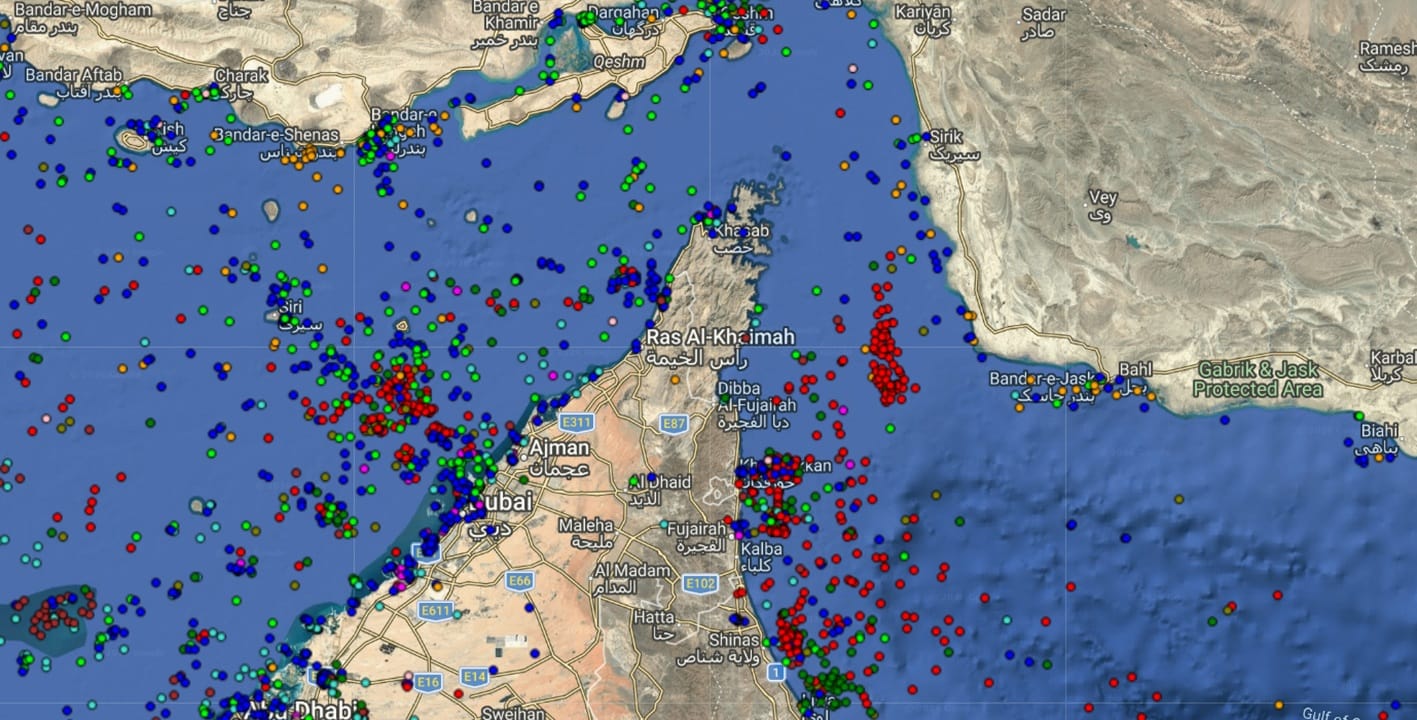
The official warning language had already shifted before the latest wave of attacks. A March 10 Joint Maritime Information Center advisory said the regional maritime threat remained CRITICAL, described the strait as functionally disrupted for routine commercial shipping and warned that limpet-mine or sea-drone attacks at regional terminals remained a significant concern. An active U.S. Maritime Administration alert similarly recommends that vessels keep clear of the area if possible and maintain a 30-nautical-mile standoff from U.S. naval ships to reduce the risk of misidentification.
Why the Strait of Hormuz is uniquely vulnerable to sea drones
That matters because, according to the U.S. Energy Information Administration, about 20 million barrels per day moved through the strait in 2024, equal to roughly 20% of global petroleum liquids consumption, and few practical alternatives exist for much of that flow. In a corridor this narrow and this busy, the commercial impact of a disabling hit can reach far beyond the vessel that takes the blow.
Sea drones add a particularly troubling layer because they operate at the surface, where ordinary maritime traffic is already dense, and can threaten a ship without the visibility of a missile launch or the slow-clearing footprint of a minefield. Reuters reported that maritime specialists believe such craft can carry heavier explosive payloads than many aerial drones and disable a ship even when they do not sink it. Responsibility for some of the latest attacks remains disputed or under investigation, but ambiguity is part of the threat: uncertainty itself can drive crews, insurers and charterers to act more cautiously.
Strait of Hormuz risk is shifting from signaling to disruption
For years, many incidents in and around Hormuz were read mainly as signals — a show of reach, a seizure meant to send a political message, or an attack timed to raise pressure without shutting the waterway outright. The latest pattern looks more disruptive. If operators conclude that any tanker at anchor, in terminal waters or in transit might face a low-profile surface strike, the strait can become commercially intimidating even before any side declares a blockade.
That is why the maritime effect may arrive faster than the military one. Freight costs rise, war-risk premiums widen, ships wait longer outside the danger zone, and cargoes that can be delayed or rerouted are delayed or rerouted. In that environment, the number of ships still willing to sail can matter almost as much as the number actually hit.
The Strait of Hormuz threat has been building for years
The danger did not emerge overnight. The 2019 attacks on tankers in the Gulf of Oman showed how quickly violence near Hormuz could jolt oil markets and push governments into a public blame game. The 2021 strike on the Mercer Street off Oman showed that unmanned attacks on commercial shipping could be fatal. And Iran’s 2024 seizure of the MSC Aries in the Strait of Hormuz reinforced a separate but related point: merchant vessels in this corridor can become bargaining chips as well as targets.
What looks different now is the convergence of those patterns. Earlier episodes alternated between sabotage, drone strikes and seizures. The current crisis combines several of them at once, while official advisories are already using emergency language and commercial traffic remains under intense pressure. That makes the Strait of Hormuz less a single chokepoint than a layered threat environment, where the cheapest weapon capable of sidelining a tanker may shape the next phase of the Gulf shipping crisis.
For oil markets, the immediate question is whether enough traffic keeps moving to prevent a sharper supply shock. For maritime planners, the larger question is whether sea drones have permanently lowered the threshold for serious disruption in Hormuz. If the answer is yes, the next shipping crisis in the Gulf may be defined as much by commercial hesitation as by direct battlefield damage.


