

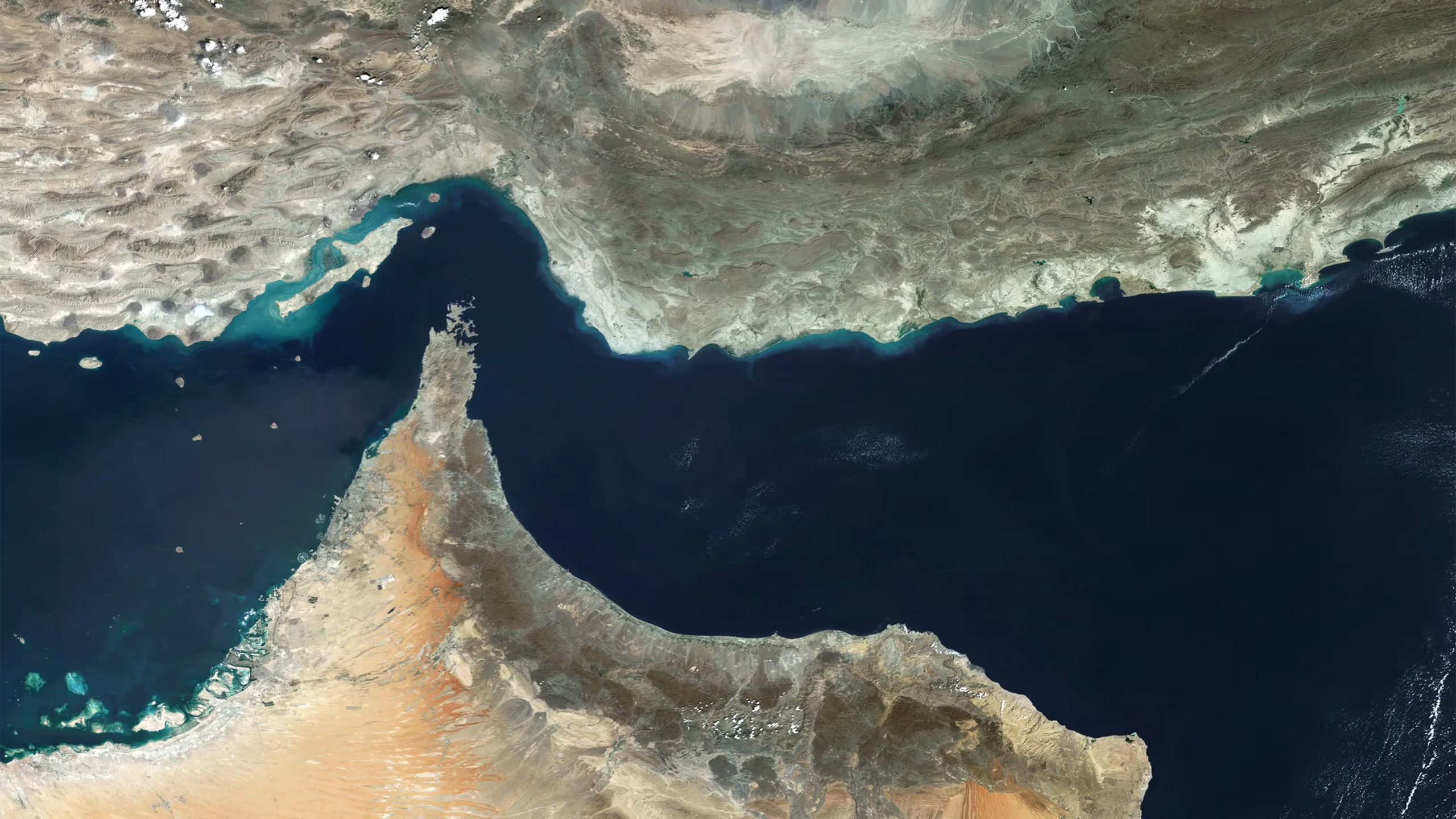
LONDON — A small but growing number of commercial vessels tied to countries seen by Tehran as relatively friendly are again crossing the Strait of Hormuz, offering only fragile relief on a route that normally carries roughly a fifth of the world’s oil and seaborne liquefied natural gas in peacetime, March 18.
Ship-tracking and diplomatic reporting suggest Iran is allowing carefully vetted passage near its coast for selected cargoes rather than restoring broad, rules-based freedom of navigation.
What Strait of Hormuz tracking data is showing
According to ship-tracking data published Tuesday, at least five ships exited the strait through Iranian waters on March 15 and March 16, a sign that Tehran’s blockade has shifted from near-total disruption to selective access. Analysts cited in that report said some vessels were using the Larak-Qeshm Channel near the Iranian coast, an unusual route that appears designed to verify ownership and cargo before passage is allowed.
The clearest public example so far is the Pakistan-bound tanker Karachi, which crossed with its automatic identification signal still on, something most ships have avoided for safety reasons since the war began. Reuters reported that the Aframax tanker hugged the Iranian side of the strait before turning east toward Pakistan, reinforcing the view that some voyages are being cleared case by case.
India has already benefited from the same narrow opening. Reuters reported that two Indian-flagged liquefied petroleum gas carriers reached western Indian ports after Tehran allowed a few vessels through, even as New Delhi kept seeking passage for 22 more ships stranded west of Hormuz. For energy-importing Asian economies, that matters because even a handful of successful sailings can ease the immediate risk of shortages without solving the larger navigation crisis.
China, meanwhile, had already begun pressing Tehran for special treatment. Earlier this month, Reuters reported on China’s push for safe crude and LNG passage, underscoring that the emerging relief has been negotiated country by country rather than granted across the market. That helps explain why most of the crude moving through the strait now still appears to be headed for Asia.
Why this Strait of Hormuz relief still looks fragile
None of that amounts to a normal reopening. The broader pattern remains one of selective passage, elevated risk and political sorting, with Western-linked shipping still facing the greatest uncertainty. Even Washington appears to see the current flow as provisional: Treasury Secretary Scott Bessent said the United States was comfortable, for now, with some Iranian, Indian and Chinese ships getting through because it helps keep global fuel supplies from tightening further.
That matters for oil markets, but it does not yet solve the core problem. A route that functions only for vessels judged acceptable by one side is still a chokepoint under pressure, not a restored international lane. Insurers, shipowners and commodity buyers can take some comfort from more hulls getting through, yet they still have to price in the risk that permissions can be narrowed, paused or reversed with little warning.
Why Strait of Hormuz history still matters
The current pattern fits a longer cycle of pressure and partial improvisation in Hormuz. In 2023, Washington even considered putting armed sailors and Marines on commercial ships after repeated Iranian harassment and seizures. In 2024, Tehran seized the MSC Aries near the chokepoint, reviving fears that merchant shipping could once again become a bargaining chip in a wider regional confrontation.
That history is why the latest movement should be read as fragile relief, not durable normalization. More ships from countries with workable ties to Tehran are getting through, and that is better than the near-standstill seen earlier in the month. But until transit no longer depends on route-by-route permission, the Strait of Hormuz will remain open only in the narrowest sense that matters to traders: just enough to move some barrels, but still too risky to call secure.


