

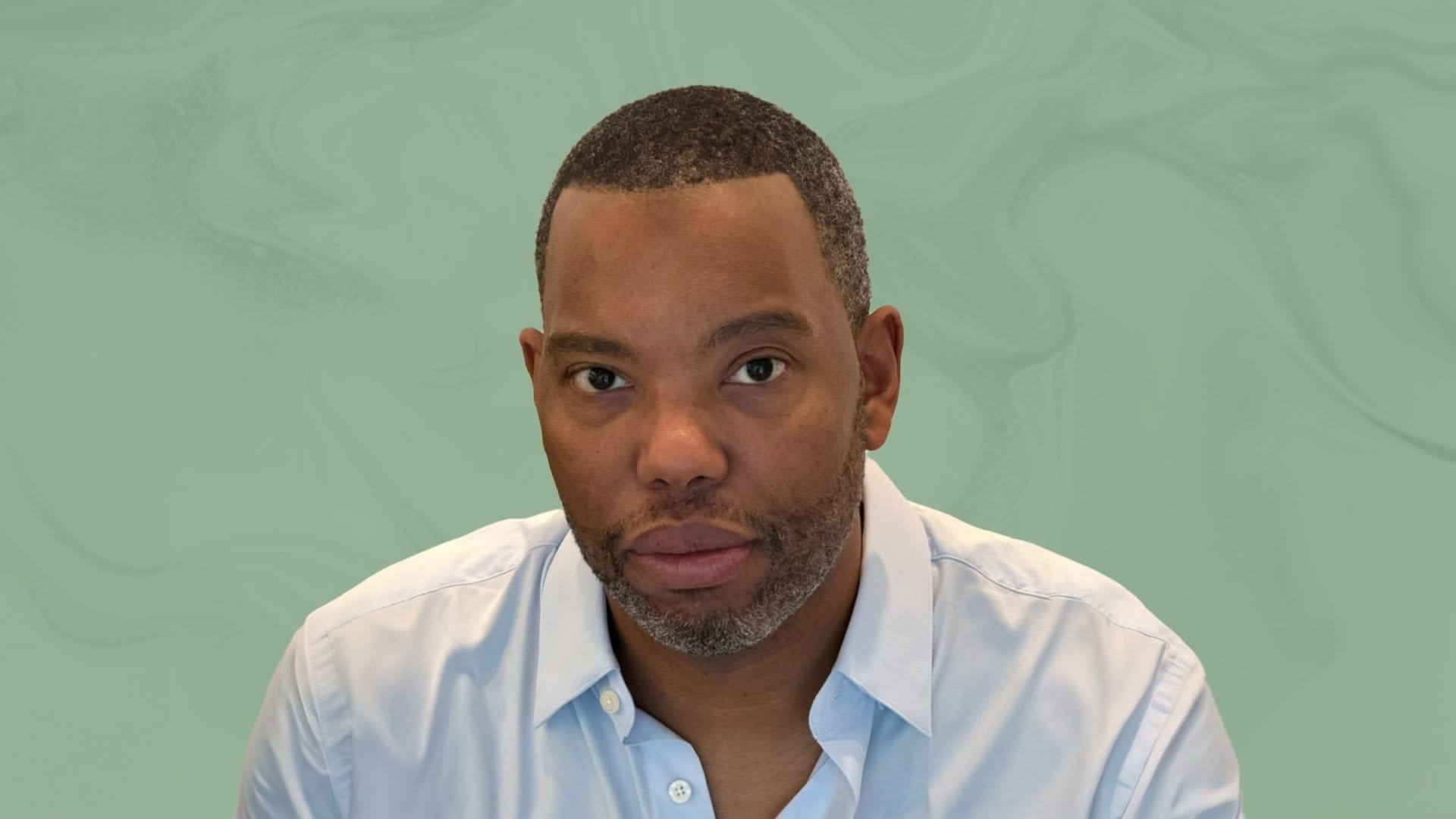
NEW YORK — Ta-Nehisi Coates’s essay collection “The Message” has re-entered the spotlight this week in U.S. media and classrooms, stirring a national argument over Palestine, the ethics of calling Israel’s policies “apartheid,” and the growing push to pull contested titles from school shelves. The renewed attention comes as a high-profile TV interview and new book-ban data collide with Coates’s insistence that storytelling can either expose injustice or help bury it, Dec. 16, 2025.
First published Oct. 1, 2024, the No. 1 national bestseller follows Coates across three “resonant sites of conflict” — Dakar; Columbia, South Carolina; and Palestine — using each stop to interrogate how narratives are built, protected and weaponized, according to the publisher’s description.
What Ta-Nehisi Coates says in ‘The Message’
Coates, the author of “Between the World and Me,” frames “The Message” as a set of letters and essays that begin as a meditation on craft and end as a broader indictment of how nations tell stories about themselves — and about the people they rule. In Senegal, he writes about the pull of origin myths and the tension between a living city and a romanticized past. In South Carolina, he turns to a modern American battleground: who gets to define history inside schools, and what happens when the “wrong” books become curriculum.
The book’s final and longest section follows Coates to Palestine, where he argues that what he saw “on the ground” is routinely softened by euphemism and filtered by what powerful institutions deem “acceptable” language. That argument — not just what Coates saw, but how he insists it should be named — is the combustible center of the reaction.
Palestine, “apartheid” and the fight over moral clarity
Coates has described his approach as a rejection of what he sees as a journalistic habit of treating human-rights questions as puzzles of “complexity” rather than tests of basic principle. In an interview with Vox, he said the word “apartheid” is not a rhetorical flourish but a moral line: “Either apartheid is right or wrong. It’s really, really simple.” He has argued that his goal is to center people who, in his view, are routinely pushed to the margins of American coverage.
Critics — including some journalists and pro-Israel advocates — have countered that Coates’s framing leaves too little room for Israeli security arguments, Palestinian militant violence, or the political history of the conflict, and that it risks turning a long, deadly struggle into a single, absolute narrative.
The “apartheid” label itself has a long and contested paper trail. In 2021, Human Rights Watch issued a major report arguing that Israeli authorities were committing the crimes against humanity of apartheid and persecution, in “A Threshold Crossed”. In 2022, Amnesty International released its own findings — and Israel and the United States rejected the accusation — in a debate captured in a Reuters report about the Amnesty allegations and the backlash.
From page to prime time: the interview that became its own story
The argument went mainstream in late 2024, when “CBS Mornings” co-host Tony Dokoupil pressed Coates during a book interview and questioned his treatment of Israel and Palestinians. The exchange prompted an internal dispute at CBS News over tone, neutrality and what “tough” interviewing should look like in politically charged coverage, as described by the Associated Press.
Coates, in that interview period, rejected the idea that a 256-page essay collection should be treated as a comprehensive history of the conflict. “I wrote a 260-page book,” he said at the time. “It is not a treatise on the entirety of the conflict between the Israelis and the Palestinians.”
The clash became a proxy battle over more than one author’s argument: whether mainstream U.S. outlets are too cautious in describing Palestinian life under occupation, or too quick to accept activist language without sufficient interrogation — and what “balance” should mean when the subject is oppression, war and state power.
Book bans and the South Carolina chapter
While the book’s Palestine section drew the most national heat, “The Message” also revisits a domestic fight that has only intensified: challenges to books in schools and libraries. The American Library Association said it tracked 821 attempts to censor library materials and services in 2024, involving 2,452 unique titles, in its book-ban data — a level the organization says remains far above the years before 2020, even as the raw number declined from 2023.
Coates’s own work has been pulled into that conflict. In 2023, he attended a South Carolina school board meeting to support a high school teacher who had been told to stop using his writing in an advanced English class after some students complained that the unit made them feel “ashamed to be Caucasian,” the AP reported at the time. That episode foreshadowed the themes “The Message” returns to: who controls the classroom narrative, and how quickly discomfort becomes a political demand for removal.
In Coates’s telling, book challenges are not isolated disputes about individual passages; they are part of a broader contest over whose histories count as “American,” whose pain is legitimate, and whether education should be protective — or probing.
Why the debate is flaring again now
Part of the book’s renewed visibility is cultural: the Israel-Hamas war and its ripple effects continue to transform how institutions talk about speech, protest and “acceptable” political language. But part of it is also media-driven. In December, CBS News named Dokoupil the next anchor of the “CBS Evening News,” a move that revived public scrutiny of his earlier Coates interview and the internal dispute it set off, according to Reuters.
The result is that “The Message” is no longer just a book being reviewed. It has become a recurring stress test: for newsrooms wrestling with impartiality and perceived bias, for school boards and libraries navigating censorship pressure, and for readers trying to decide whether Coates’s moral clarity is a corrective — or a simplifying force.
What comes next
Coates has built a career on arguing that America’s self-story is incomplete without confronting injustice in full view. His 2014 Atlantic cover story “The Case for Reparations” helped move a once-fringe policy discussion into mainstream political debate — and established his reputation for merging reporting with moral urgency.
“The Message” applies that same urgency to a different terrain: a global conflict that divides American institutions and communities, and a domestic backlash that increasingly treats books as liabilities. Whether readers see the book as essential witness or as a one-sided provocation, its impact has been to force a blunt question into the open: If language shapes reality, who gets to decide which words can be spoken — and which stories can be read?


