
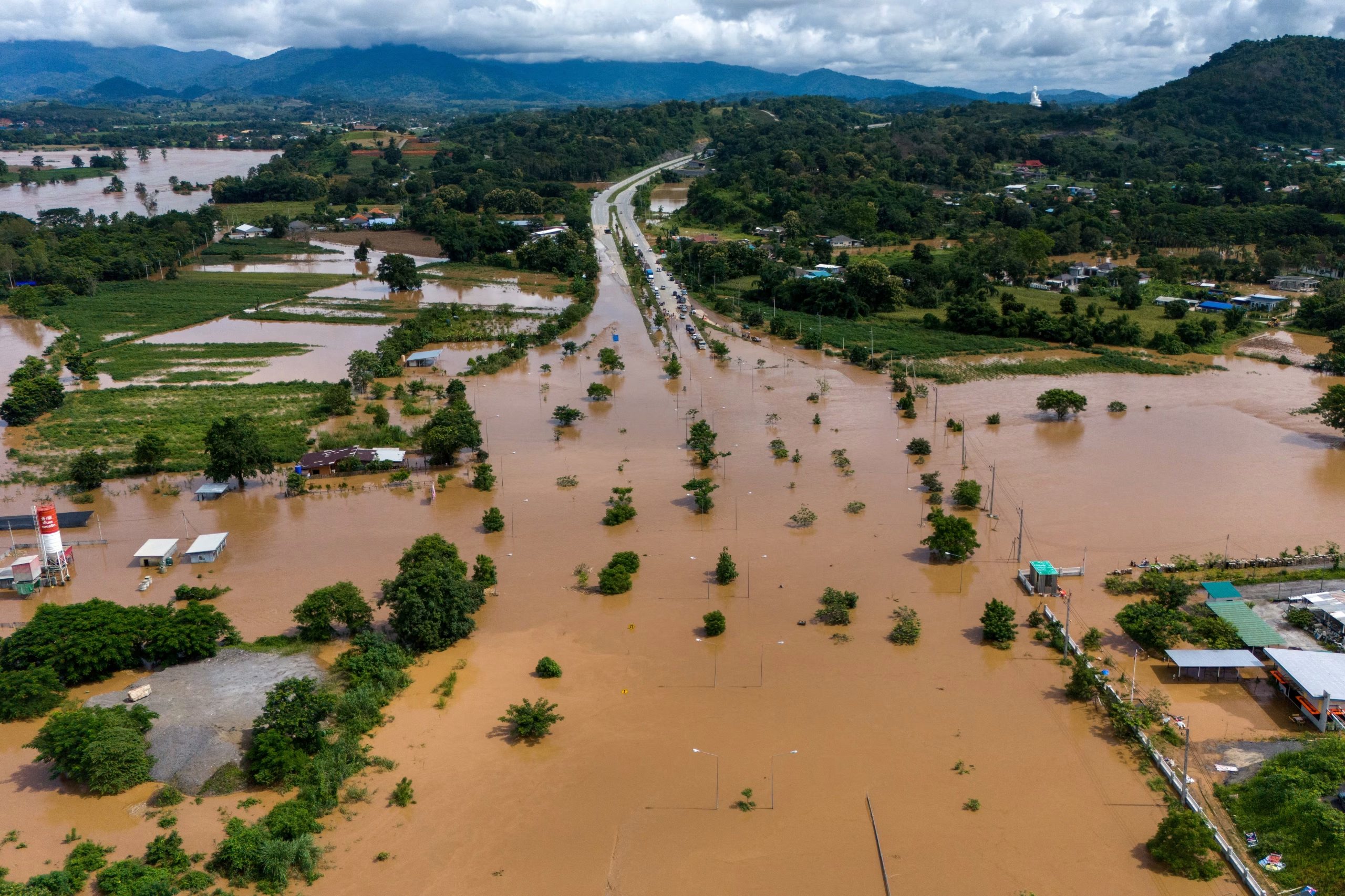
HAT YAI, Thailand — Thai military helicopters on Wednesday evacuated critically ill patients from a flooded hospital in the south as the death toll from floods rose to at least 33 people in nine provinces of Thailand and, combined with rising waters in neighbouring Malaysia, forced nearly 50,000 people from their homes. Monsoon rains, some of the heaviest in 30 years, turned Hat Yai into a brown waterway on Thursday, flooding Hat Yai’s main hospital and shutting off power to many districts as a race began to evacuate patients from intensive care units to safety. Nov 26, 2025.
Thailand’s flooding strains hospitals and rescue teams.
Some 600 patients were under treatment at Hat Yai Hospital when water poured into its ground floor late last week, flooding the emergency wards and damaging parts of the electrical system, according to one detailed international report. “After today, there will no longer be any intensive care patients at Hat Yai Hospital,” said Somrerk Chungsaman, a senior Public Health Ministry official, as authorities began preparing airlifts for the sickest of them.
Oxygen supplies at Hat Yai Hospital were expected to last just 24 hours, prompting the evacuation plan that would prioritise high-dependency and ventilated patients, the Ministry of Public Health said. The Royal Thai Air Force and police helicopters had been flying in oxygen tanks, medical teams and food to the complex and transporting 12 infants, bedridden patients and other vulnerable individuals to safer hospitals in neighbouring provinces, according to a report by local outlet Nation Thailand.
Rescue work goes well beyond the hospital. Thailand’s military said it had sent about 20 helicopters and 200 boats to Hat Yai and surrounding districts, supported by the navy’s only aircraft carrier, HTMS Chakri Naruebet, which was acting as a mobile operations centre and a floating clinic for flooded southern provinces.
Wider toll from southern deluge
Mudslides have blocked roads and collapsed homes, aggressive waterborne predators have become emboldened by sudden surges in the currents of flooded streets, and days of torrential rain have turned normally placid stretches of river into killing channels. Floods caused by days of near-constant rains in much of southern Thailand had killed at least 33 people across seven provinces — most due to drowning, electrocution, landslides and flash currents. More than 2.7 million people and nearly a million homes have been affected, while tens of thousands of residents have been evacuated to temporary shelters as Thailand’s flooding continues to send rivers and drainage canals over their banks, officials said.
In Songkhla province, which has been declared a disaster area, some neighbourhoods are inundated with up to two metres of water, and volunteer rescue groups say they have been inundated with thousands of cries for help. An Associated Press report, as well as local media, describes families who wait atop roofs for navy boats and army helicopters, or cling to power poles or upper floors as brown water swirls about inches below them.
There have been 33 deaths across seven provinces, government spokesman Siripong Angkasakulkiat said, adding that currents would remain dangerous even as waters began to recede in some areas. So far, officials have received over 77,000 requests for help on social media and through emergency hotlines, ranging from food drops to rooftop rescues, he said.
The wet record makes the Thai flood context tough.
Meteorologists say a stationary monsoon trough was responsible for delivering the unprecedented rain that fell over Hat Yai and nearby provinces, with 335 millimetres in one day falling on the city and 630 millimetres over three days — both figures described as the heaviest seen there since records began and well in excess of the 428 millimetres recorded during the Hat Yai flood of 2010.
Warmer sea-surface temperatures in the Gulf of Thailand and the Andaman Sea are supercharging storm systems, making short, sharp floods more likely in Thailand and harder to predict, according to interviews with scientists by Thai and regional media. They point out that such extreme rainfall, like that this week, is in line with broader climate patterns driven by human-induced greenhouse gas emissions.
The disaster this week adds to a sequence of events over the past decade or so. The flash floods in 2010 inundated Hat Yai and the major rubber-growing areas that year, killing over 100 people across Thailand and smashing exports, contemporaneous reporting from that time notes.
(Catastrophic flooding in 2011, along the Chao Phraya River basin, flooded industrial estates north of Bangkok and was considered one of the most expensive disasters in the world, according to historical analyses of the 2011 Thailand floods.) That then triggered even more promises of a major investment in levees, reservoirs and drainage, since critics say development has continued to sprawl across low-lying floodplains faster than protection has been erected.
More recently, heavy monsoon rains in late 2024 killed more than 30 people and left tens of thousands displaced in Malaysia and southern Thailand, an AP article on that season’s flooding noted — evidence of how frequently the region is now being subjected to emergency evacuations.
Prime Minister Anutin Charnvirakul announced an emergency in Songkhla and promised quick compensation to victims, also dispatching mental health teams to assist weary medics and survivors. But for the families who remain marooned above the waterline in Hat Yai and other towns, it is all still right now: getting food, clean water, and a safe way out while helicopters circle overhead and floodwaters rip through their streets in Thailand.