

WASHINGTON — The U.S. Food and Drug Administration this month widened a crackdown on unregulated “gas-station drugs,” seizing thousands of products containing the opioid-like compound 7-hydroxymitragynine, or 7-OH, while warning that the drug tianeptine continues to be sold illegally nationwide. The stepped-up enforcement and public alerts are aimed at cutting off a fast-growing market of convenience-store shots, gummies and tablets that regulators say can fuel addiction and overdose, Dec. 16, 2025.
The latest push lands as state officials move to take tianeptine off shelves and federal regulators focus on concentrated 7-OH — a substance linked to kratom but increasingly sold in “enhanced” forms that officials say pose far higher risks than traditional kratom leaf products.
FDA targets 7-OH in a new wave of seizures and enforcement
In a Dec. 2 enforcement action, the FDA said the U.S. Marshals Service seized about 73,000 units of concentrated 7-OH products — valued at roughly $1 million — from three firms in Missouri, describing the items as adulterated foods and dietary supplements that cannot be lawfully sold with concentrated 7-OH added as an ingredient. Details of the seizure were outlined in the agency’s Dec. 2 press announcement on the 7-OH product seizures.
“This enforcement action is a strong step to protect Americans from the dangers of concentrated 7-OH products, which are potent opioids,” FDA Commissioner Marty Makary said in the agency’s statement.
The FDA’s Dec. 2 action followed a broader federal push in July, when the agency said it was recommending that certain 7-OH products be controlled under the federal Controlled Substances Act. The FDA stressed that its effort is focused on concentrated 7-OH — not on natural kratom leaf products — and released new materials meant to help consumers and clinicians distinguish between the two. The agency described that approach in its July 29 announcement on steps to restrict 7-OH opioid products.
Regulators and clinicians have increasingly raised concerns that concentrated 7-OH products can be marketed with bright packaging and sold through channels that make them easy to buy — including at smoke shops and convenience stores — often without clear dosing standards or safety review.
States ban tianeptine as FDA warns consumers about “gas station heroin”
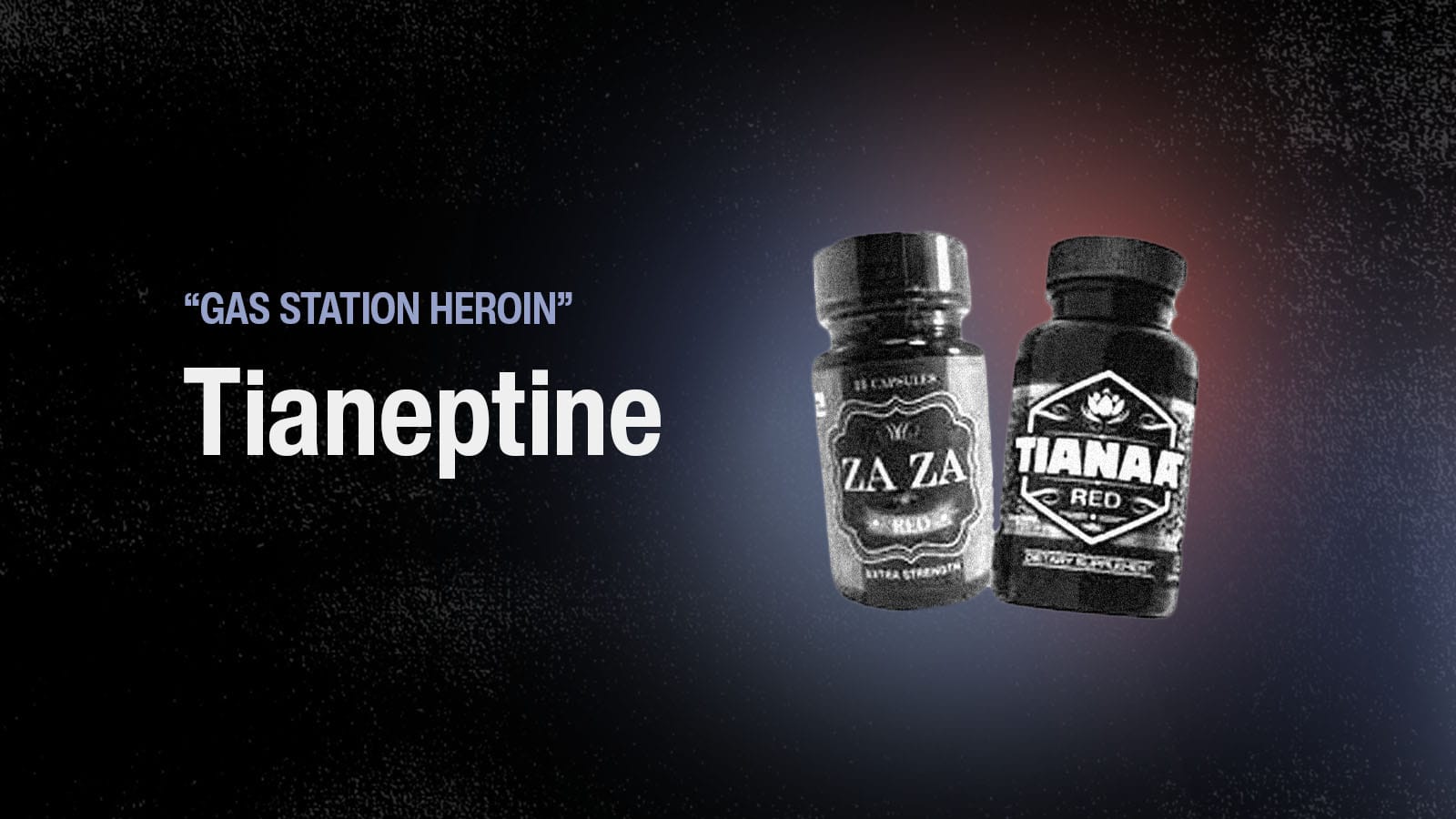
While the FDA focuses on concentrated 7-OH, it has also continued sounding alarms about tianeptine, an antidepressant approved in some countries but not approved for any medical use in the United States. In a May 8 safety notice, the agency warned consumers not to buy or use any tianeptine product and said the drug is frequently sold at convenience stores, gas stations and vape shops, sometimes under brand names such as Tianaa, ZaZa, Neptune’s Fix, Pegasus and TD Red. The FDA’s notice also cited case reports describing extremely high daily doses among some U.S. consumers. The agency’s guidance is detailed in its May 8 warning on serious risks tied to tianeptine products.
Separately, the Drug Enforcement Administration has noted that tianeptine is not federally controlled under the Controlled Substances Act — a gap that has helped drive state-by-state action even as federal regulators warn the substance is being sold unlawfully as a supplement or “research chemical.” The DEA summarized its control status in an April 2025 DEA tianeptine fact sheet.
One example of state action came in Delaware, where lawmakers moved to ban sales by placing tianeptine into the state’s Schedule I controlled substances list. Delaware’s bill listing and effective date are included in the Delaware General Assembly’s HB 21 bill detail page.
Public health officials and clinicians say the tianeptine market has been especially difficult to curb because products can be sold in small bottles or capsules with vague labels — and because some consumers may assume a product is safe simply because it is easy to buy.
Older reporting shows the problem has been building for years
Although federal officials have recently stepped up enforcement, the concerns around tianeptine and similar “gas station” products have been building over time:
2018: The CDC reported that calls to U.S. poison centers linked to tianeptine increased sharply during 2014–2017, signaling an emerging public health risk and noting effects that can mimic opioid toxicity and withdrawal. The findings were published in the CDC’s August 2018 MMWR report on tianeptine exposures (2000–2017).
2023: Florida’s attorney general announced an emergency rule intended to outlaw tianeptine — describing the substance as “highly addictive and even deadly” — reflecting how states began moving quickly when the products appeared to spread through retail outlets. The announcement is archived in the September 2023 Florida attorney general release on tianeptine.
2024: A CDC “Notes from the Field” report described a New Jersey cluster of severe illness associated with Neptune’s Fix, a tianeptine-containing elixir, and reported that samples tested positive for synthetic cannabinoids — underscoring concerns about adulteration and unpredictable ingredients. The CDC detailed the cluster in its February 2024 MMWR report on the Neptune’s Fix illness cluster.
What happens next
Federal action on 7-OH will likely continue to play out through enforcement and the federal drug-control process, while states keep updating their controlled-substance rules for tianeptine and other emerging products sold outside traditional pharmacy channels.
For consumers, clinicians and retailers, regulators’ central message has remained consistent: legality and safety are not guaranteed by easy availability — especially for products marketed as supplements or “nootropics” but containing potent, opioid-like ingredients.


