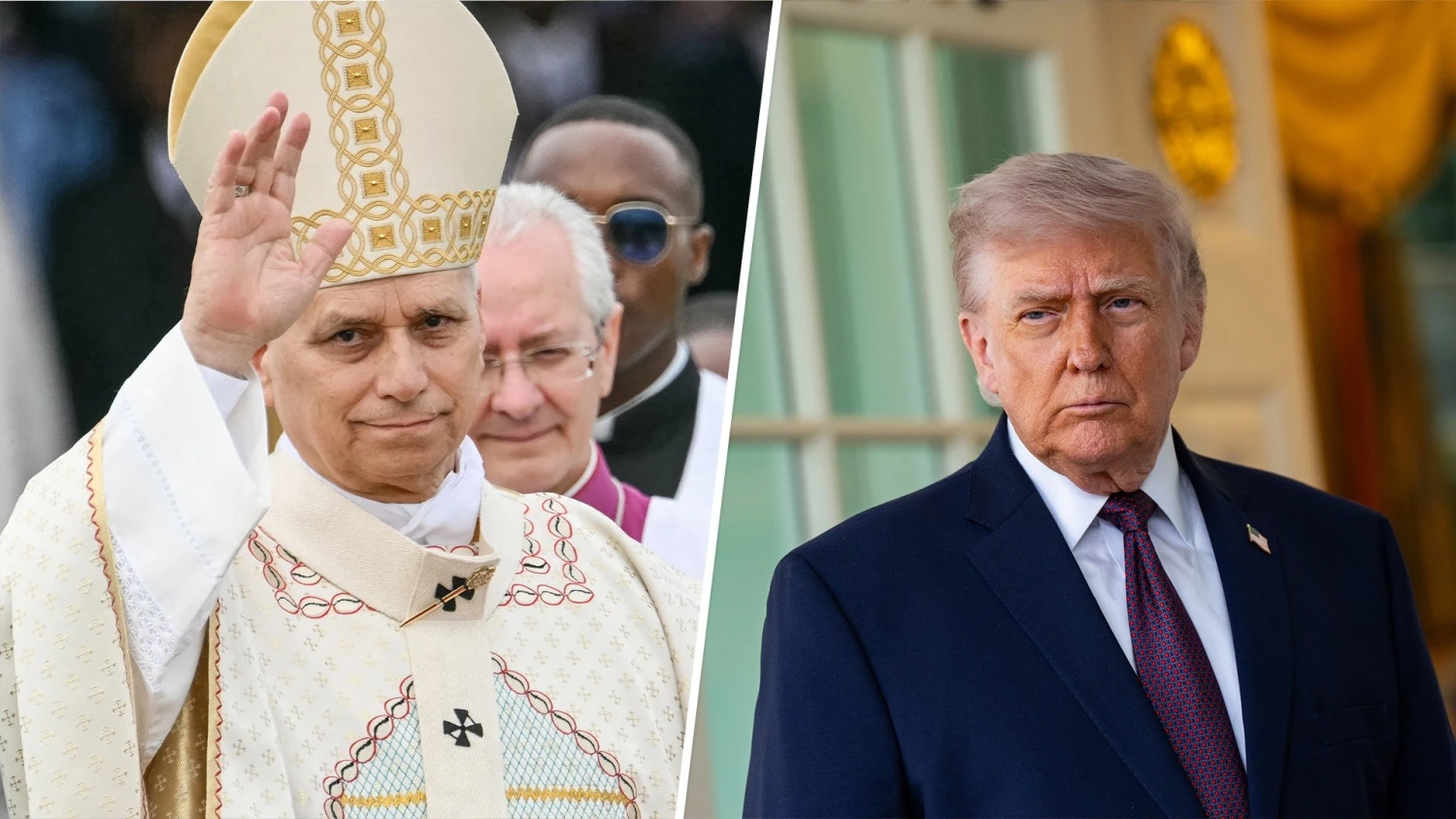
VATICAN CITY — President Donald Trump and Pope Leo XIV have opened an unusually public dispute over the U.S.-Israeli war in Iran after Leo condemned threats against the Iranian people and Trump answered that Tehran cannot be allowed to obtain a nuclear weapon, April 21, 2026. The clash has grown sharper because Leo, the first U.S.-born pope, has cast his appeal in explicitly moral terms — peace, dialogue and protection of civilians — while Trump argues that pressure and military force are needed to end the crisis.
Reuters has traced how Leo moved from months of restraint to a direct public appeal to Trump, a turning point that made the dispute feel larger than a routine White House-Vatican disagreement. The pope had largely avoided speaking about his home country in his first 10 months, then began naming the president publicly as the Iran war widened.
The break became unmistakable after Leo called Trump’s threat against Iran “truly unacceptable” following a social media warning that “a whole civilization will die tonight” if Tehran did not meet U.S. demands. In the Vatican’s fuller account of the same exchange, Leo also urged citizens to contact political leaders and ask them to reject war, while stressing that attacks on civilian infrastructure violate international law.
Why the Trump Pope clash over Iran is different
Leo has not treated the confrontation as a partisan argument. Instead, he has doubled down on a pastoral line, saying the world needs a message of peace and coexistence and presenting dialogue as the only durable answer to a war that has already destabilized the region. Reuters reported that he repeated that view even after Trump’s latest social media attack prompted Leo to defend peace and coexistence during his Africa trip.
That message is landing while the war itself remains unsettled. As of Tuesday, Reuters reported that U.S.-Iran talks were still uncertain as the ceasefire deadline neared, with both sides trading accusations even as Pakistan prepared for a possible new round of negotiations. In that setting, the pope’s insistence on de-escalation has become both a moral intervention and a challenge to Trump’s public war rhetoric.
Trump’s side of the argument is straightforward: he says Iran’s repression, regional behavior and nuclear ambitions make hard pressure unavoidable. Leo’s side is just as clear: threats against an entire people, religious language used to bless bloodshed and attacks on civilians cannot be defended as a Christian witness. That contrast is what has turned a policy disagreement into a symbolic contest over the language of power, faith and peace.
This clash also has a long backstory
Trump’s friction with the Vatican did not begin with Leo. In 2016, during Trump’s first presidential campaign, Reuters reported that Pope Francis said a leader focused on building walls and not bridges was “not Christian”, one of the defining church-state flashpoints of that election year.
The relationship softened in tone but not necessarily in substance in 2017, when Reuters reported that Francis urged Trump to be a peacemaker at their first Vatican meeting. That encounter showed that even when the public temperature dropped, the Vatican still wanted to frame Trump-era politics around peace, migration and moral responsibility.
There was also continuity in Leo himself before the white cassock. Reuters noted after his election that Robert Prevost had already criticized Trump and JD Vance before becoming pope, especially on immigration and the Christian duty to care for others. That matters now because it suggests the current Iran dispute is not a sudden personality clash, but the latest chapter in a longer argument over how political power should speak about borders, war and human dignity.
For now, neither side appears ready to step back. Trump keeps presenting military pressure as the path to security. Leo keeps answering that peace cannot be built through threats, punishment of civilians or the sanctification of war. With talks over Iran still fragile, the standoff between the White House and the Vatican is becoming a secondary theater in the same crisis — one fought with words, symbols and competing claims to moral authority.