
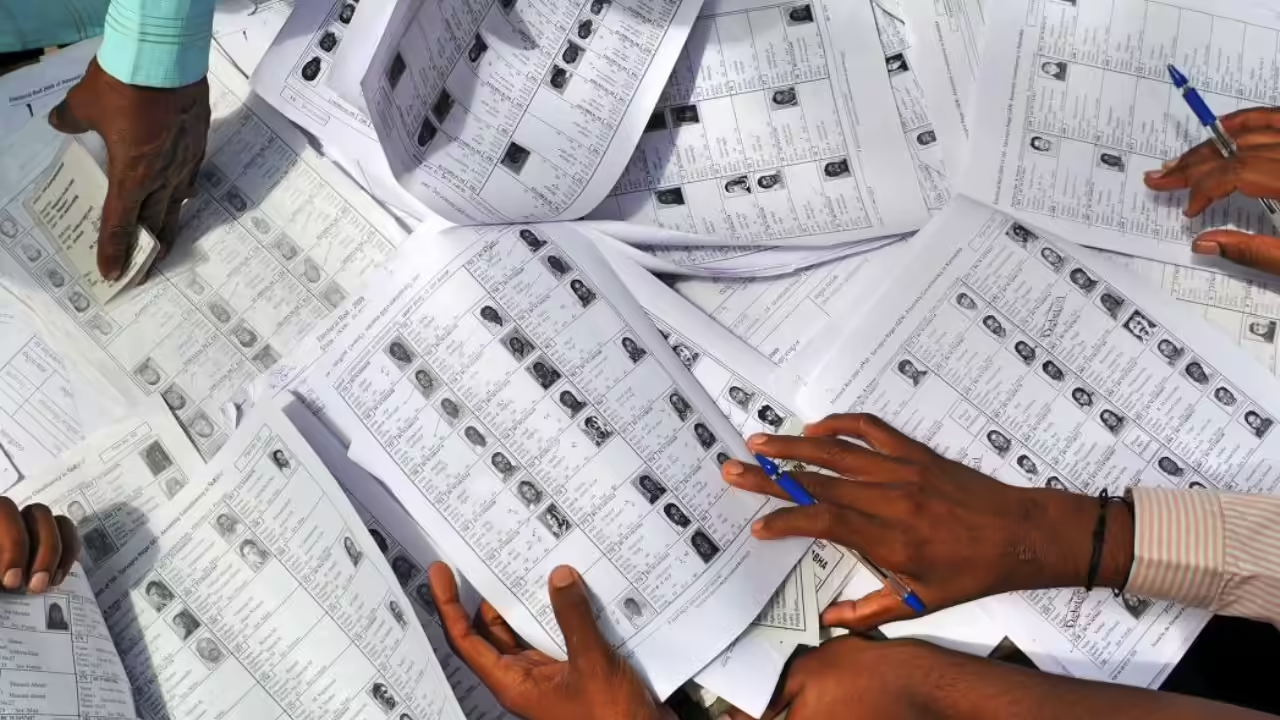
KOLKATA, India — West Bengal’s voter roll dispute has deepened days before the first phase of the Assembly election after the Special Intensive Revision, or SIR, left about 90 lakh names off the rolls and pushed thousands of voters into an appeals system that remains under pressure. With the Supreme Court allowing only tribunal-cleared voters to return through supplementary rolls before April 21 and April 27, the revision has moved from an administrative cleanup into one of the state’s most consequential election issues, April 18.
Why the West Bengal voter list is now at the center of the election
The scale of the exclusions is what has turned the West Bengal voter list into a flashpoint. The Week reported that 63.66 lakh names were already out in the final SIR roll published on Feb. 28, and another 27.16 lakh were later found ineligible after adjudication, taking the total deletions to about 90.82 lakh. Even allowing for rounding across reports, the numbers are large enough to reshape the electorate just as Bengal heads into voting on April 23 and April 29.
The legal window for relief is narrow. The Indian Express reported that the Supreme Court, invoking Article 142, directed the Election Commission of India to issue supplementary revised rolls for voters whose appeals are allowed by tribunals before April 21 for phase one and April 27 for phase two. But the court also made clear that a pending appeal alone does not restore voting rights.
That has left the process racing against the calendar. The Times of India reported on April 18 that no reinstated names had yet been published for the first phase, even though the 19 tribunals had started work and were disposing of cases. For voters who believe they were wrongly deleted, the central problem is no longer just eligibility; it is whether any relief can arrive in time to matter.
How the West Bengal voter list fight became bigger than a paperwork dispute
What makes this story bigger than a technical revision is the gap between record correction and electoral participation. A cleanup exercise is expected to remove dead, shifted or duplicate entries. The controversy begins when voters who say they cast ballots in the 2024 Lok Sabha election now find themselves excluded and dependent on a compressed appeals process. That is why the argument has expanded beyond list management into questions of due process, access and timing.
For affected voters, the official route remains open, at least on paper. The Election Commission’s Voters’ Services Portal allows electors to search their names in the latest SIR list and submit documents against notices. In practice, though, the usefulness of that remedy will be judged by whether cleared names are actually restored before polling dates arrive.
West Bengal voter list concerns did not begin this month
The current crisis did not appear overnight. An Indian Express report from March 2025 showed that duplicate EPIC numbers had already triggered a political row in Bengal, with parties treating voter-roll anomalies as an early warning sign before the 2026 election. That dispute mattered because it raised the same underlying question that dominates the present crisis: whether corrections are improving the rolls or undermining trust in them.
By October 2025, the baseline records themselves had begun to draw scrutiny. The Times of India reported that a booth with 842 voters in North 24 Parganas had disappeared from the archived 2002 SIR rolls used as a key reference point in the present exercise. That episode now looks less like an isolated anomaly and more like part of a longer chain of disputes over how Bengal’s voter data is being built, checked and defended.
What happens next
The immediate test is simple: whether tribunal decisions can be translated into supplementary rolls quickly enough to let eligible voters cast ballots in the coming phases. If that does not happen, the West Bengal voter list controversy will not end with polling. It will carry forward into legal challenges, political recriminations and a larger debate over how far an electoral revision can go before confidence in the process itself begins to erode.