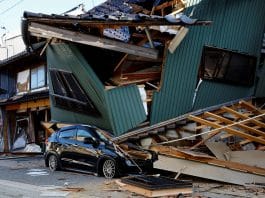

WASHINGTON — Winter Storm Fern swept across the eastern two-thirds of the United States, canceling more than 13,000 weekend flights and prompting federal emergency disaster declarations in at least 12 states, officials said Sunday. Airlines trimmed schedules ahead of the worst icing as forecasters warned that freezing rain and an Arctic blast could make roads impassable and slow power restoration, Jan. 25, 2026.
Calling the storms “historic,” President Donald Trump approved emergency disaster declarations for South Carolina, Virginia, Tennessee, Georgia, North Carolina, Maryland, Arkansas, Kentucky, Louisiana, Mississippi, Indiana and West Virginia, according to a Reuters report. “We will continue to monitor, and stay in touch with all States in the path of this storm. Stay Safe, and Stay Warm,” Trump wrote.
Winter Storm Fern by the numbers
Flight cancellations: Reuters cited FlightAware as reporting more than 4,000 U.S. cancellations Saturday and at least 9,400 more for Sunday.
Power outages: More than 217,000 customers were without electricity early Sunday, Reuters reported, with the biggest concentrations in Louisiana, Mississippi, Texas and Tennessee.
Texas grid action: The Department of Energy said it issued an emergency order allowing ERCOT to deploy backup generation at data centers and other major facilities to help mitigate blackouts during Winter Storm Fern, the agency said.
The National Weather Service’s Weather Prediction Center warned of an “unusually expansive and long-duration winter storm” bringing heavy snow from the central U.S. to the Northeast and “widespread heavy ice accumulation” from the Southern Plains into the Southeast and Mid-Atlantic, with “crippling to locally catastrophic impacts” possible in the hardest-hit icing corridors, according to the center’s forecast discussion.
Why ice is driving the disruption
Even a thin glaze can shut down highways and airports, and thicker accretions can snap trees and power lines. In parts of the South, where Winter Storm Fern is expected to hold temperatures below freezing longer than a typical cold snap, officials urged residents to avoid nonessential travel, keep phones charged and plan for multi-day outages where ice builds.
Older storms add context
The scramble to protect the grid and keep transportation moving follows recent winter crises. A federal report released after the February 2021 freeze known as Winter Storm Uri said more than 4.5 million people in Texas lost power, some for as long as four days, and called for stronger cold-weather preparedness, according to the Federal Energy Regulatory Commission.
Airlines also remain sensitive to winter-driven network shocks after Winter Storm Elliott pushed across the U.S. in December 2022, when carriers canceled hundreds of flights as conditions deteriorated ahead of the holiday travel rush, as documented in The Weather Channel’s coverage.
For now, travelers and residents in the path of Winter Storm Fern were urged to monitor local advisories, check flight status before heading to the airport and delay driving until crews can treat roads and clear debris.