
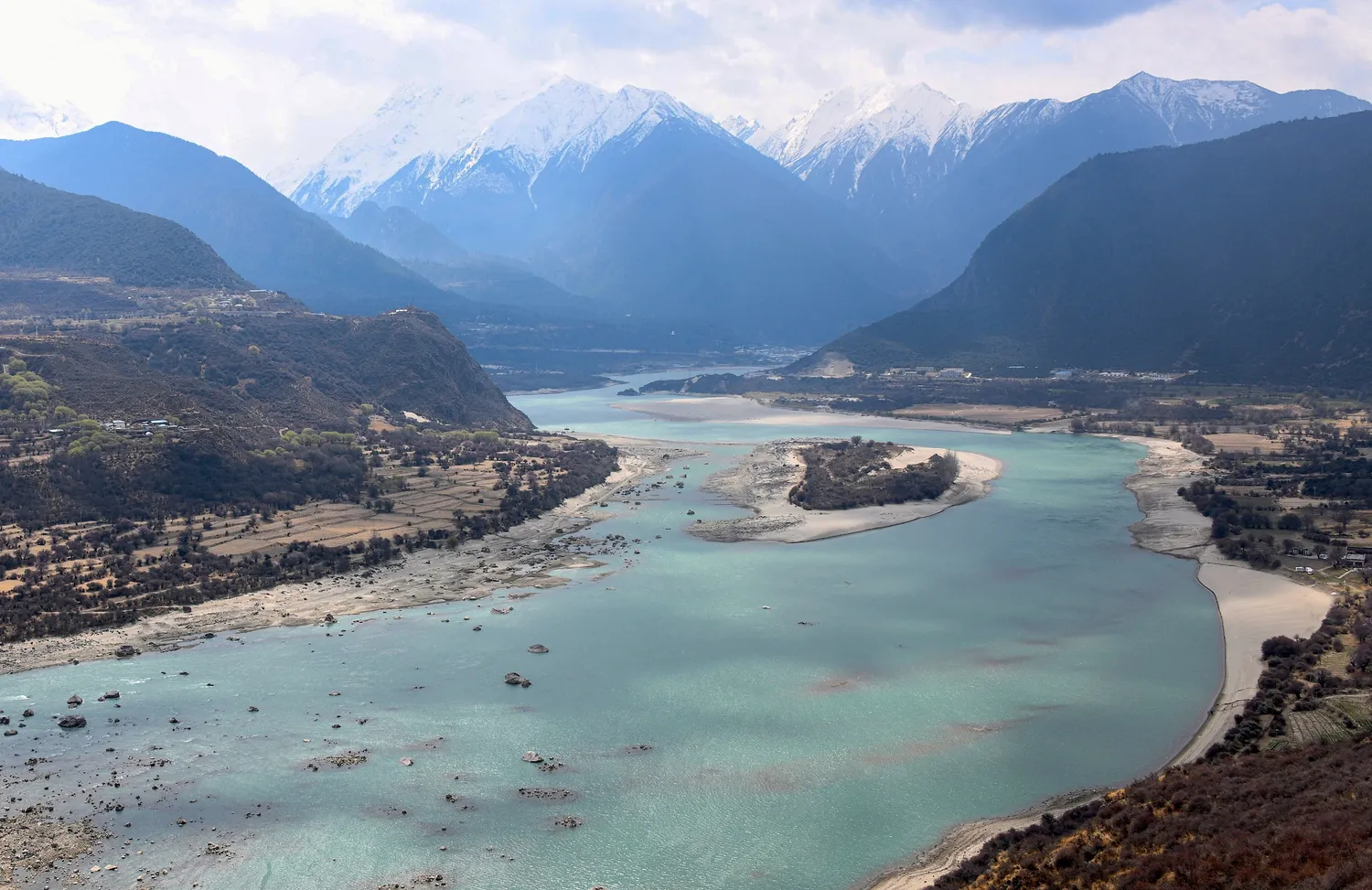
NEW DELHI — China’s colossal Yarlung Tsangpo dam is deepening water-security fears in India and Bangladesh after Beijing moved from approval to construction on the lower reaches of the river that flows downstream into the Brahmaputra basin, April 21, 2026.
The anxiety is driven not only by the scale of the project, but also by the possibility that any major upstream intervention could reshape seasonal flows, sediment, flood timing and strategic leverage across a river system that supports millions of people.
Why the Yarlung Tsangpo dam alarms India and Bangladesh
Beijing first approved the hydropower project in December 2024, portraying it as a green, safe development meant to advance carbon goals, protect ecology and boost growth in Tibet.
Concern sharpened after China began construction in July 2025 on a five-station cascade scheme that Chinese officials say could generate about 300 billion kilowatt-hours of electricity a year, making it the biggest hydropower project of its kind.
India has made its unease public. In a Jan. 3 briefing, New Delhi called for transparency, consultation and protection of downstream interests, saying activities in upstream areas must not harm lower-riparian states on the Brahmaputra.
Bangladesh has taken a similar line. During a January visit to Beijing, Dhaka formally raised concerns and sought assurances that the dam would not damage downstream flows, showing how the issue has widened from a China-India dispute into a broader regional water-security test.
The worry is not only geopolitical. A January Reuters analysis highlighted the extreme earthquake risk around Himalayan dams, underscoring that any giant project in Tibet’s fracture zones raises questions not just about water control, but also about structural safety, landslides and cascading disaster downstream.
Why the fears are so hard to dismiss
For India, especially Arunachal Pradesh and Assam, the central fear is that a project of this size could eventually affect lean-season water availability, sediment movement and disaster planning even if Beijing insists the dam will not harm downstream users. For Bangladesh, the concern is even broader: any disruption upstream can intensify pressure on a low-lying delta already dealing with erosion, salinity and climate stress.
That is why the Yarlung Tsangpo dam is no longer just an engineering story. It has become a question of trust between an upstream power and two downstream countries that depend on timely data, predictable flows and confidence that river infrastructure will not be turned into strategic leverage.
The Yarlung Tsangpo dam story has been building for years
This is not a sudden controversy. Back in late 2020, Reuters reported that China was eyeing up to 60 gigawatts of hydropower on the lower Yarlung Tsangpo, tying the idea to its 2021-2025 planning cycle and long-term clean-energy ambitions.
Within a day, Reuters also reported that India was weighing a large counter-project in Arunachal Pradesh to offset the possible impact of Chinese dams upstream. That early reaction helps explain why today’s alarm feels less like a new shock and more like the return of a long-running strategic dispute.
China sees the dam as a flagship of energy transition and infrastructure power. India and Bangladesh see a future in which one upstream state could gain greater practical influence over a river that millions downstream rely on. Until there is more clarity on design, operations and data-sharing, the Yarlung Tsangpo dam will remain not just a mega-project, but a mega-source of mistrust.