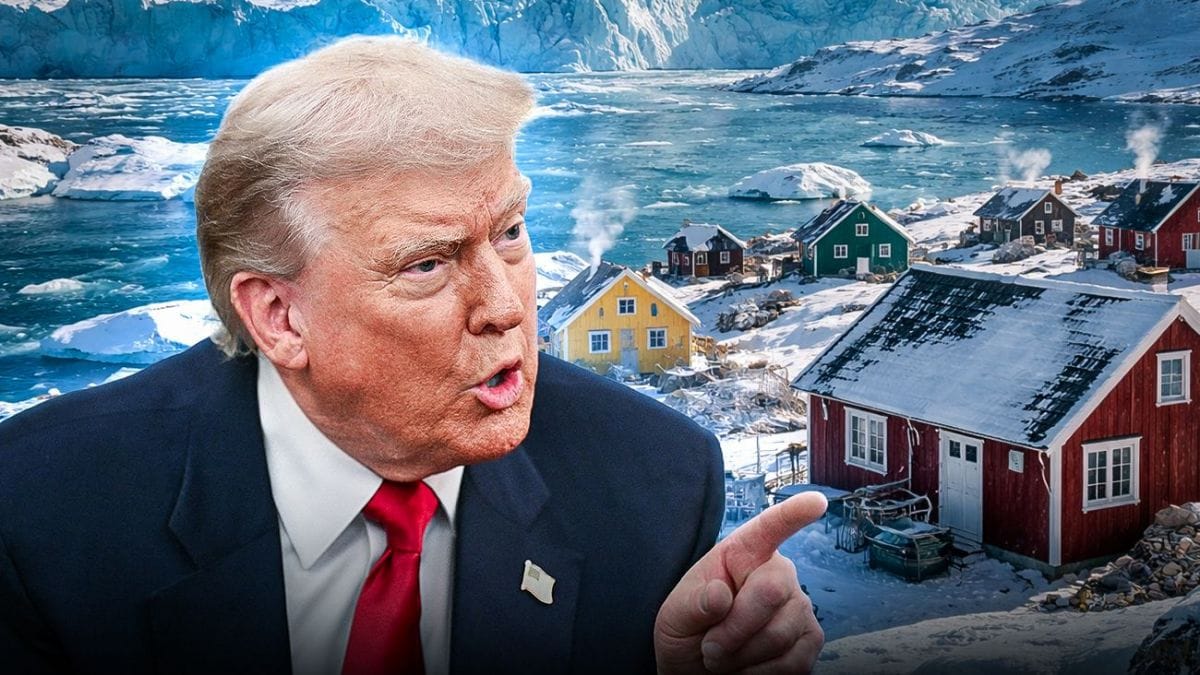
NEW YORK — U.S. stocks tumbled Tuesday after President Donald Trump renewed a tariff threat aimed at Europe over Greenland, pulling the S&P 500 down about 2.1% and the Nasdaq composite down about 2.4%. The Trump Greenland tariffs rippled through global markets as investors rushed into traditional havens and trimmed exposure to risk, Jan. 20, 2026.
Trump Greenland tariffs and the market shock
In the U.S., the selloff accelerated through the afternoon, leaving the S&P 500 at 6,796.86 and the Nasdaq at 22,954.32, levels that market watchers said reflected a broad “risk-off” reset rather than a single-sector wobble, according to a Reuters market report. A separate Associated Press recap of index moves described Tuesday as the steepest daily slide for major benchmarks since October, with technology shares among the hardest hit.
Trump’s weekend comments and subsequent posts tied the tariffs to his push for a deal that would put Greenland under U.S. control. Under the proposal described by Reuters, new levies would start at 10% on Feb. 1 and rise to 25% on June 1, applying to goods from Denmark, Norway, Sweden, France, Germany, the Netherlands, Finland and Great Britain unless an agreement is reached on Greenland, as laid out in a Reuters report on Trump’s tariff vow. Denmark and Greenland’s leaders have repeatedly rejected the idea of a sale.
Volatility measures jumped alongside the drop in equities. The Cboe Volatility Index (VIX) climbed above the psychologically important 20 level, a move often read as a sign that investors are paying up for protection against bigger swings; Cboe’s VIX dashboard tracks the gauge in real time.
In Europe, officials signaled they were preparing countermeasures while also seeking an off-ramp. EU trade officials discussed potential retaliation and other tools, including the bloc’s anti-coercion instrument, according to a Reuters report on Europe’s response planning. In Davos, U.S. Treasury Secretary Scott Bessent urged calm and played down fears of a new trade war, Reuters reported in coverage of his World Economic Forum comments.
Why Trump Greenland tariffs keep resurfacing
The standoff echoes Trump’s earlier Greenland push during his first term, when Greenland officials publicly rejected purchase talk. In 2019, Greenland’s foreign minister told Reuters the territory was “open for business” but not for sale, according to a Reuters report from Aug. 16, 2019. Denmark later approved a U.S. consulate in Greenland, Reuters reported in a Dec. 18, 2019 article, and the U.S. State Department announced the consulate’s reopening in Nuuk in 2020 in a public statement.
For investors, the immediate question is whether Trump Greenland tariffs remain a negotiating tactic or harden into a prolonged policy fight that hits growth, earnings and inflation expectations. Markets now face a week of economic updates and corporate results that could either calm nerves or amplify the volatility that surfaced so abruptly Tuesday.