

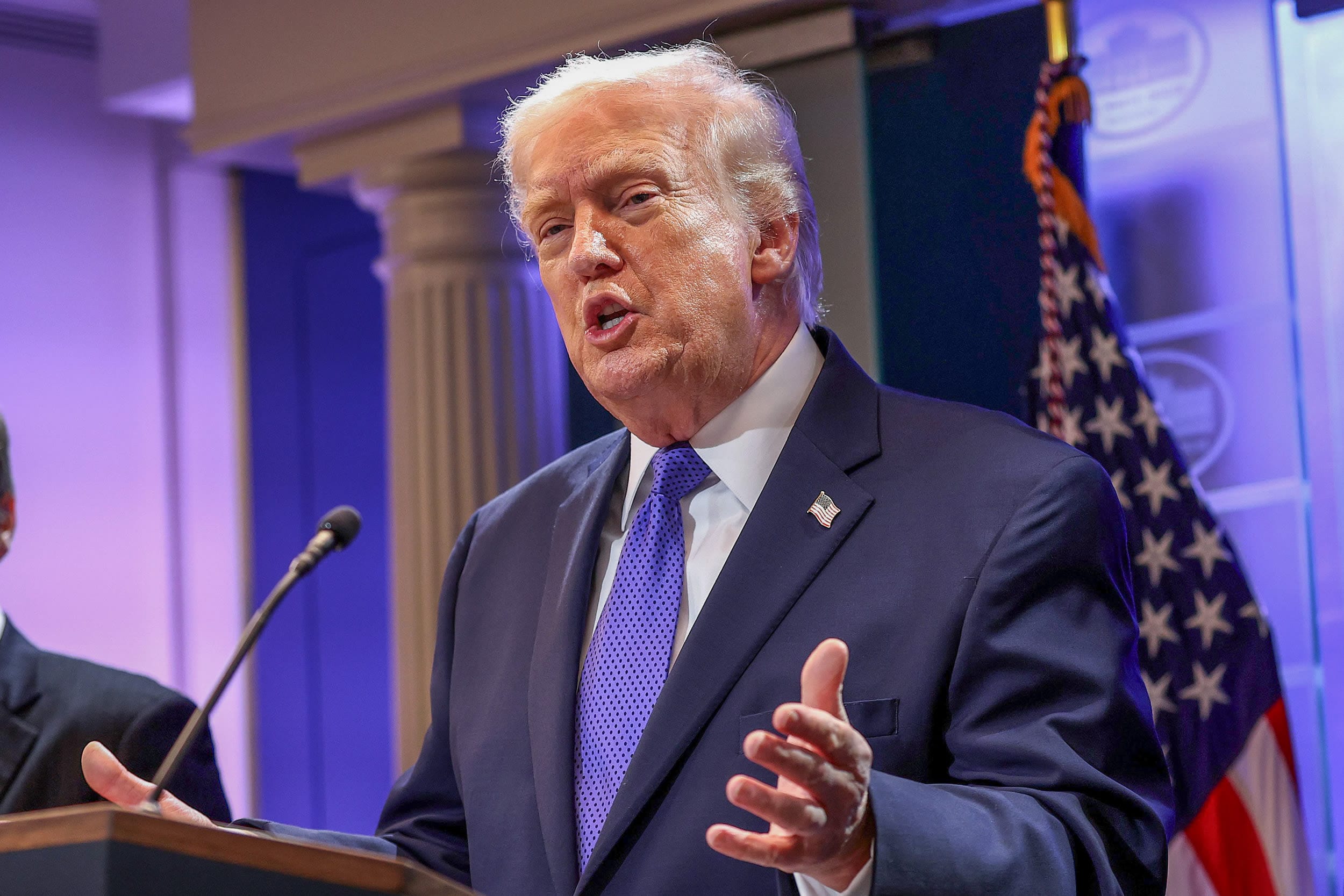
WASHINGTON — The Supreme Court’s 6-3 decision striking down President Donald Trump’s emergency-based import duties has opened a path for Trump tariff refunds that economists say could top $175 billion, even as the justices left the mechanics of repayment unresolved, Feb. 21, 2026.
The ruling says the 1977 International Emergency Economic Powers Act does not let a president unilaterally impose broad tariffs, pushing the next phase of the fight into specialized trade litigation and a claims process that could move far slower than the tariff collections did.
Trump tariff refunds: what the Supreme Court actually decided
In Learning Resources, Inc. v. Trump, the high court held that IEEPA “does not authorize the President to impose tariffs,” wiping out the legal basis for two major tariff buckets: “drug trafficking” duties aimed at imports from Canada, Mexico and China, and “reciprocal” duties that set a 10% baseline on imports from most countries, with higher rates for dozens of nations.
The court’s order also underscored how fragmented the litigation path had become. One suit that began in a federal district court was sent back with instructions to dismiss for lack of jurisdiction, while a companion case that began in the U.S. Court of International Trade was upheld — a sign that most refund battles are likely to run through the trade-law system rather than general federal courts.
The decision is sprawling and technical, but the takeaway for Trump tariff refunds is simple: Tariffs collected under IEEPA were collected without lawful authority. What the court did not do, however, is order an immediate, automatic repayment plan for every importer that paid the duties.
Chief Justice John Roberts wrote that Congress holds the power to “lay and collect” duties, and that IEEPA’s authority to “regulate … importation” cannot be stretched into an open-ended power to tax. For a plain-English walkthrough of the opinions and dissents — including Justice Brett Kavanaugh’s warning in dissent that refunds may be required even after some importers passed costs to consumers — see SCOTUSblog’s analysis.
How big could Trump tariff refunds get?
The Penn Wharton Budget Model estimate pegs potential Trump tariff refunds at “up to $175 billion,” based on how much revenue the now-invalid IEEPA tariffs generated since early 2025, when the duties began and then expanded across countries and products.
That is not a promised payout. It’s a ceiling on what could be claimed and ultimately repaid if importers successfully navigate the refund route and courts agree the government must return the money.
Why Trump tariff refunds could take years
The refund bottleneck is procedural. Customs duties are not typically repaid just because a policy loses in court; they are repaid through defined channels that depend on whether an import entry has been “liquidated” — the government’s final accounting of what is owed for a shipment.
A recent Congressional Research Service explainer says that, as of Dec. 10, 2025, the government told a court that about 19.2 million of roughly 34 million entries subject to the IEEPA tariffs were still unliquidated. For those shipments, the logic is relatively straightforward: when an entry liquidates, the government would calculate duties “required by law,” and refunds could follow if the now-invalid IEEPA tariffs are excluded from that liquidation calculation.
For already-liquidated entries, the CRS describes a protest window that is generally 180 days after liquidation, along with a maze of questions about whether IEEPA collections are “protestable” decisions and what kind of lawsuit, if any, is required when administrative routes are unavailable or futile. Even when a protest is allowed, the CRS notes that the government can take up to two years to review it unless the importer requests accelerated disposition — a built-in reason that Trump tariff refunds could take years for many filers.
Who actually gets Trump tariff refunds?
Even if courts ultimately require repayments, the refund check — if and when it comes — will track the party that paid the duty at the border. That is usually the importer of record, not necessarily the brand that sells the product, the distributor that absorbed higher costs, or the consumer who saw higher prices.
That mismatch is why Trump tariff refunds could trigger a second wave of disputes inside supply chains. Companies that contractually shifted tariffs to vendors or customers may face pressure to pass refunds back down the chain, while others may argue the refund should stay with the party that took on the legal risk and administrative burden.
What businesses can do now
Companies that think they are owed Trump tariff refunds are already shifting from politics to paperwork. Practical steps importers and their advisers often discuss include:
Identify affected entries by matching shipments to the now-invalid IEEPA duty lines.
Check liquidation status to understand which procedural lane applies.
Preserve deadlines where possible, because refund rights can turn on timing.
Document who bore the cost to prepare for downstream negotiations.
This is not legal advice, and the correct strategy can vary by importer, product and shipping timeline. But the point of the Trump tariff refunds fight is already clear: the winners will not only be those who paid the most, but those who can prove it and file correctly.
Trump’s next move: replace the revenue, keep the leverage
The Supreme Court ruling did not end tariff uncertainty. Trump moved quickly to replace the struck-down duties with a temporary 10% global tariff for up to 150 days under Section 122 of the Trade Act of 1974, while also teeing up new investigations that could support longer-lasting tariffs under other statutes, Reuters reported.
That pivot matters for Trump tariff refunds in two ways. First, it gives the administration a reason to argue that any repayment should be handled cautiously to avoid disrupting broader trade policy. Second, it means many importers may still be paying duties — just under a different label — even as they fight to recover the duties already collected under IEEPA.
A familiar pattern: tariff fights and refunds before IEEPA
Importers chasing Trump tariff refunds are not entering completely uncharted territory. In 2021, the U.S. Court of International Trade invalidated certain Section 232 steel and aluminum duties on “derivative” products and ordered refunds, a reminder that tariff disputes can turn into multi-year accounting exercises as well as legal battles. A summary of that earlier refund episode appears in this 2021 analysis from Global Compliance News.
And while the current case is about emergency powers, the underlying economic stakes echo years of debate over how tariffs reshape prices and supply chains. A 2023 U.S. International Trade Commission report reviewed the economic impact of Section 232 and Section 301 tariffs on U.S. industries, offering context for why businesses fought over duties long before the IEEPA tariffs arrived.
Bottom line
The Supreme Court shut the door on IEEPA as a tariff tool. It also opened a potentially enormous window for Trump tariff refunds. What comes next will be less about speeches and more about liquidation dates, filings and years of litigation — with $175 billion worth of incentives to keep fighting.


