

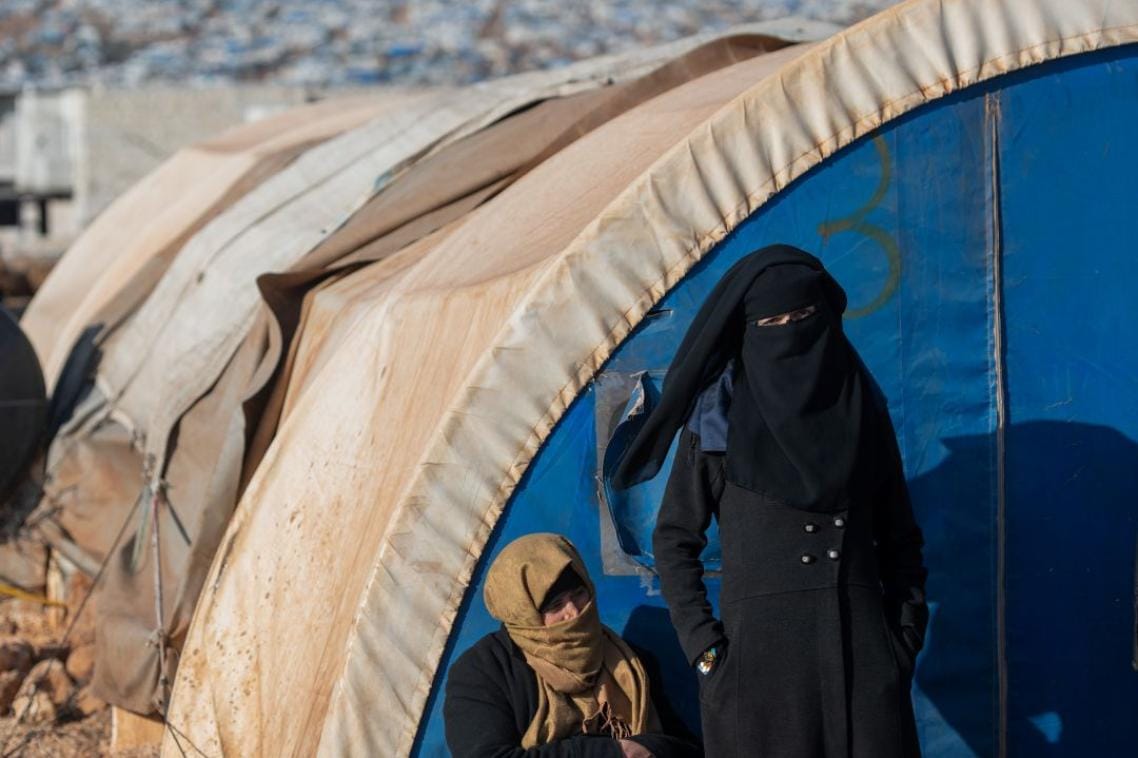
CANBERRA, Australia — Australia’s government on Sunday rejected reports it is coordinating an Australia ISIS repatriation effort to help 34 women and children linked to suspected Islamic State fighters leave Syria’s Roj detention camp in northeast Syria. Ministers said the Commonwealth is not assisting the cohort’s return and is preparing to pursue prosecutions if anyone comes back and is suspected of breaking Australian law, Feb. 22, 2026.
The dispute centers on what “help” means in practice: arranging travel out of Syria versus processing documents that citizens can legally request. The women and children have been held for years in Kurdish-run camps after the collapse of the Islamic State group’s self-declared “caliphate.”
Australia ISIS repatriation claim draws denial from Burke and Albanese
Home Affairs Minister Tony Burke issued the sharpest pushback after a domestic report suggested officials were organizing the group’s return and briefing states on preparations. In comments carried by Reuters, Burke said assertions that the government was “conducting a repatriation” were wrong and that claims of meetings with states “for the purposes of a repatriation” were also incorrect.
Prime Minister Anthony Albanese has repeatedly drawn a line between citizens returning under their own steam and government-facilitated travel, saying Canberra will not “provide assistance or repatriation” for the cohort. The Australia ISIS repatriation debate has become a flashpoint in domestic politics because it intersects with counterterrorism policy, public safety fears and questions about Australia’s responsibilities to children who hold citizenship.
Australia ISIS repatriation: what happened when the cohort tried to leave Roj camp
The 34 people — from 11 families — briefly left the camp earlier this week in a convoy headed for Damascus before being turned back. ABC News reported the group was stopped after Syrian government authorities did not allow the convoy to continue, forcing a return to the camp.
Officials and advocates have pointed to the uncertain security and diplomatic environment as a complicating factor. Even if individuals hold Australian passports, leaving northeast Syria can involve multiple authorities, shifting checkpoints and uncertain paperwork requirements. The government has stressed it is monitoring the situation so agencies are “prepared for any Australians seeking to return,” while maintaining it is not arranging the travel.
Australia ISIS repatriation and temporary exclusion orders
One point of near-consensus in the Australia ISIS repatriation dispute is that the government’s strongest immediate tool is legal, not logistical. Burke confirmed the use of a Temporary Exclusion Order (TEO) for one individual, which can delay an Australian citizen’s return while authorities complete security and law-enforcement steps.
In an official transcript of his ABC 7.30 interview, Burke said the decision was triggered by “reports” the group might be moving and noted the law does not allow TEOs for anyone under 14. He also described the order’s mechanics, saying it creates a two-year period in which a return permit must ultimately be issued if applied for, but can be structured to delay arrival while agencies do further work.
That legal framing feeds directly into the government’s public posture: Canberra says it will not run an Australia ISIS repatriation operation, but it will apply existing laws — including passport and exclusion-order rules — and act on security-agency advice case by case.
Assistant Foreign Minister Matt Thistlethwaite made a similar argument in a Sky News interview, saying the government had “provided no assistance whatsoever,” while also emphasizing that citizens are entitled to apply for passports under the law.
Australia ISIS repatriation in context: a contested policy since 2019
The current standoff is the latest chapter in a yearslong Australia ISIS repatriation saga that has moved in fits and starts, often following court action, humanitarian pressure or changes in government.
In October 2022, Australia repatriated four women and 13 children from a Syrian camp after individual assessments by national security agencies, according to a contemporaneous Reuters report. That operation followed an earlier, smaller extraction in 2019 and underscored that Canberra can act when it chooses to coordinate returns.
Human rights organizations have argued that prolonged camp detention exposes children to violence, poor health care and radicalization risks. A 2022 Human Rights Watch report said many repatriated children from northeast Syria were reintegrating well in home countries and urged Australia to move more urgently to bring back remaining women and children.
But legal efforts to compel government action have fallen short. In November 2023, the Guardian reported a Federal Court ruling that Australia had no legal obligation to repatriate a group of women and children from Syrian camps, a decision that has shaped the political and legal arguments ever since.
What happens next
Even as ministers insist there will be no Australia ISIS repatriation mission, they have signaled agencies are preparing for the possibility that some members of the cohort could still reach Australia. That could mean interviews, monitoring, potential prosecutions where evidence supports charges, and child-welfare interventions for minors.
For now, the government’s message is consistent: it rejects claims of logistical assistance, says it will apply the law on passports and exclusion orders, and warns that anyone who returns and is found to have committed terrorism-related offenses will face the justice system. The next practical test for Australia ISIS repatriation policy may come not from Canberra’s planning, but from whether Syrian and Kurdish authorities allow the group to attempt the journey again.


