

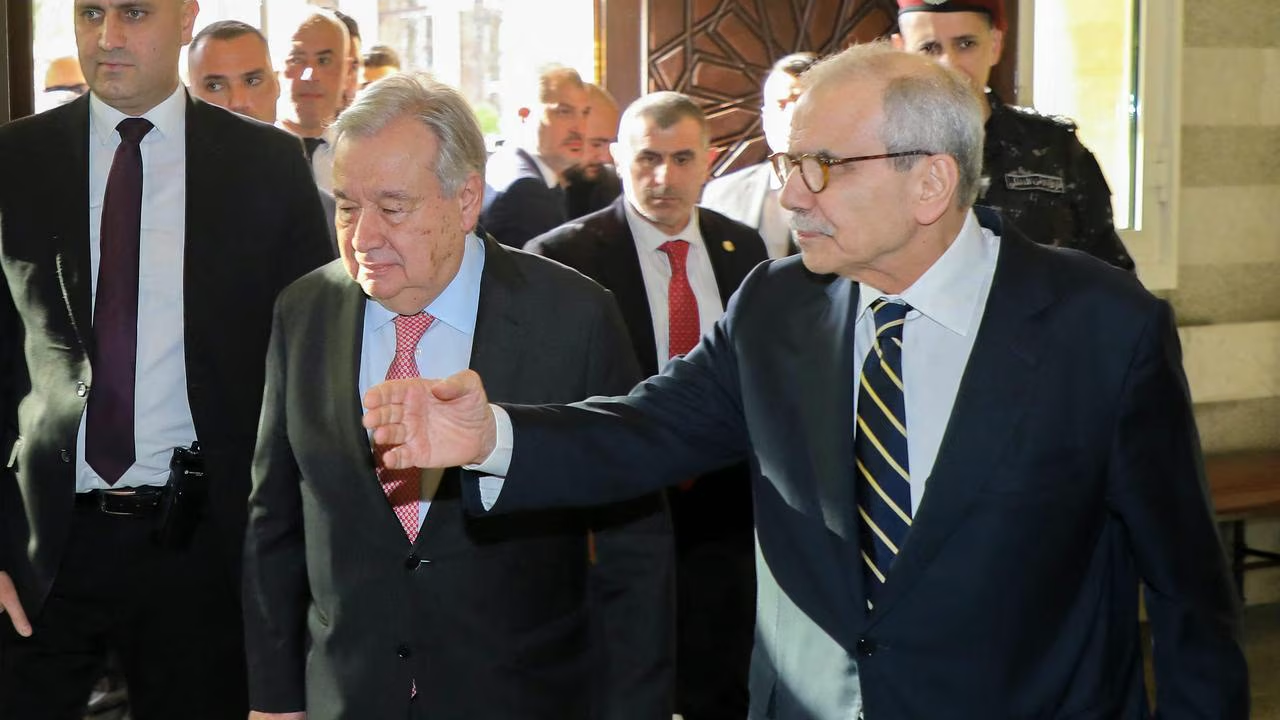
BEIRUT, Lebanon — Iran said Monday its envoy to Lebanon, Mohammad Reza Shibani, will remain in Beirut despite a Lebanese order requiring him to leave by March 29. The refusal has turned a diplomatic dispute into a broader test of whether Beirut can enforce state authority over foreign influence, armed groups and the question of who decides war and peace, March 30, 2026.
The issue is no longer only about one diplomat. It is about whether the Lebanese state can set and enforce red lines while Hezbollah, Tehran’s closest ally in Lebanon, remains central to a war that has already killed more than 1,200 people and displaced over 1 million, according to Reuters’ latest report from Beirut.
Why the Iran envoy to Lebanon standoff matters
Lebanon’s foreign ministry withdrew Shibani’s accreditation, declared him persona non grata and gave him until March 29 to depart after saying he had violated diplomatic norms by commenting on Lebanese internal politics. The move, detailed by The Associated Press, came alongside a broader government push that declared Hezbollah’s military activity illegal and demanded the group hand its weapons to the state, even as Beirut stopped short of severing diplomatic ties with Tehran.
The order immediately exposed Lebanon’s internal divisions, with Hezbollah and allied figures denouncing it. The broader clash has also been intensified by the regional war: Reuters reported on March 25 that Iran told intermediaries Lebanon had to be included in any ceasefire arrangement with the United States and Israel, underscoring that Tehran still sees the Lebanese front as part of its wider bargaining position.
That helps explain why the envoy issue has hit such a nerve inside Lebanon. By mid-March, Reuters was already reporting that disarming Hezbollah was being framed as a key condition for ending the conflict, putting Beirut under pressure to show it can do more than issue statements.
This sovereignty test has been building for months
This week’s showdown also fits a longer pattern. In February 2025, Lebanon blocked an Iranian civilian flight to Beirut after Israeli accusations that cash was being moved for Hezbollah, triggering a standoff in which Iran then barred Lebanese planes from bringing stranded citizens home.
By August 2025, Lebanon’s president was publicly telling a visiting Iranian official that no armed group in the country could keep weapons or rely on foreign backing, signalling that the sovereignty debate had already moved from rhetoric to declared policy.
And in September 2025, the Lebanese government hit another crunch point over a plan to disarm Hezbollah, showing that the current row over Shibani is part of the same unresolved fight over whether the state can outmatch the armed and political leverage of Hezbollah.
What Beirut does next
Lebanon now faces an awkward choice. It can absorb Iran’s refusal and risk making its expulsion order look symbolic, or it can press the matter harder and invite a sharper internal confrontation with Hezbollah and its allies.
That is why Shibani’s continued presence matters beyond protocol. If the order is ignored without consequence, the episode will reinforce a longstanding Lebanese fear that state authority is still negotiable when it collides with Tehran’s interests. If Beirut pushes back, it will have to show it can do more than issue statements.


