

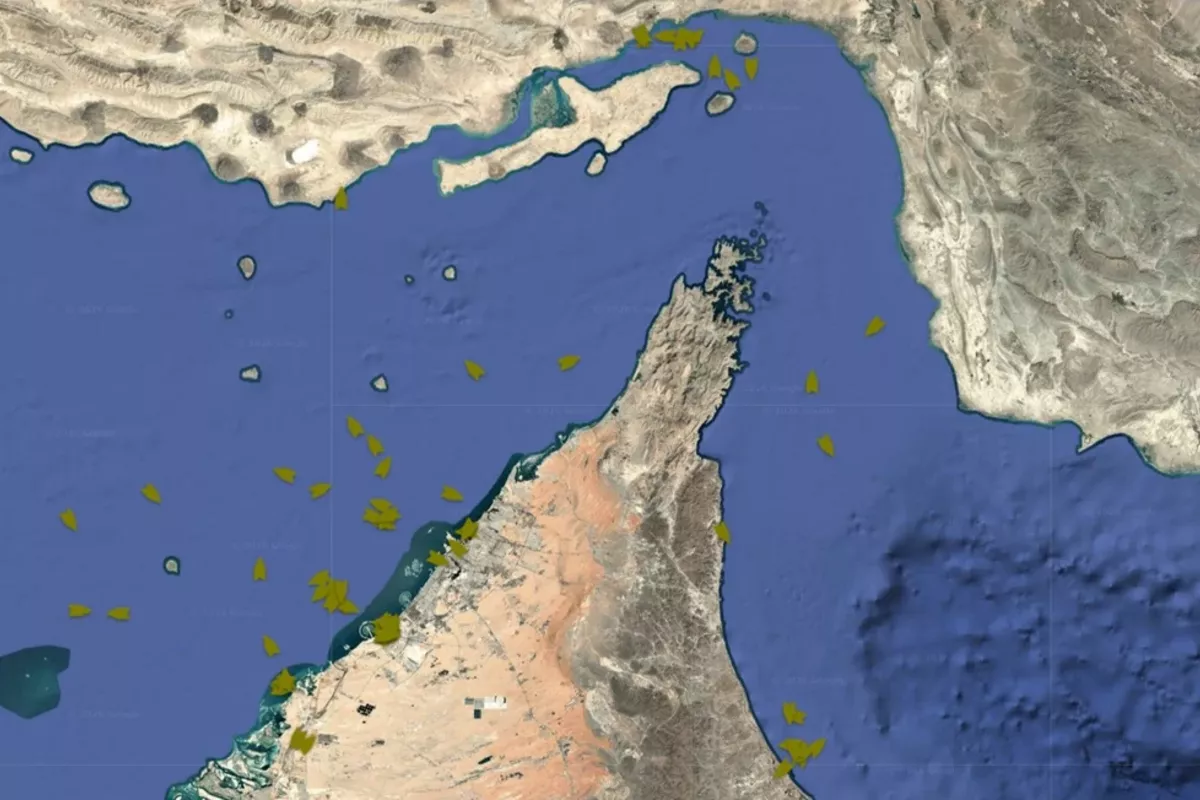
The dispute escalated after Iran reversed a brief reopening of the strait and renewed limits on commercial traffic, with The Associated Press reporting that ships held position after two India-flagged vessels were fired on during attempted transits. The latest turn has left tanker operators, energy traders and governments trying to assess whether the crisis is moving toward another short pause or a wider military confrontation.
Strait of Hormuz becomes the center of the energy standoff
The Strait of Hormuz is not just another shipping lane. It is the narrow outlet from the Persian Gulf to the Gulf of Oman and the Arabian Sea, making it the main route for crude oil, petroleum products and liquefied natural gas from several Gulf producers. The International Energy Agency says about 20 million barrels per day of crude oil and oil products moved through the strait in 2025, roughly a quarter of the world’s seaborne oil trade.
That concentration gives the current crisis global reach. A prolonged disruption would affect Asian buyers first because much of the oil and gas moving through the waterway is bound for China, India, Japan, South Korea and other import-dependent economies. But the price impact would spread quickly, because crude and refined fuel prices are set in global markets.
The United States has framed its action as a targeted maritime blockade of Iranian ports and coastal areas. In its formal notice, U.S. Central Command said the blockade would apply to vessels entering or leaving Iranian ports but would not impede ships transiting the Strait of Hormuz to and from non-Iranian ports. Iran argues that the measure violates the ceasefire framework and says it will not allow others to benefit from the passage while Iranian maritime trade is constrained.
Talks continue, but the blockade dispute clouds diplomacy
Diplomacy has not stopped, but it remains fragile. Reuters reported that U.S. President Donald Trump and Iranian officials both cited progress in talks, even as major gaps remained over nuclear issues and the Strait of Hormuz. The same uncertainty has kept shipping companies cautious, with vessels waiting for clearer signals before attempting passage.
The immediate risk is that a tactical maritime incident could outrun diplomacy. A warning shot, damaged vessel, misread naval maneuver or strike on a tanker could force either side to respond more aggressively. That is why the crisis is being watched not only by governments in Washington and Tehran, but also by energy ministries, shipping insurers, commodity desks and airlines that depend on stable fuel supplies.
The economic concern is already visible. In a joint statement, the heads of the International Energy Agency, International Monetary Fund and World Bank Group warned that shipping through the Strait of Hormuz had yet to normalize and that higher oil, gas and fertilizer prices could hit energy importers and low-income countries especially hard. That warning underscores how a naval standoff can quickly become a cost-of-living problem far from the Gulf.
Older Hormuz flashpoints show why markets react fast
The Strait of Hormuz has been a recurring pressure point for decades, which is why markets often respond sharply to threats there. In 1988, the U.S. Navy launched Operation Praying Mantis after USS Samuel B. Roberts struck an Iranian mine; the Naval History and Heritage Command account describes the operation as retaliation against Iranian targets in the Arabian Gulf. That episode remains a reminder that shipping disputes in the Gulf can quickly become direct U.S.-Iran military clashes.
More recent confrontations also shape today’s fears. In 2011, during a sanctions dispute tied to Iran’s nuclear program, Reuters reported that Iran threatened to stop Gulf oil flows if foreign sanctions were imposed on its crude exports. The threat did not close the strait, but it showed how Iran has repeatedly used the waterway as leverage when economic pressure rises.
The 2019 tanker crisis added another layer of mistrust. Iran said it had seized the British-flagged Stena Impero in the Strait of Hormuz, while London said it was seeking a diplomatic resolution and warned of serious consequences; Reuters covered the seizure as part of a broader rise in Gulf tensions after the U.S. withdrawal from the 2015 nuclear deal. That history makes shipowners more sensitive to any sign that commercial vessels could again become bargaining chips.
What happens next for the Strait of Hormuz crisis
The next phase depends on whether negotiators can separate the port blockade dispute from broader nuclear and security talks. A narrow understanding could allow non-Iranian commercial traffic to resume while talks continue over sanctions, nuclear restrictions and Iranian export access. A wider failure could leave both sides enforcing competing restrictions in the same crowded maritime corridor.
Energy markets will be watching three signals: whether tankers begin moving through the strait in meaningful numbers, whether the U.S. modifies or clarifies enforcement of the Iranian port blockade, and whether Iran’s navy or Revolutionary Guard forces continue to challenge commercial ships. Even a partial reopening may not immediately restore normal flows because insurers, crews and shipowners will need confidence that the route is safe.
For now, the Strait of Hormuz crisis remains a test of how far each side is willing to go without triggering a broader war. The danger is that the waterway’s importance gives both Washington and Tehran leverage, but also gives the world economy very little room for error.


