

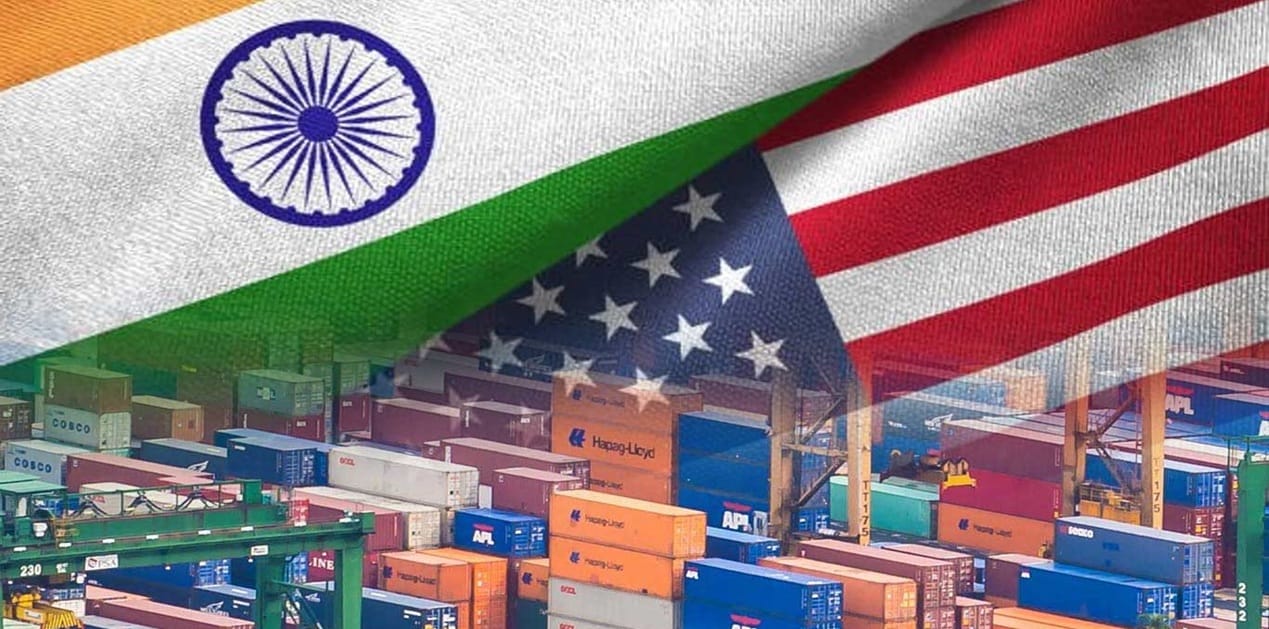
WASHINGTON — President Donald Trump said Monday that the United States and India have reached a U.S.-India trade deal that would cut U.S. tariffs on Indian goods to 18% and commit New Delhi to ending purchases of Russian oil. The agreement, announced after a call with Prime Minister Narendra Modi, is intended to ease a tariff standoff and shift India toward more U.S. energy and lower barriers for American exporters, Feb. 2, 2026.
Trump outlined the U.S.-India trade deal in a social media post, and Reuters reported the effective rate would drop from 50% to 18% by removing a Russia-related duty while lowering a country-specific tariff. The report said the initial announcement provided few details, including when the lower rates would start and how fast India would need to end Russian oil purchases.
What the U.S.-India trade deal includes
Trump said India would “BUY AMERICAN at a much higher level” and move to reduce its tariffs and non-tariff barriers against the United States “to ZERO,” without laying out a product list or timetable.
An Indian government official said New Delhi’s purchase commitments span petroleum, defense goods, electronics, pharmaceuticals, telecom products and aircraft and would roll out over several years, according to a Reuters report from New Delhi. Investors cheered: the report said India’s Nifty 50 climbed nearly 3% and the rupee rose more than 1% to about 90.40 per dollar in early Tuesday trading. U.S.-listed shares of major Indian companies and the iShares MSCI India exchange-traded fund also rose after the announcement, Reuters said.
How the U.S.-India trade deal ties to Russian oil
Indian refiners told Reuters they would need a wind-down period to fulfill cargoes already booked for February and March and said they had not yet received a formal government order to stop imports, according to a separate Reuters report. Modi welcomed the reduced tariff rate in his own post but did not mention Russian oil, the report said.
The Associated Press reported the tariff rate on Indian products had climbed to a combined 50% after two 25% increases last year, one explicitly tied to India’s purchases of Russian oil, and said the new arrangement would bring the rate down to 18% if the commitments are carried out.
How we got here
Trade frictions between Washington and New Delhi predate the latest dispute. In 2019, the U.S. Trade Representative announced plans to end India’s duty-free benefits under the GSP program, and Reuters reported in 2020 that Trump and Modi hoped negotiations could produce a “phase one” agreement. Russia’s 2022 invasion of Ukraine later reshaped the energy debate, and Reuters reported that India’s imports of discounted Russian crude surged as global buyers shunned Moscow.
For now, both governments are presenting the U.S.-India trade deal as a starting point. Businesses and markets will be watching for formal legal notices to change U.S. tariff rates, clearer timelines for replacing Russian barrels, and the detailed terms that would turn political promises into enforceable trade policy.


