

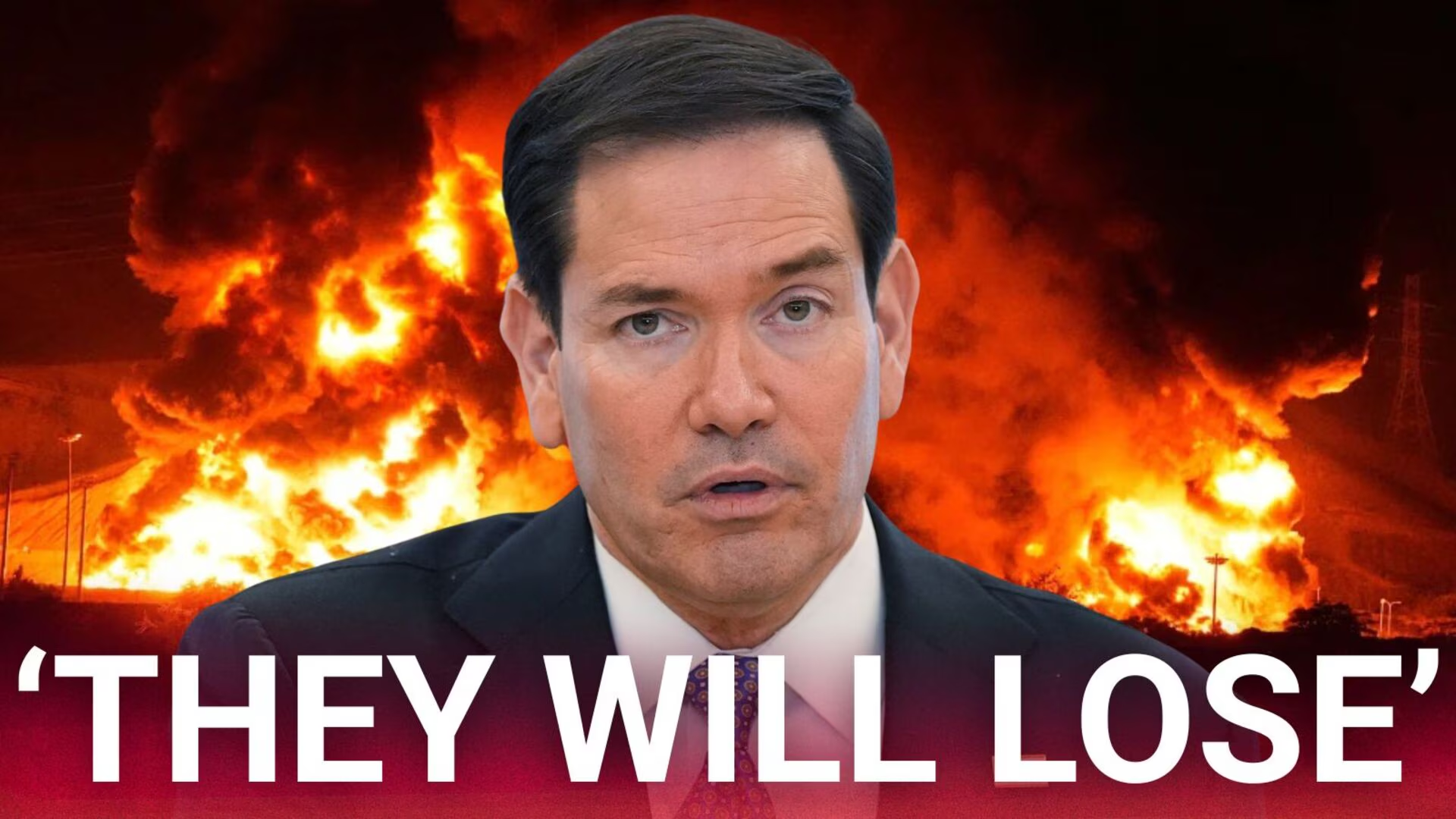
Marco Rubio Iran Warning Signals Hardening U.S. Position
The Marco Rubio Iran Warning underscores a broader shift in U.S. political rhetoric toward a more aggressive deterrence posture in the Middle East. Rubio, a longtime advocate for stricter policies against Tehran, emphasized that repeated harassment of U.S. naval forces in international waters could trigger direct military consequences.
The warning follows increased maritime incidents involving fast-attack boats operating near U.S. and allied vessels, particularly in and around the Strait of Hormuz, a critical chokepoint for global oil shipments.
Similar tensions have been documented in previous years, including heightened confrontations in 2019 when Iranian vessels were accused of harassing commercial tankers, according to reporting by
BBC coverage of Gulf maritime tensions.
Marco Rubio Iran Warning and US Military Response Posture
U.S. defense officials have reiterated that any attack on American naval forces would be met with “appropriate defensive measures,” a stance that includes the potential destruction of hostile small craft if they are deemed an imminent threat. The Pentagon has not confirmed any recent strikes but has increased surveillance and naval presence in the region.
Historical incidents continue to shape current policy. In 2023, reports of Iranian-linked forces seizing commercial vessels heightened concerns over maritime security, as detailed by
Reuters reporting on Iran-U.S. tensions.
Marco Rubio Iran Warning Amid Rising Naval Encounters
The Marco Rubio Iran Warning also comes at a time when the U.S. Navy has expanded escort operations for commercial shipping in the Middle East. Officials say the goal is to deter harassment and ensure freedom of navigation through international waters.
Iranian state-aligned maritime units have previously been accused of aggressive maneuvering near U.S. vessels, including incidents documented by international observers and defense analysts. Broader context on these confrontations has been tracked by
Associated Press reporting on Iran-related naval incidents.
Marco Rubio Iran Warning Reflects Longstanding Regional Tensions
The latest warning reflects long-standing friction between the United States and Iran, particularly following the collapse of the 2015 nuclear agreement and subsequent sanctions regimes. Maritime flashpoints have remained a persistent feature of this geopolitical rivalry.
Analysts note that similar escalatory cycles occurred in past years, including 2020 naval confrontations in the Persian Gulf that brought both nations to the brink of direct military conflict. Broader geopolitical analysis of these trends can be found through
Al Jazeera’s coverage of Iran-related developments.
Marco Rubio Iran Warning and Strategic Deterrence Debate
Defense analysts are divided over the implications of the renewed rhetoric. Some argue that a stronger deterrence posture reduces the likelihood of miscalculation at sea, while others warn it increases the risk of rapid escalation in already volatile waters.
The U.S. Navy has continued operations across the region under U.S. Central Command, focusing on safeguarding commercial shipping lanes and allied naval assets, as tracked in defense reporting by
U.S. Naval Institute News coverage.
Outlook on the Marco Rubio Iran Warning
The evolving Marco Rubio Iran Warning highlights the fragility of maritime security in the Gulf and the potential for rapid escalation between U.S. and Iranian forces. With global energy routes passing through the region, any further confrontation could carry significant economic and geopolitical consequences.
As Washington signals a tougher stance, diplomatic channels remain limited, and regional observers continue to monitor whether heightened rhetoric will translate into operational engagement or renewed negotiations.


