

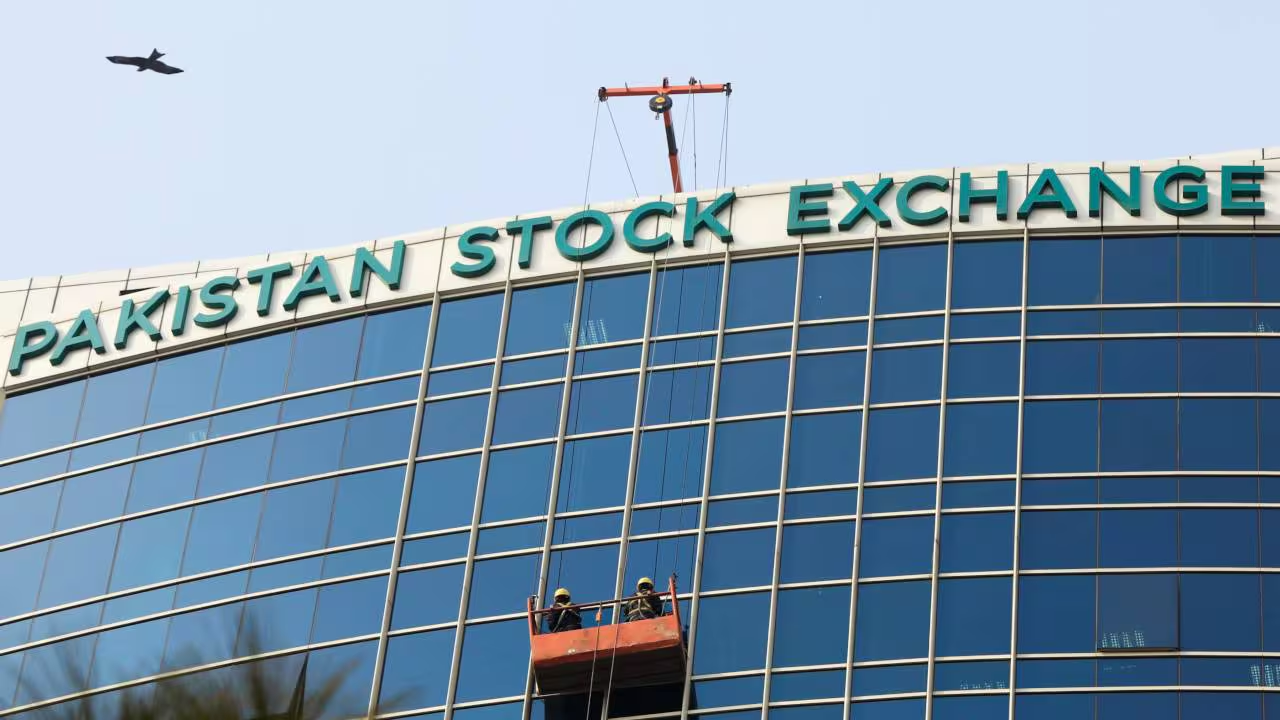
KARACHI: The Pakistan Stock Exchange (PSX) witnessed a sharp downturn on Monday as escalating geopolitical tensions between the United States and Iran triggered a wave of risk aversion across global financial markets, dragging down investor sentiment and accelerating selling pressure across key sectors. The benchmark KSE-100 index fell significantly amid fears that worsening Middle East instability could disrupt oil supply routes and deepen inflationary pressures worldwide, May 11, 2026.
Pakistan Stock Exchange under pressure as geopolitical risks intensify
The Pakistan Stock Exchange extended its losses as renewed US-Iran hostilities unsettled regional markets, particularly after concerns emerged over the Strait of Hormuz—a critical global energy corridor. Investors reacted swiftly to reports of escalating military activity and diplomatic breakdowns, which added fresh uncertainty to already fragile economic conditions.
Market analysts noted that the selloff was largely driven by foreign outflows and cautious institutional positioning, as global equities also turned volatile amid fears of prolonged conflict. Similar pressure had already been building in recent sessions, with earlier declines seen as tensions first intensified in the region. In one of the recent sessions, the PSX had already dropped sharply as geopolitical risks escalated, reflecting growing investor anxiety in this earlier market report.
Escalating tensions weigh on investor confidence
The latest downturn follows a series of volatile trading sessions in which the PSX has remained highly sensitive to developments in the Middle East. Analysts say uncertainty surrounding US-Iran negotiations, coupled with intermittent clashes in strategic maritime zones, has kept risk appetite subdued.
Earlier in April, the market also came under heavy selling pressure when stalled diplomatic talks and concerns over the Strait of Hormuz disrupted investor sentiment, pushing the benchmark index lower as traders rushed to reduce exposure according to a previous market analysis. Similarly, another downturn was recorded when geopolitical uncertainty triggered a broader selloff across multiple sectors as reported in this earlier coverage.
Pakistan Stock Exchange reflects global market volatility
The impact of US-Iran tensions has not been limited to Pakistan. Global markets have also reacted sharply, with Gulf equities retreating and energy prices fluctuating on concerns over supply disruptions. Regional indices across the Middle East have posted mixed to negative performances as investors continue to price in geopolitical risk premiums.
More recently, Gulf stock markets also declined following renewed deadlock in US-Iran negotiations, highlighting how closely regional equities are tied to developments in the conflict. Oil markets, meanwhile, have remained highly sensitive to any diplomatic signals, swinging between optimism and fear over potential supply shocks as detailed in this Reuters report.
Market outlook remains uncertain
Analysts warn that continued volatility in the Pakistan Stock Exchange is likely unless there is a clear de-escalation in US-Iran tensions or a breakthrough in diplomatic talks. With inflation concerns, energy price uncertainty, and foreign investor caution all in play, the market is expected to remain highly reactive to geopolitical headlines in the coming weeks.
While some analysts believe that intermittent peace signals could stabilize sentiment temporarily, others caution that any renewed escalation could trigger further downside pressure, particularly in energy-sensitive and banking sectors.
Conclusion
The PSX’s latest decline underscores its vulnerability to external geopolitical shocks, especially those tied to global energy security. As US-Iran tensions continue to evolve, investor sentiment in Pakistan is likely to remain fragile, with markets closely tracking diplomatic developments and crude oil movements for direction.


