

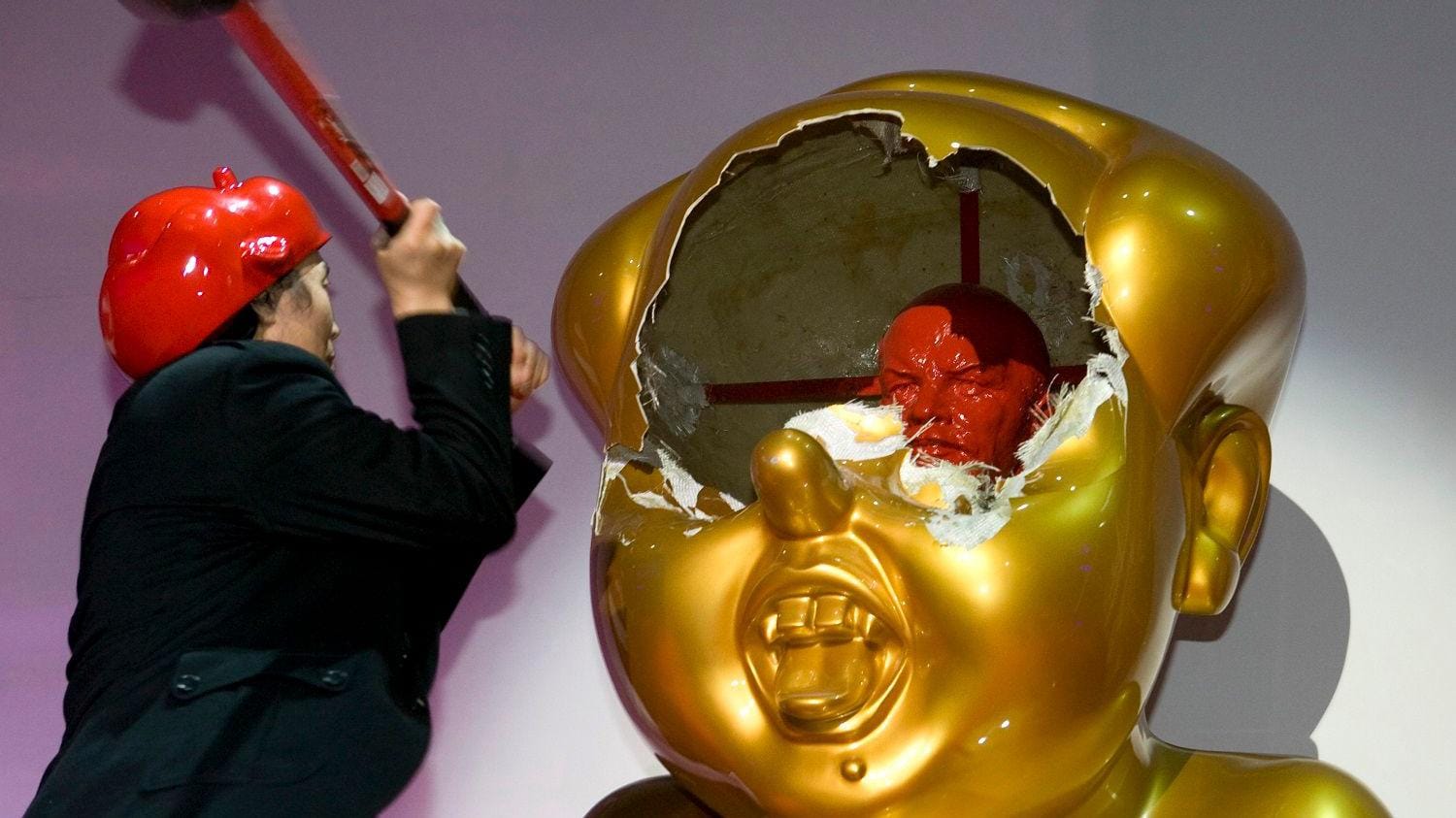
HONG KONG — Chinese authorities are holding artist Gao Zhen in pretrial detention more than a year after charging him under China’s “heroes and martyrs” law, while his wife and 7-year-old U.S.-citizen son remain blocked from leaving the country, relatives and rights groups say. Advocates argue the case shows how Beijing is using vague “historical memory” crimes and sweeping exit bans to punish dissent and pressure families, Dec. 9, 2025.
Chinese police first detained Gao Zhen, 69, in the northern city of Sanhe on Aug. 26, 2024, while he was visiting from the United States with his wife, Zhao Yaliang, and their son, Gao Jia. In an urgent action, Amnesty International identifies him as a prominent Chinese artist and U.S. permanent resident who now faces up to three years in prison on charges of “slandering heroes and martyrs.”
Health risks mount for Gao Zhen as trial repeatedly delayed.
The case against Gao Zhen centers on satirical Mao Zedong sculptures and other works he created with his brother more than 15 years ago, long before Beijing added the “heroes and martyrs” offense to the criminal code in 2021. Reports in foreign media say the artist has now spent more than 400 days in custody awaiting trial, sharing a crowded cell with more than a dozen inmates. In contrast, relatives say he is suffering from arteriosclerosis and other health problems that are going untreated in detention.
Lawyers and campaigners argue that prosecutors are effectively applying the law retroactively by targeting artwork produced before the legislation existed, raising serious concerns about due process and basic legal certainty. They also note that the authorities have not publicly announced a trial date for Gao Zhen, despite earlier indications that proceedings could begin in mid-2025.
Exit ban traps Gao Zhen’s young son and wife in China.
While Gao Zhen waits behind bars, his wife and son remain stranded in China under an opaque exit ban that has drawn particular outrage because the child is a U.S. citizen. The family’s attempt to leave the country was blocked at the border, and they have since been forced to live on the outskirts of Beijing under close surveillance, according to rights groups and a detailed account first reported by the Washington Post.
The Dui Hua Foundation, which monitors Chinese court cases, has condemned the use of exit bans against Gao Zhen’s family and warned that Beijing is increasingly using such measures against people who are not accused of any crime, including foreign nationals and children. Advocates say the restrictions on Gao Jia, now seven, amount to collective punishment aimed at squeezing the artist and discouraging public advocacy on his behalf.
‘Heroes and martyrs’ law used far beyond Gao Zhen.
The legal basis for the case is China’s Law on the Protection of Heroes and Martyrs, adopted in 2018 to shield officially celebrated figures from perceived “defamation” and later reinforced through a 2021 criminal-code amendment. Legal analysts note that the statute’s vague language regarding the protection of “honor and reputation” has given prosecutors broad discretion to target historians, journalists, and artists whose work challenges the Communist Party’s narrative of the past.
Even before Gao Zhen’s arrest, the law had been used against online commentators. In 2021, Newsweek reported that blogger Qiu Ziming became the first person criminally charged under the measure after questioning the official death toll in a border clash with India. This case signaled how criticism of the military could be recast as an attack on “heroes and martyrs.” That prosecution followed years of warnings from experts who, as earlier coverage noted, feared the law would chill public debate about sensitive episodes in Chinese history.
Commentary from independent outlets such as China Digital Times has described the legislation as part of a broader “memory politics” campaign, with authorities insisting that courts, platforms, and schools police speech that “distorts” or “slanders” Party-approved heroes.
Growing international pressure before a possible verdict
The pressure on Beijing over Gao Zhen has increased steadily as his detention has stretched past the one-year mark. In October, Human Rights Watch urged Chinese authorities to drop the charges and release him, arguing that his prosecution for nonviolent artwork violates fundamental rights to free expression and artistic freedom.
More than two dozen groups, including Freedom House, issued a joint statement on the first anniversary of his detention, calling the case “a chilling warning to artists everywhere” and urging foreign governments to press for his release and the lifting of exit bans on his family. In Washington, a bipartisan House bill that focuses on Chinese human rights abuses cites Gao Zhen’s ongoing detention explicitly as evidence of the risks facing U.S. residents who return to China.
For now, Gao Zhen remains in legal limbo, sketching and writing from his cell while supporters outside the country campaign for his freedom. With his health reportedly deteriorating and his young son still unable to leave China, rights advocates say the stakes of his case go well beyond a single artist — testing how far Beijing is prepared to go in enforcing loyalty to its officially sanctioned “heroes and martyrs,” and how forcefully the rest of the world is willing to respond.


