

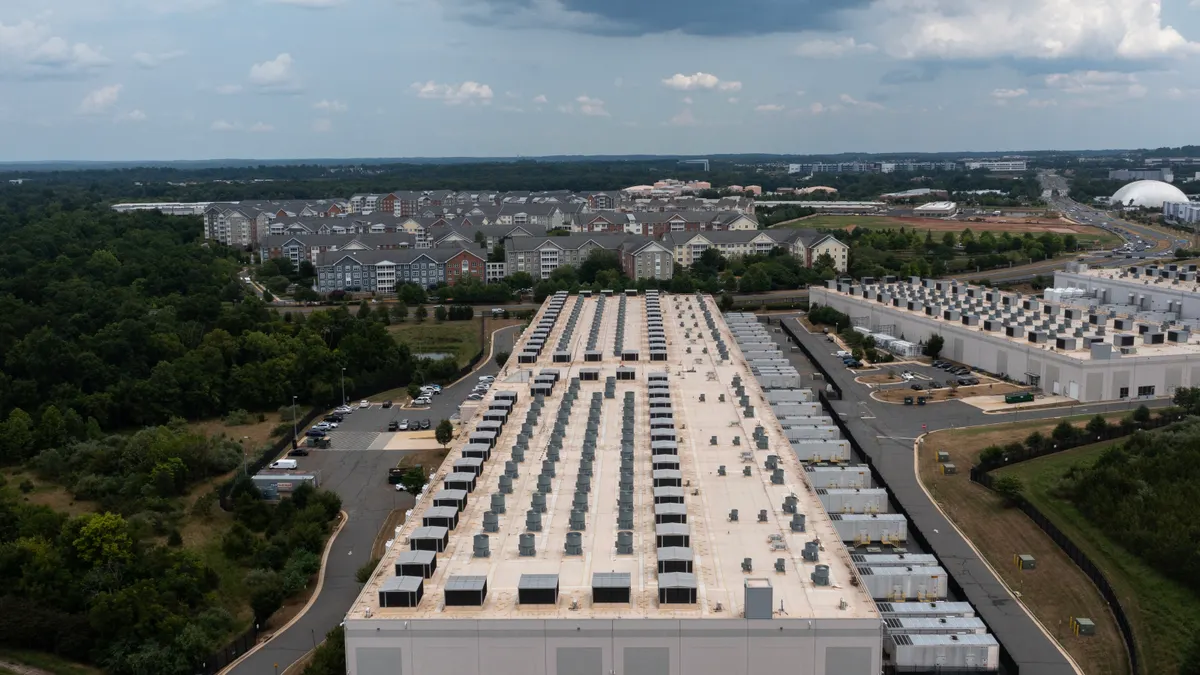
CAMBRIDGE, England — Researchers said in a March 2026 preprint that AI data centers may be creating localized heat islands that raise surrounding land surface temperatures by an average of 2 degrees Celsius and could affect more than 340 million people worldwide. The study, which has not yet been peer-reviewed, tracked satellite heat patterns around large facilities over two decades and suggests the waste heat from hyperscale computing and cooling may be spilling far enough into surrounding communities to become a local climate issue.
The authors analyzed land-surface temperature records from 2004 to 2024 around thousands of large AI sites and found average surface warming of 2.07 degrees Celsius after operations began. In the strongest cases, the rise reached 9.1 degrees Celsius, and the warming footprint extended as far as 10 kilometers, or about 6.2 miles. To reduce interference from existing city heat, the team focused on facilities outside highly dense urban areas and then estimated how many people live within the affected zones.
The distinction matters: the paper measured land surface temperature, not direct street-level air temperature. Even so, warmer roofs, pavement and surrounding ground can still intensify local heat exposure and raise cooling needs in communities that are already dealing with hard surfaces, traffic corridors and industrial development.
Why AI data centers can create local heat islands
The mechanism is straightforward. Servers generate heat, and the larger the computing load, the more heat operators must move out of the building to keep hardware stable. That means the environmental conversation around AI data centers is no longer only about carbon emissions or grid demand. It is also about where all that rejected heat goes once it leaves the campus.
That matters because the EPA says heat islands can raise energy costs, worsen air pollution and increase heat-related illness and mortality. A hyperscale campus will not create the same outcome in every region, but the paper suggests some facilities are now large enough to become their own localized heat source, especially when they sit beside other heat-retaining development.
The study does not claim a uniform threat everywhere. Climate, vegetation, building materials, cooling technology and land use all shape how much heat gets trapped locally. Still, the size of the signal suggests planners may need to start treating thermal spillover as a real siting issue rather than as an afterthought.
AI data centers were already straining power and water systems
The new heat-island finding lands on top of a broader resource squeeze. The International Energy Agency said in 2025 that electricity demand from data centers worldwide is on track to more than double by 2030 to about 945 terawatt-hours, with AI-optimized facilities driving much of that increase. That makes local temperature, grid planning and cooling technology part of the same discussion, not separate debates.
Water is another pressure point. Reuters reported in early 2026 that an average mid-size data center uses about 1.4 million liters of water a day for cooling, with some operators now testing low-water or zero-water designs in hotter regions. If AI campuses are simultaneously drawing more electricity, rejecting more heat and competing for scarce cooling water, nearby communities may start judging projects by their total thermal footprint rather than by energy demand alone.
This warning also fits a longer timeline. Google said in 2016 that DeepMind cut cooling energy at one of its data centers by up to 40%, a reminder that removing heat has long been one of the industry’s core engineering problems. And Reuters reported in 2024 that long-term U.S. data-center IT demand could top 50 gigawatts by 2030, up from 21 gigawatts in 2023, showing that the power side of the strain was already accelerating well before this new study tried to quantify the local heat effect.
What comes next for communities near AI data centers
If the paper’s findings hold up under peer review, they could push permitting and site-selection debates in a new direction. Local governments may want clearer disclosure on cooling systems, landscaping, reflective materials, wastewater reuse, backup generation and the distance between hyperscale campuses and homes, schools or heat-vulnerable neighborhoods.
The industry is not out of options. Better chips, more efficient software, smarter cooling systems, vegetative buffers and heat-aware site design can all reduce the amount of waste heat that reaches the wider landscape. But the bigger message is that AI data centers can no longer be discussed only as a cloud-computing story. They are becoming a land-use, public-health and local-climate story, too.
For years, the environmental conversation around AI data centers centered on carbon emissions, power demand and water use. This study suggests there may be a fourth issue hiding in plain sight: the possibility that the ground around the world’s fastest-growing compute hubs is getting measurably hotter.


