
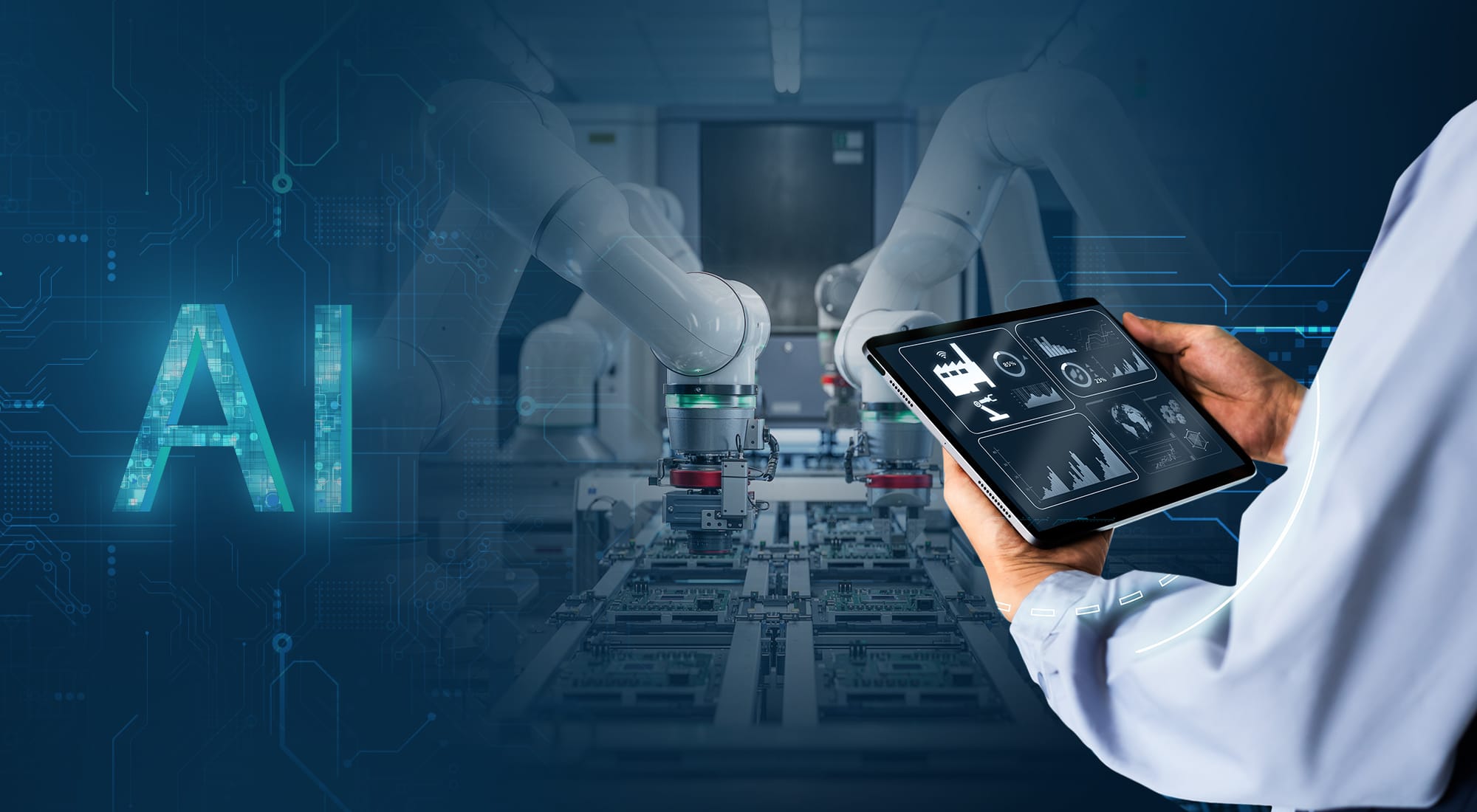
AI robotics forecasts strengthen the bull case
Big market estimates have given investors a clearer narrative: AI may not remain confined to software, data centers and chatbots. Goldman Sachs Research has projected that the global humanoid robot market could reach $38 billion by 2035, a sharp increase from its earlier expectations, according to Goldman Sachs’ humanoid robot market forecast. The bank cited lower component costs, faster progress in artificial intelligence and a larger potential labor market as reasons for the upgraded outlook.
Morgan Stanley has taken an even longer view, estimating that the humanoid market could reach $5 trillion by 2050, with more than 1 billion humanoid robots potentially in operation worldwide, according to Morgan Stanley’s humanoid robotics research. The forecast assumes adoption remains gradual into the 2030s before accelerating as robots become cheaper, safer and more capable.
Bank of America has also framed humanoids as part of a “physical AI” cycle, projecting that annual humanoid robot shipments could rise from tens of thousands in 2025 to millions by the mid-2030s and that total ownership could eventually surpass several billion units, according to Bank of America Institute’s physical AI analysis. Such forecasts have helped broaden the robotics investment case from niche automation to a potential platform shift.
Continuity from earlier robotics cycles
The current excitement did not appear overnight. Industrial robotics had already been expanding before the generative AI boom. The International Federation of Robotics reported in 2021 that a record 3 million industrial robots were operating in factories worldwide, according to the IFR’s World Robotics 2021 release. That earlier growth showed that manufacturers were already willing to automate repetitive and high-precision tasks, even before newer AI models improved robot perception, planning and language-based control.
Still, the market has a history of skepticism. In 2023, the Associated Press noted that humanoid robots were becoming more visible but remained awkward, expensive and difficult to deploy outside controlled settings, according to AP’s report on the limits of humanoid robots. That context matters because investors are now betting that advances in AI models, sensors, batteries and robotic hands can solve problems that held back earlier generations.
Why investors are watching the hardware layer
The investment case increasingly centers on the hardware stack behind intelligent machines. Robotic hands, actuators, sensors, batteries, edge chips and machine-vision systems may become the “picks and shovels” of the AI robotics economy. Companies that supply these components could benefit even if the eventual winners among full humanoid robot makers remain unclear.
That is one reason Linkerbot’s fundraising target has drawn attention. Dexterity is one of the most difficult problems in robotics. A robot that can walk but cannot reliably grasp, sort, lift, place or manipulate objects has limited commercial value. By contrast, robotic hands that can be installed across different platforms may give investors exposure to the broader market without relying on one humanoid brand.
Investor optimism is also being helped by the wider AI spending cycle. Citigroup recently raised its global AI market forecast to more than $4.2 trillion by 2030, pointing to faster enterprise adoption of automation and AI tools, according to Reuters coverage of Citi’s updated AI market outlook. While that estimate covers artificial intelligence broadly, robotics investors see physical AI as one of the next major extensions of enterprise AI spending.
Adoption will likely start in workplaces
Near-term adoption is expected to come from warehouses, factories, logistics centers, power infrastructure, agriculture and health care support roles rather than ordinary households. These environments offer clearer returns on investment because robots can be assigned repetitive, dangerous or labor-constrained work.
Factories already use industrial arms and mobile robots, making them natural test beds for humanoids and other AI-enabled machines. Warehouses may also be attractive because they require movement, object handling and repetitive workflows. In health care and elder care, the opportunity is large, but safety, regulation and trust may slow adoption.
Household robots remain the most ambitious part of the forecast. Homes are unpredictable environments filled with fragile objects, pets, children, stairs, clutter and countless edge cases. For that reason, many analysts expect household adoption to lag industrial and commercial use, even if long-term forecasts assign homes a large share of the eventual market.
Risks remain high despite the boom
The bullish forecasts do not remove major risks. Humanoid robots still face technical hurdles in balance, battery life, dexterity, safety, repair costs and real-world reliability. A robot that performs well in a demo may struggle in a busy warehouse or a crowded home. Investors also face valuation risk if private robotics companies price in mass adoption years before revenue can justify it.
Labor concerns may become another pressure point. If robots move into more service jobs, policymakers and unions could push for new rules on safety, liability and worker displacement. Companies will also need to prove that robots can work around people without creating new risks.
Even so, the direction of capital is clear. AI robotics has become one of the most closely watched frontiers in technology investing because it connects software intelligence with the physical economy. The market may not grow in a straight line, but the combination of large forecasts, component innovation and early deployments has given investors a powerful reason to keep watching.