

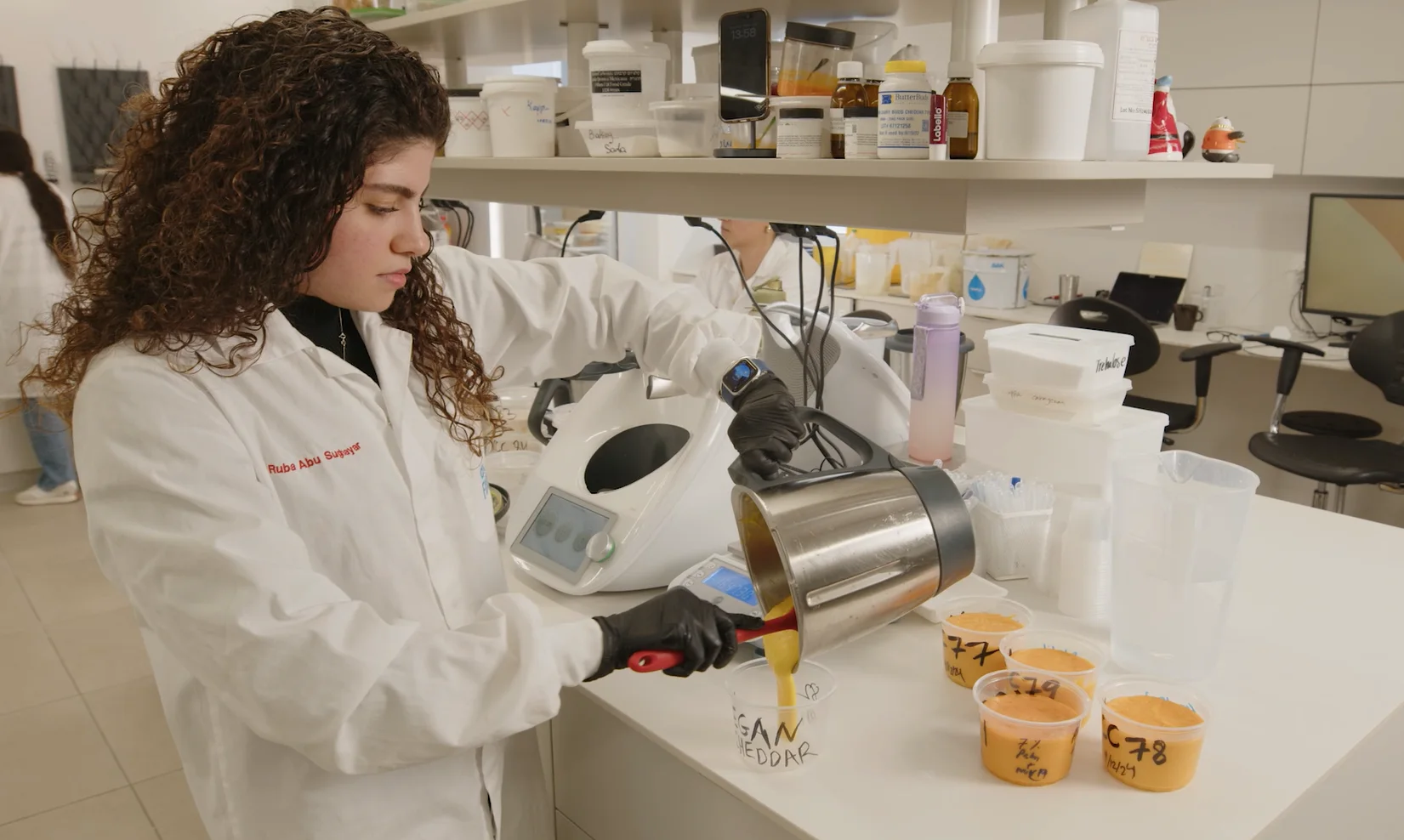
AMSTELVEEN, Netherlands — AKA Foods said Monday it closed a $17.2 million seed round led by AI entrepreneurs Alex and Michael Bronstein to launch AKA Studio, a “secure AI” platform for food research and development. The company said its privacy controls are designed to keep proprietary formulations and sensory data out of shared model training while still giving teams AI-assisted guidance from idea to launch, Nov. 17, 2025.
In the announcement, AKA Foods described AKA Studio as the world’s first secure AI system for food innovation and said the platform consolidates a company’s institutional knowledge and ongoing R&D into a structured foundation. It said the system incorporates experimental and analytical measurements tied to texture, aroma and taste from sensory research facilities, then applies AI assistants to guide formulation and optimization. AKA Foods said linking historic and current R&D data with ingredient specifications, sensory feedback and regulatory documentation can shorten innovation cycles from years to weeks.
What AKA Foods is building with “secure AI”
AKA Foods says the goal is not to replace hands-on formulation work, but to speed decision-making by connecting structured documentation with sensory evidence and internal know-how. On its AKA Studio platform overview, the company outlines three core modules — Knowledge, Workbench and Sensory — backed by an AI assistant built for food workflows rather than general-purpose chat.
Trade coverage has focused on the practical payoff for product developers. FoodBev Media reported that AKA Studio is designed to unify historical and current R&D inputs so teams can move faster without losing traceability across trials, specs and documentation. AKA Foods also says the platform is suited for common reformulation priorities, including clean-label projects, reduced sugar and fat targets, and supply chain resilience work.
Security, however, is the headline feature of the rollout. FoodIngredientsFirst reported that AKA Foods is positioning the system as a protected environment for organizational knowledge and sensory data, and highlighted the company’s “world-first” framing. New Food Magazine said AKA Studio can be delivered as secure software-as-a-service with private client environments and, for stricter requirements, deployed on-premises in an “air-gapped” setup, meaning isolated from outside networks. AKA Foods has said customer data is never shared or used for model training and that clients retain ownership and control of their proprietary information.
CEO David Sack framed the product as a way to make dormant research usable: “The global food industry holds enormous amounts of valuable knowledge but struggles to use it effectively.”
Why privacy has become a headline feature for AKA Foods
AI is already reshaping how products are formulated and tested, but the most valuable inputs — recipes, sensory benchmarks and trial results — are often trade secrets. A 2024 overview in Food Business News described how machine learning can analyze sensory factors such as taste, smell and texture and simulate ingredient interactions to speed product development. AKA Foods is betting that “secure AI” is what makes those gains usable for companies that cannot risk exposing proprietary formulations and internal documentation.
That tension is not unique to food. In cloud security, the push to protect “data in use” has driven interest in confidential computing, which uses hardware-based isolation to keep data shielded even while it is being processed. IEEE Spectrum explained the model in 2020 in its guide to confidential computing. AKA Foods is aligning its pitch with that broader shift: privacy-by-design as a baseline expectation for AI in R&D, not an optional add-on.
AKA Foods said it will use the seed funding to expand AKA Studio’s rollout with enterprise customers and continue developing its sensory-AI approach. The company also said it sees future applications beyond food, including cosmetics and pharmaceuticals, where formulation and sensory evaluation remain central.


