
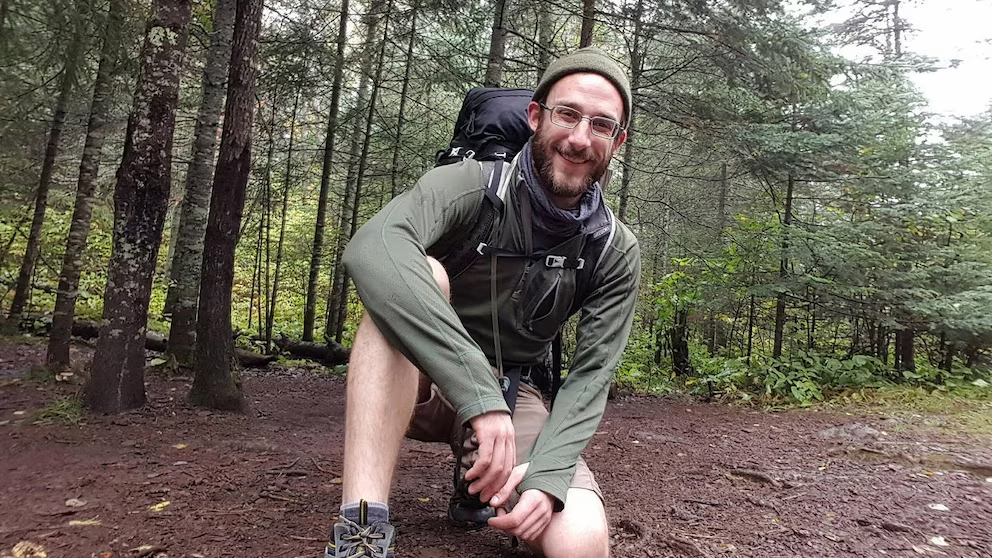
MINNEAPOLIS — A federal judge dissolved a temporary order that barred the Department of Homeland Security from destroying or altering evidence tied to the fatal shooting of Alex Pretti, concluding the court’s intervention was no longer warranted even as he criticized officials’ public statements about the case, Feb. 2, 2026.
In the same day’s developments, DHS Secretary Kristi Noem announced a rapid rollout of body-worn cameras for DHS field officers in Minneapolis, a move the administration framed as a transparency step after the killing of Alex Pretti intensified protests and scrutiny of federal immigration operations.
Alex Pretti case: judge ends evidence-preservation order
U.S. District Judge Eric Tostrud lifted the restraining order after DHS told the court it would preserve relevant material, including video and other records, and after state officials pressed for access as their own investigation moved forward. The judge wrote that he found the administration’s rhetoric around Alex Pretti “troubling,” but said that concern did not supply a legal basis to keep the order in place. (Read the Reuters account on the ruling lifting the evidence order.)
The court fight has unfolded alongside competing public narratives about what happened during the confrontation. DHS has said agents acted after Alex Pretti posed a threat, while attorneys and witnesses have disputed key elements of that account in sworn statements and public interviews.
DHS body-camera plan expands after Alex Pretti killing
Noem said body cameras would be deployed to DHS officers operating in Minneapolis “effective immediately,” with the goal of expanding the program nationwide as funding allows. DHS agencies have uneven body-camera coverage, and the rollout arrives amid heightened demands from lawmakers and civil liberties advocates for clearer identification and use-of-force standards. (See Reuters on the DHS body-camera rollout.)
In a separate report, The Washington Post detailed the scale challenge: Immigration and Customs Enforcement has about 22,000 employees but roughly 4,400 body cameras, while Customs and Border Protection has about 13,400 cameras for more than 45,000 officers. (Details here: federal officers in Minneapolis to start wearing body cams.)
Time reported the announcement comes as DHS funding negotiations and proposed policy guardrails collide in Congress, with Democrats pushing a broader package of reforms beyond cameras. (More: body cameras pledged amid backlash.)
What earlier reporting shows
The restraining order Tostrud later lifted was initially granted after Minnesota investigators said federal agents controlled the scene and removed material evidence. Minnesota Public Radio reported the judge’s earlier ruling and the state’s concern about evidence access. (Background on the initial evidence order.)
The Justice Department also opened a civil rights investigation into the shooting, The Washington Post reported Jan. 30, a step that broadened federal scrutiny beyond DHS’ internal review. (Justice Department civil rights probe.)
And ProPublica identified two federal agents tied to the encounter through government records, underscoring ongoing pressure for names and documentation to be made public as the investigation continues. (ProPublica on agents identified.)
For now, the legal fight over evidence has eased, but the political and public fight over accountability has not — with Alex Pretti at the center of an expanding debate over federal policing, transparency tools, and how quickly agencies can be required to adopt them.