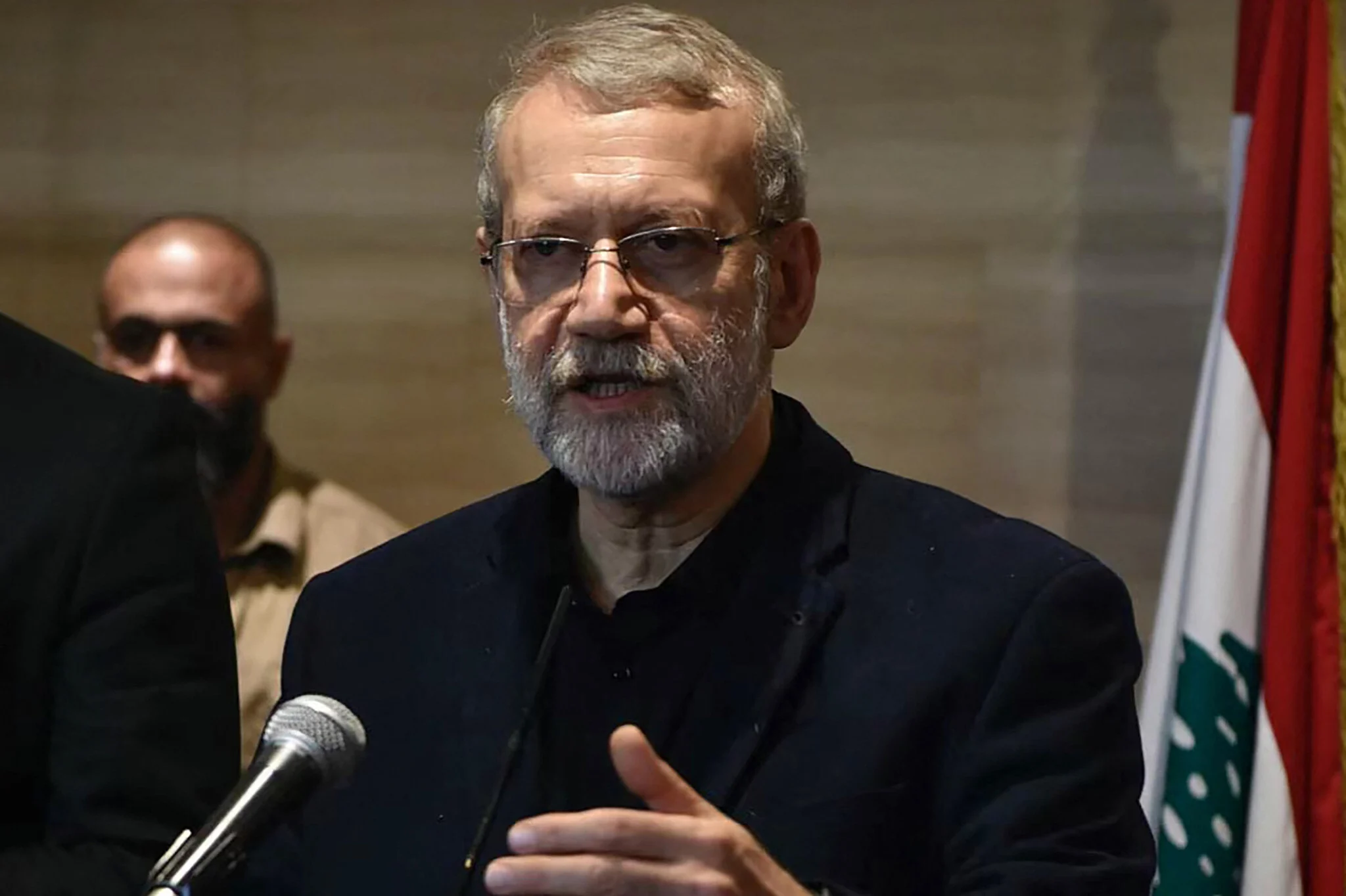
DUBAI, United Arab Emirates — Iran confirmed that Ali Larijani was killed in an Israeli strike, removing one of the Islamic Republic’s most influential political and security figures and deepening uncertainty around Tehran’s wartime chain of command, March 17, 2026. The confirmation came hours after Israel said it had targeted Larijani and as Tehran signaled retaliation following attacks that also struck the regime’s internal security leadership.
The death ends the career of a veteran insider who moved between the Revolutionary Guards, state media, parliament and nuclear diplomacy, while also taking a hard line during the regime’s January protest crackdown. In a current Reuters profile of Larijani’s final role inside Iran’s power structure, the news agency described him as an architect of Iranian security policy who had again become central after last year’s air war and the more recent escalation with Israel.
The Associated Press reported that Iranian authorities confirmed Larijani’s death Tuesday and said his son, Morteza Larijani, was also killed, underscoring how deeply the strike cut into a family long embedded in the Islamic Republic’s political elite. The confirmation also put to rest several hours of uncertainty after Israeli officials announced the strike before Tehran publicly acknowledged it.
Why Ali Larijani mattered to Iran’s wartime leadership
Larijani was not simply another senior official. He had served as parliament speaker from 2008 to 2020, earlier led Iran’s nuclear talks, and remained one of the few figures who could operate across the country’s clerical establishment, security institutions and foreign-policy machinery. That dual image — pragmatic in tone, hard-line in outcome — became even sharper after the U.S. Treasury sanctioned him in January for his role in coordinating the crackdown on protests, saying he had called for violence against demonstrators.
The same round of attacks also hit Iran’s internal enforcement apparatus. Reuters reported that Iranian state media confirmed the death of Gholamreza Soleimani, the commander of the Basij paramilitary force, giving the strikes an immediate operational as well as symbolic impact. Together, the losses removed two figures tied not only to wartime command but also to domestic repression.
Ali Larijani’s long political arc
Larijani’s staying power was visible long before the current war. In 2021, Reuters reported that he demanded an explanation after being barred from the presidential race, a sign of how even an establishment loyalist could fall afoul of Iran’s narrowing political system. Yet he remained important enough to attempt a comeback: in 2024, Reuters covered his registration for the snap presidential election after President Ebrahim Raisi’s death, when he argued that Iran needed economic repair and relief from sanctions while preserving a strong defense posture.
That history helps explain why Larijani’s death matters beyond the headline. He was one of the last veteran power brokers who could speak the language of state security and diplomacy at the same time, making him useful in crisis management even when hard-liners distrusted his occasional pragmatism.
What Ali Larijani’s death means next
The strike landed at a moment when the regional conflict was already expanding. In a later dispatch, Reuters reported that Iran answered with missile attacks on Tel Aviv, saying the barrage was retaliation for Larijani’s killing. That response suggests Tehran intends to treat his death not as an isolated strike but as part of a wider campaign against the upper ranks of the Iranian state.
For now, the immediate effect is clear: Iran has lost a senior official who helped connect its parliament, security bureaucracy and nuclear strategy over four decades. Whether the system can quickly replace that mix of institutional memory and political reach may shape how Tehran manages both the war abroad and control at home in the days ahead.