

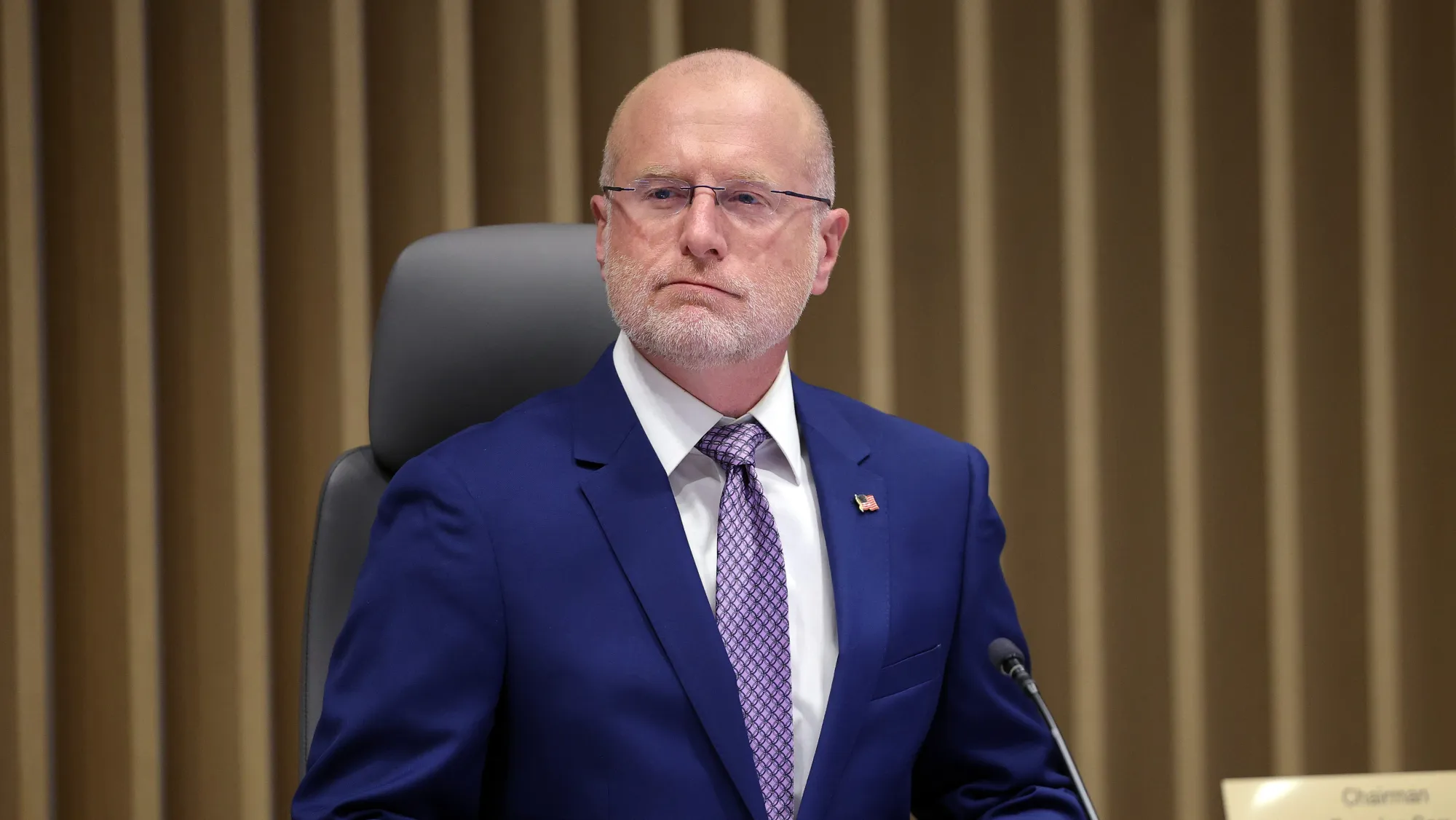
What began as a weekend warning about “news distortions” quickly became a broader fight over whether the FCC chair is trying to use broadcast regulation to intimidate coverage of the Iran conflict.
Federal Communications Commission Chairman Brendan Carr ignited a fresh press-freedom fight after warning Saturday, March 14, that broadcasters airing what he called false or distorted coverage of the Iran conflict could lose their licenses, drawing blowback from lawmakers, press-freedom advocates and FCC Commissioner Anna Gomez by Sunday, March 15, 2026. Critics say the warning matters because it turns the FCC’s public-interest language into a political threat aimed at shaping how the war is covered.
The trigger was President Donald Trump’s complaint about coverage of damage to U.S. air tankers in Saudi Arabia and broader reporting on the conflict. As Reuters reported in its initial account of Carr’s post, Carr reposted Trump’s criticism and warned that broadcasters running “hoaxes and news distortions” should “correct course” before license renewals.
Carr then widened the controversy when he told CBS News in an exclusive follow-up interview that broadcast licenses are not a “property right” and said stations can lose them if they fail to meet the public-interest standard. Carr also said there was no immediate effort underway to reassess licenses, but the overall message landed as a warning shot aimed at the television side of the media business.
Why Brendan Carr’s warning is drawing such a fierce backlash
The legal terrain is narrower than the rhetoric. In the FCC’s own guide on speech regulation, the agency says it does not regulate online content and has long held that the public interest is best served by permitting free expression of views. The commission’s separate explainer on broadcast news distortion says the policy applies to over-the-air local television and radio news, not to every corner of the modern media ecosystem.
That gap explains why the backlash was immediate. Axios reported that the Radio Television Digital News Association called Carr’s position “government control of the press,” while the Foundation for Individual Rights and Expression called the warning outrageous. Democratic lawmakers cast it as censorship, Gomez said such threats violate the First Amendment, and even Republican Sen. Ron Johnson said he does not want the government meddling in private speech.
Critics also point to the practical reality that the FCC does not license national networks such as CBS, NBC or ABC directly. It licenses individual local stations. That means Carr’s warning was less an immediate blueprint for mass revocations than a signal that regulatory leverage, complaint dockets and license renewals could become part of a broader pressure campaign against journalism the administration dislikes.
That distinction matters. A chairman does not need to revoke a license tomorrow to influence editorial decisions today. For newsrooms, station owners and corporate parents with merger business before regulators, the threat can still create a chilling effect even if the underlying legal case is weak.
How Brendan Carr’s latest move fits a longer pattern
This confrontation did not come out of nowhere. In a September 2025 Reuters report on Carr’s increasingly aggressive posture toward media companies, critics argued that he was turning old FCC tools and the public-interest standard into a modern speech weapon. That story captured a regulatory style that worried media lawyers well before Carr turned the same logic toward Iran-war coverage.
The longer history is even more revealing. In an October 2017 Reuters article, then-FCC Chair Ajit Pai rejected Trump’s suggestion that NBC could face license trouble over reporting the president disliked. Pai said the FCC did not have authority to revoke a station license based on the content of a particular newscast and declared that the agency would stand for the First Amendment.
That contrast is central to why Carr’s comments landed so hard. The current argument is not just about one weekend post or one war. It is about whether a federal regulator can wrap political displeasure in the language of public-interest enforcement and use that threat to bend coverage. For supporters of a free press, that is why the backlash was so sharp — and why this episode is unlikely to fade quickly.


