

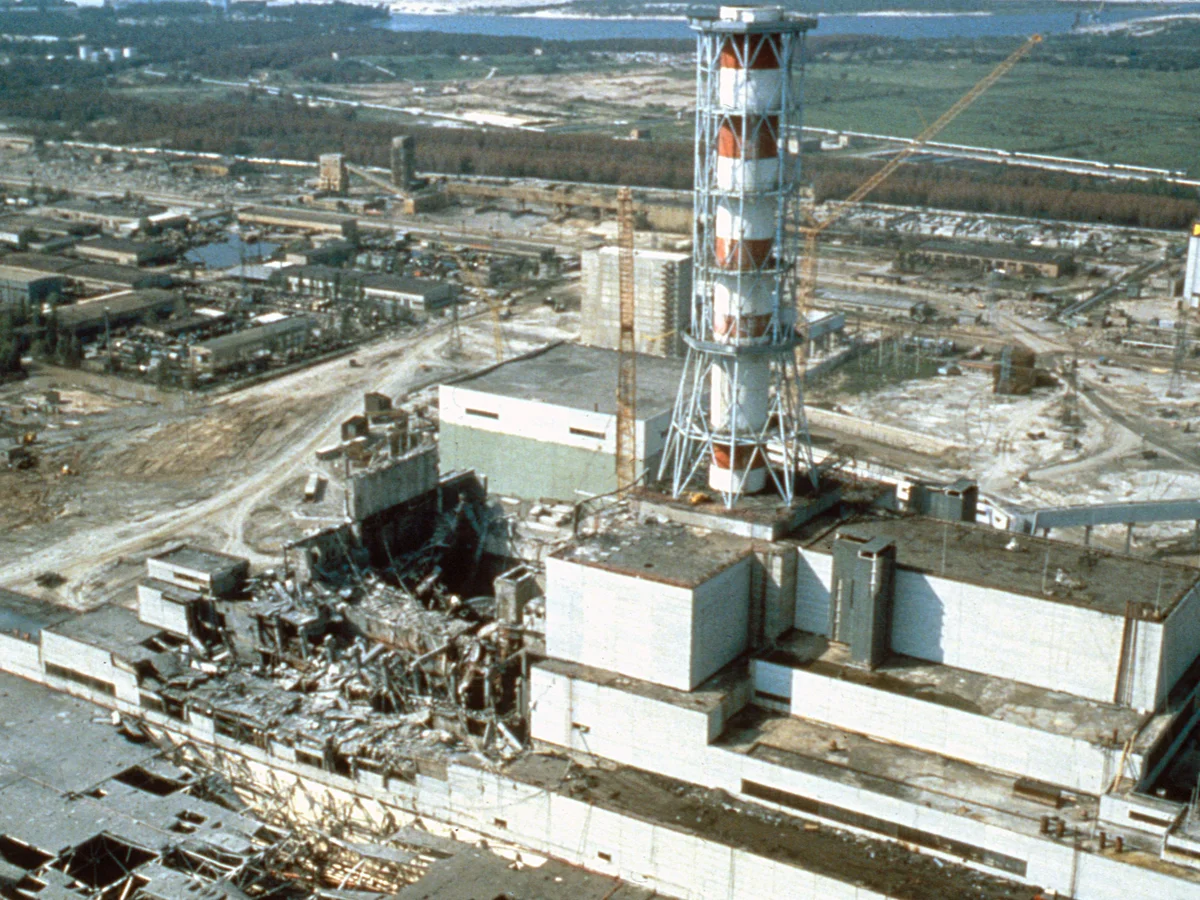
KYIV, Ukraine — The Chernobyl disaster is again shaping Ukraine’s energy debate as attacks across Ukraine, Russian-occupied territory and Russia killed at least 16 people and officials renewed warnings about risks around the damaged nuclear site, the Associated Press reported. Solar panels and batteries cannot secure nuclear facilities, but they can keep clinics, water systems and emergency hubs working when missiles and drones take down central power, April 26, 2026.
Forty years after the reactor explosion that made Chernobyl a global symbol of technological failure, Ukraine is confronting a different but connected danger: war has turned electricity itself into a strategic target. Nuclear safety depends on stable power, trained staff, intact infrastructure and protected access. Civilian survival depends on many of the same things.
Why the Chernobyl disaster still matters in a war over power
The site’s most urgent concern is the New Safe Confinement, the giant structure built to cover the remains of Unit 4. The International Atomic Energy Agency said a February 2025 drone strike caused significant structural damage and affected the structure’s designed confinement function, though it did not cause a release of radioactive material, according to the IAEA’s assessment of the damaged shelter.
That does not mean the danger is theoretical. The damaged confinement system must still protect the old sarcophagus, limit radioactive dust and withstand further degradation. Repairs are costly, technically difficult and politically urgent because the war has added new layers of risk to a site already defined by long-term contamination.
The wider nuclear picture is just as troubling. At the Russian-held Zaporizhzhia nuclear power plant, Europe’s largest, external power was lost for about an hour on the 40th anniversary of the Chernobyl accident, forcing diesel generators to start and marking the 15th loss of all external power links since Russia’s 2022 invasion, Reuters reported. The plant is not generating electricity, but it still needs power to keep nuclear fuel from overheating.
The lesson is stark: nuclear plants do not become safe simply because reactors are shut down. They remain dependent on cooling, monitoring and reliable electricity. When war disrupts those systems, backup power becomes a safety barrier.
Older warnings show this crisis has been building
The continuity over time is clear. In March 2022, during the first weeks of Russia’s full-scale invasion, Reuters reported that Ukraine warned of radiation risks after Chernobyl lost power, while the IAEA said there was no critical impact on safety at that point. By May 2023, The Washington Post was reporting on Ukraine’s turn to solar panels for hospitals, schools, police stations and other critical buildings as a way to resist blackouts. In late 2024, Physicians for Human Rights documented how attacks on energy infrastructure affected health care, including outages that left hospitals struggling to maintain basic services.
Taken together, those reports show the same pattern repeating across four years of war: attacks on power systems create cascading risks. A blackout can threaten a clinic, a water pump, a communications hub or a nuclear safety system. The scale changes, but the vulnerability is the same.
Solar is a lifeline, not a shield
Solar power will not stop a missile, repair a nuclear shelter or replace a national grid. But solar panels paired with batteries can create small islands of resilience. Those islands matter when centralized power stations, substations and transmission lines are under repeated attack.
The International Energy Agency says accelerating distributed solar power and battery storage would support Ukraine’s energy security. Its analysis found that Ukraine’s available dispatchable power generation capacity fell from about 38 gigawatts to 19 gigawatts in the year after Russia’s full-scale invasion and later dropped to 12 gigawatts after severe attacks in spring 2024, while distributed solar has helped add capacity quickly.
The value is not only environmental. A rooftop array on a clinic can keep vaccines cold. A battery can keep medical records online. A solar-backed water system can keep pumps running through an outage. A school or municipal building with backup power can become a community charging and heating point.
Clinics show what energy resilience looks like
Ukraine’s health system offers a practical example. The World Bank says solar installations supported by its HEAL Ukraine project have helped clinics reduce outage impacts and maintain services. In Myrotske, a primary care clinic installed 29 solar panels with 15 kilowatt-peak capacity, and the clinic can now operate for 36 hours without external electricity; across participating clinics, average grid consumption fell by 48% between February and October 2025, according to the World Bank’s account of Ukraine’s solar-powered health clinics.
Those numbers are modest compared with a national power system, but they are powerful at the human level. For a rural clinic, 36 hours of power can mean safe vaccine storage, functioning diagnostic equipment, heat, lighting and communications during a blackout. For patients, it can mean care continues when the grid fails.
The real Chernobyl warning is about redundancy
The Chernobyl disaster remains a warning about secrecy, design flaws, emergency response and the long life of radioactive contamination. In today’s Ukraine, it is also a warning about redundancy. Systems that depend on a single line, a single generator, a single fuel supply or a single centralized plant are easier to break.
That is why solar has become more than a climate tool in Ukraine. It is emergency infrastructure. It spreads risk, reduces dependence on fuel deliveries and gives public services another layer of protection when the grid is under attack.
The same principle applies beyond Ukraine. Hospitals, water utilities, shelters and communications systems need power plans that assume disruption. Large grids remain essential, but communities also need local backup that can operate when national systems fail.
Chernobyl’s destroyed reactor cannot be made safe by solar panels. Neither can Zaporizhzhia’s nuclear risks be solved by rooftop power. But the war has made one point impossible to ignore: when electricity becomes a weapon, distributed clean power becomes a lifeline. The safer future is not only one with repaired nuclear shields and protected power plants. It is one where essential services can keep running even when the next blackout comes.


