

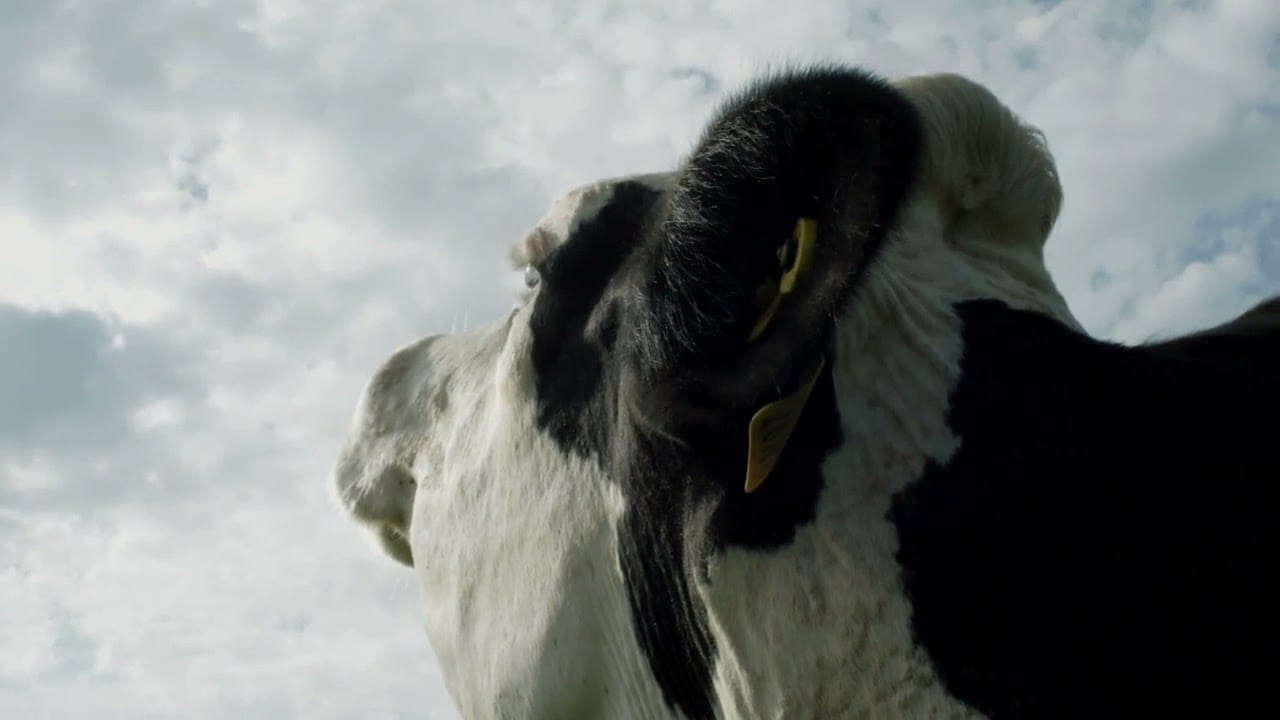
NEW YORK — Filmmaker Andrea Arnold’s Cow, a Cow documentary that stays close to Luma, a dairy cow on a working English farm, is a bruising reminder that the food chain has a face, Dec. 15, 2025. Filmed in near-silence and at hoof level, the Cow documentary turns routine acts — birth, milking, movement, separation — into a story you feel in your stomach.
Arnold built a career on closeness. Here, the closeness is the argument: no narrator, no experts, no comforting distance. The camera simply keeps pace until the “ordinary” starts to look like a factory line.
Inside the Cow documentary: what Luma shows you when the camera won’t look away
At 94 minutes, Cow isn’t an exposé and it isn’t a sermon — it’s an act of proximity. The film premiered in the Cannes Premiere section in 2021, and the festival’s own synopsis stresses seeing cows “not in a romantic way but in a real way,” as described in Cannes’ listing for Cow. The result is devastating precisely because it refuses to editorialize.
What you see in this Cow documentary is both tender and relentless: a mother licking her newborn clean; a gate swinging shut; machinery clamping and humming; a return to work before the afterbirth is even out of frame. Humans drift at the edges — heard more than seen — and that choice keeps the viewer where the cow is: inside a system that treats bodies as inputs and outputs.
“IT’S BEEN IN MY HEART A LONG TIME,” ARNOLD SAID IN A BFI INTERVIEW ABOUT THE YEARS-LONG PROJECT.
The film’s rhythms are easy to read even if you’ve never stepped into a barn. MUBI calls the film an observational portrait that “unflinchingly chronicles” Luma’s daily cycle — grazing, giving birth, making milk — in its synopsis for Cow. In practice, that lack of explanation becomes the point: you’re left to connect the dots between desire, duty and machinery.
That uneasy gap — between what we want to believe and what we’re willing to witness — has been building for decades. A 2003 review in the journal Animal Welfare outlines how distress around cow-calf separation can intensify after longer contact, in a review of early separation’s effects. Public expectations have shifted, too: a 2017 PLOS ONE survey found broad opposition to immediate separation in the U.S. and Germany, detailed in a study of attitudes toward cow-calf separation.
Film has tracked these tensions, too. In 2013, The Guardian’s review of The Moo Man leaned on a human story — an artisanal dairy farmer, a “back-to-basics” pitch — to talk about milk and compromise. Arnold’s Cow documentary strips away even that comfort. There’s no spokesperson here. Only Luma.
Critics have praised the craft behind the punch. The Los Angeles Times review highlighted how Arnold uses vérité filmmaking to force a connection to the cows’ lived experience, not a highlight reel of “farm life.”
What happens after you watch is the real current-affairs test. The Cow documentary doesn’t hand you a checklist or an enemy. It hands you Luma’s gaze — and asks what, exactly, we’re buying when we buy milk.


