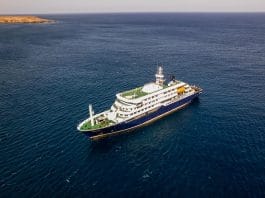

The cruise ship hantavirus outbreak has led to medical evacuations, ship isolation measures, and multinational epidemiological investigations after cases were confirmed and suspected among passengers and crew from dozens of countries.
cruise ship hantavirus outbreak prompts global health response
WHO officials confirmed seven total cases linked to the vessel, including two laboratory-confirmed infections, five suspected cases, and three deaths. One additional patient remains in critical condition in intensive care in South Africa.
The ship reportedly departed Ushuaia, Argentina, in early April on an expedition route through remote South Atlantic and Antarctic waters before the outbreak escalated. Health authorities said passengers and crew from at least 23 countries have been affected.
WHO regional officials described the situation as “serious but contained,” adding that there is “no need for panic or travel restrictions at this stage,” while maintaining that global risk remains low.
cruise ship hantavirus outbreak: investigators examine transmission sources
Hantavirus is typically transmitted through contact with infected rodent droppings, urine, or saliva, and is not usually spread between humans. Investigators are focusing on possible exposure during pre-boarding travel or remote shore excursions in South America.
Health experts are also assessing whether limited human-to-human transmission could have occurred in tightly confined cabin conditions, though such cases remain rare and depend on viral strain. According to the
U.S. Centers for Disease Control and Prevention (CDC), most infections are linked to environmental rodent exposure rather than direct human spread.
cruise ship hantavirus outbreak leads to evacuations and international coordination
At least two symptomatic passengers have been evacuated under international medical coordination involving WHO and national health agencies. One British passenger was transferred to South Africa, where laboratory testing confirmed hantavirus infection.
Authorities in Cape Verde initially denied docking permission due to infection control concerns, while discussions continue over potential rerouting to the Canary Islands for further processing of passengers and crew.
Maritime health officials say the vessel remains under strict monitoring with passengers confined to cabins as containment efforts continue.
Why the cruise ship hantavirus outbreak is considered unusual
Experts say hantavirus outbreaks are rare in maritime environments, where sustained rodent exposure is limited. Most documented cases occur in rural or wilderness settings across the Americas, Europe, and Asia.
The WHO notes that hantavirus infections can cause severe respiratory illness with high fatality rates in some strains, though outbreaks are typically isolated and geographically contained
(WHO hantavirus fact sheet).
Cruise ships more commonly experience gastrointestinal outbreaks such as norovirus, which spreads rapidly in closed environments. The CDC has previously documented how norovirus outbreaks can spread quickly on cruise vessels due to close contact and shared facilities
(CDC cruise ship outbreak surveillance).
cruise ship hantavirus outbreak under ongoing investigation
WHO continues to coordinate laboratory testing, genetic sequencing, and contact tracing while maritime authorities work to stabilize the situation onboard the MV Hondius. Officials said further updates will be issued as evacuation operations continue and the origin of the outbreak is determined.
Public health experts stress that while the incident is severe, there is currently no evidence of widespread transmission risk to the global population.