

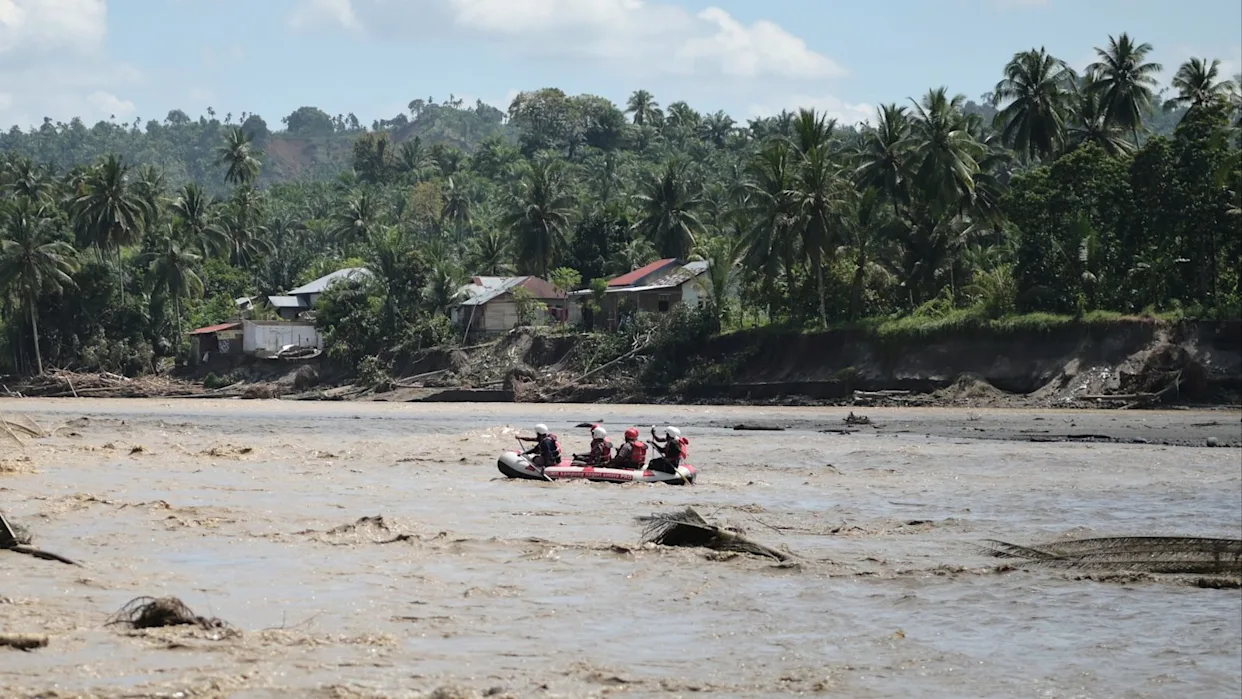
JAKARTA, Indonesia — Cyclone Senyar has killed nearly 700 people and thrown millions of others into turmoil in Indonesia, Thailand and Malaysia after a rare tropical storm surged through the Malacca Strait last week with devastating floods and landslides. Photo Rescue officials say the creeping Cyclone Senyar has exposed entrenched weaknesses in jammed river valleys and on crowded coastal cities, paralysing infrastructure and emergency services, Dec. 1, 2025.
Scale of Cyclone Senyar disaster
With Cyclone Senyar withdrawing, a new report from Reuters now puts the number of deaths as reported by officials in the three countries at least 502 in Indonesia, 176 in Thailand and three in Malaysia. At the same time, some 508 people remain missing, and about 1.4 million affected people (in Indonesia alone) have been counted. Earlier government tallies had reported more than 4 million residents in the region affected by the storm flooding, including nearly 3 million in southern Thailand. Initial estimates indicate the economic losses from Cyclone Senyar have already surpassed billion$3.
Hillsides across West Sumatra, North Sumatra and Aceh Provinces on the island of Sumatra have been washed away — entire villages buried by torrents laden with debris that surged when Cyclone Senyar tore into shore in late November before shifting east to Malaysia and southern Thailand. Indonesian data indicates that more than 28,000 homes crumpled, crucial roads and bridges were submerged, and hundreds of thousands of people were displaced, which has meant sending helicopters to drop relief into isolated valleys as families scavenge through sludge for documents, food and fuel.
In Thailand, in Songkhla province, the southern hub of Hat Yai was hit with some 335 millimetres of rain in a single day — its heaviest such daily total in roughly 300 years — and temples, markets and highways were submerged under several meters of water. Floodwaters from Cyclone Senyar have also claimed at least 176 lives in Thailand and forced some three million others to seek higher ground. At the same time, Malaysia reported three deaths and more than 10,000 people remaining in evacuation centres.
While Cyclone Nargis in Myanmar in 2008 killed nearly 140,000 people and left another equivalent number dead or missing and 2.4 million people severely affected. Typhoon Haiyan in the Philippines in 2013 killed more than 6,300 people and affected more than 14.5 million. Cyclone Senyar again demonstrates that even storms with lower wind speeds can be devastating if they remain over densely populated coasts dominated by fragile river systems.
To global disaster specialists, Cyclone Senyar is another data point in a perilous long-term trend. The World Meteorological OrganisationOrganisation estimates that since 1970, tropical cyclones have resulted in 1,945 disasters and killed more than 779,000 people worldwide, while causing some US$1.4 trillion in losses — a total it warns is likely to keep rising as climate change amplifies their destructive power and increases the number of vulnerable people. Meteorologists say that those and other factors, including continuing La Niña conditions, which have persisted in recent months and appear to be unusually warm, may have helped load the atmosphere with additional moisture that has fed Cyclone Senyar’s downpours in a season that regional reporting through The Washington Post describes as a virtually unbroken series of storms dating back to mid-September.
Governments in Indonesia, Thailand and Malaysia are scrambling to restore power, reopen washed-out roads and reconnect towns cut off from the outside world. Indonesian President Prabowo Subianto toured hard-hit West Sumatra and promised to rebuild roads, bridges, and telecommunications infrastructure as quickly as possible. South of the border: Thai authorities say water services in Songkhla are mostly restored; they hope that will allow residents to return home within days. Across the sea: Malaysia’s disaster agency has kept thousands of people in shelters even as it warned of further flooding in low-lying districts.
Even as waters began to recede, Cyclone Senyar served as a litmus test of whether the faster-growing economies of Southeast Asia could adjust to a future of more intense, rain-heavy storms — relocating houses and critical infrastructure out of floodplains, building stronger early-warning systems and safeguarding the poorest communities that have once again borne the brunt. In Sumatra, Songkhla in Thailand, and northern Malaysia, relatives were still searching the mud-covered riverbanks for family members and loved ones. One of those in Sumatra said, “We’re devastated. What do we do now?


