
The push centers on a proposed international maritime coalition, the Maritime Freedom Construct, outlined in a State Department cable seen by Reuters. The initiative would ask partner nations to contribute diplomacy, information sharing, sanctions enforcement, naval presence or other support as Washington tries to reopen one of the world’s most important energy routes.
Strait of Hormuz blockade squeezes shipping and oil markets
Commercial traffic through the strait has fallen sharply since the U.S.-Iran conflict began Feb. 28. At least six ships crossed the waterway in a 24-hour period this week, compared with 125 to 140 daily passages before the war, according to ship-tracking and satellite data cited by Reuters.
The disruption has pushed crude prices higher and raised fears of a prolonged supply shock. Brent crude surged past $125 a barrel early Thursday as stalled U.S.-Iran talks dimmed hopes for a fast reopening of the strait, The Associated Press reported.
Trump has rejected an Iranian proposal to reopen the Strait of Hormuz in exchange for lifting the U.S. blockade of Iranian ports, saying Iran must first address U.S. demands over its nuclear program. The standoff leaves Washington trying to build international support while avoiding concessions that could be seen as weakening its pressure campaign.
Allied help becomes central to U.S. strategy
The proposed coalition reflects a shift from a bilateral confrontation toward a broader security effort involving allies and partner governments. Under the plan, the State Department would coordinate diplomacy with partner nations and the shipping industry, while the Pentagon would help manage maritime traffic through U.S. Central Command.
Washington is also trying to prevent Iran from turning the closure into a revenue stream. The Treasury Department warned that payments to Iran or the Islamic Revolutionary Guard Corps for safe passage through the strait could create sanctions exposure for U.S. and non-U.S. persons, according to Treasury Department guidance.
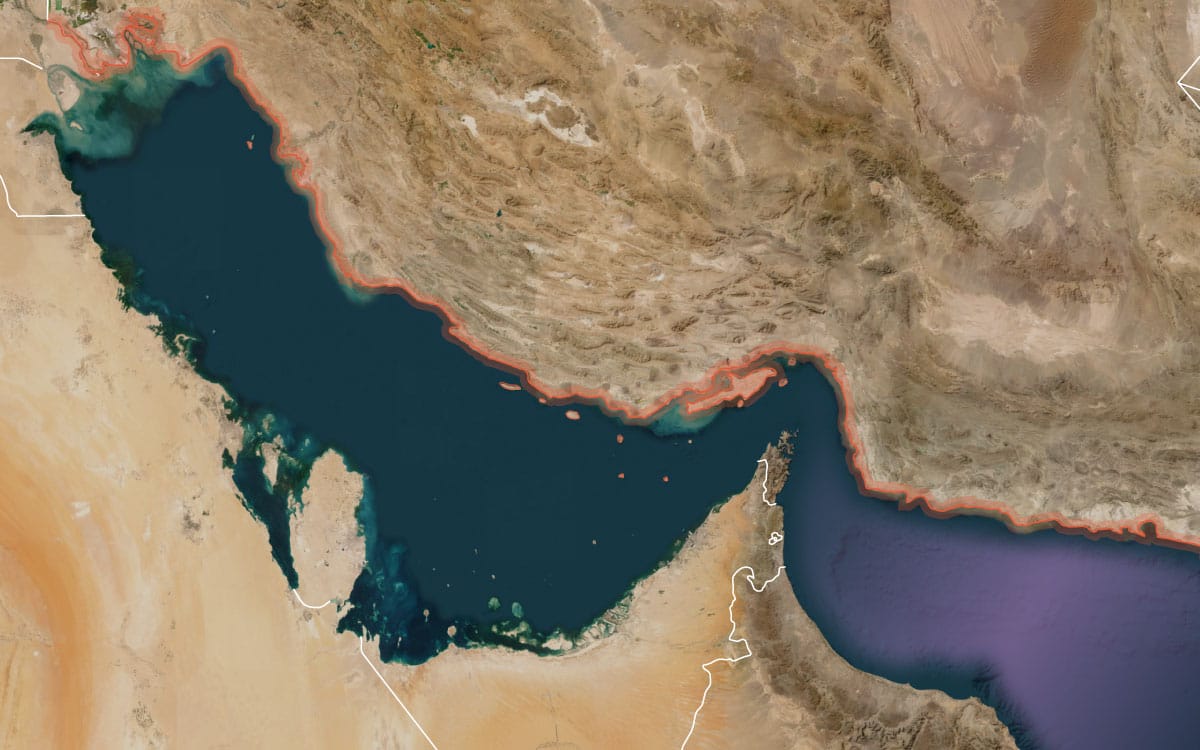
The stakes are high because the Strait of Hormuz links the Persian Gulf with the Gulf of Oman and the Arabian Sea. In the first half of 2025, total oil flows through the strait averaged 20.9 million barrels per day, or about 20% of global petroleum liquids consumption, according to U.S. Energy Information Administration data.
Older warnings show why Hormuz keeps rattling oil markets
The current crisis did not emerge in isolation. Iran has used threats over Hormuz before, including Iran’s 2011 warning to the U.S. that Western sanctions could lead it to block Gulf oil shipments.
Years later, tensions around the same chokepoint again unsettled energy traders. A Reuters 2019 factbox traced the strait’s vulnerability through the Tanker War of the 1980s, U.S. naval protection missions and repeated regional threats to shipping.
The energy consequences have also been well documented. EIA’s 2019 review described Hormuz as the world’s most important oil transit chokepoint and warned that even a temporary disruption can raise shipping costs, delay supplies and push global energy prices higher.
Global inflation fears rise as talks stall
The blockade has turned a regional military crisis into a worldwide economic test. Higher crude prices can quickly feed into gasoline, diesel, aviation fuel, shipping costs, fertilizer prices and consumer inflation, especially in countries that rely heavily on Middle Eastern energy.
For Trump, the diplomatic challenge is now twofold: keep pressure on Iran while convincing allies that a U.S.-led maritime push will reduce, not widen, the conflict. For Iran, the strait remains one of its strongest points of leverage.
Without a negotiated reopening or a credible international security plan, the Strait of Hormuz blockade could keep oil markets under severe pressure and leave governments bracing for a deeper inflation shock.