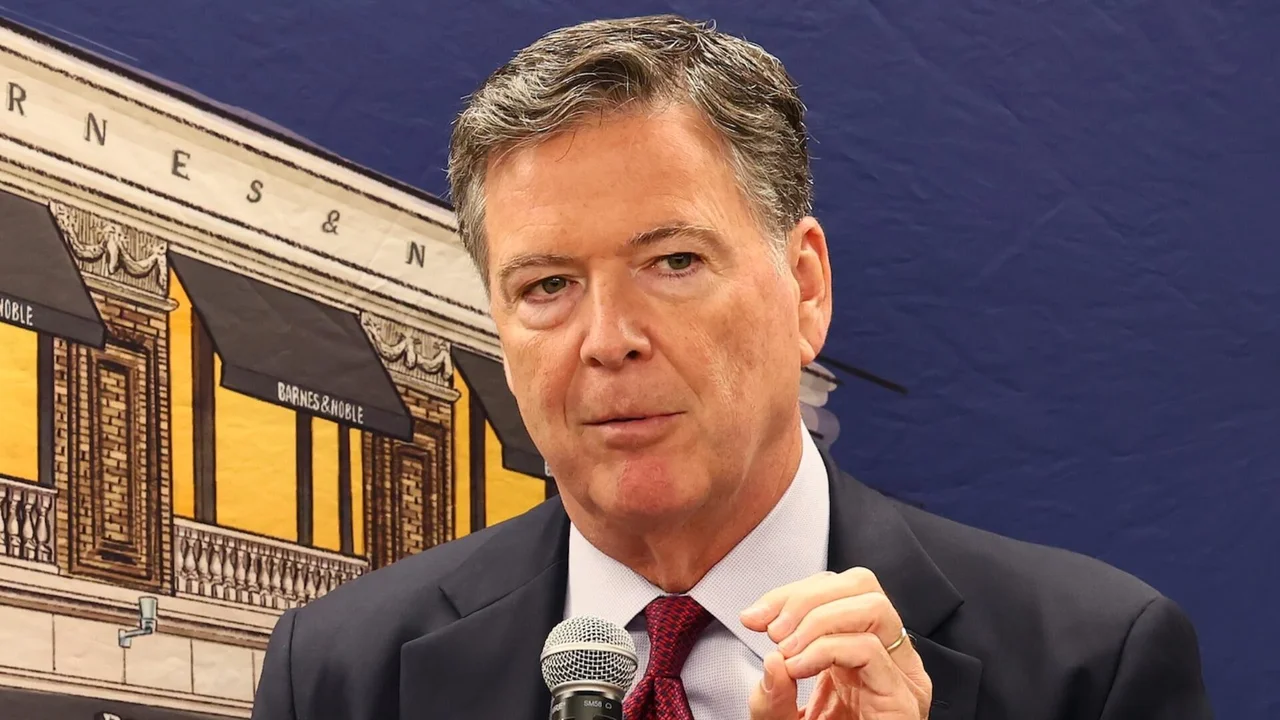
WASHINGTON — Former FBI Director James Comey was indicted by a federal grand jury in the Eastern District of North Carolina on two felony counts tied to a May 2025 Instagram post that prosecutors allege threatened President Donald Trump, the Justice Department announced Tuesday, April 28, 2026.
Prosecutors say Comey knowingly posted an image of seashells arranged to read “86 47,” which they argue a reasonable person would understand as a serious expression of intent to harm Trump, the 47th president. Comey has denied any violent intent, saying he understood the image as a political message and removed it after criticism.
Why the James Comey indictment faces a First Amendment test
The case turns on whether prosecutors can prove the post was a criminal threat rather than protected political speech. The three-page indictment charges Comey under federal laws covering threats against the president and interstate threats, alleging the Instagram post depicted “86 47” in a way that amounted to a threat to kill or harm Trump.
That allegation gives the Justice Department a high legal burden. True threats are not protected by the First Amendment, but the Supreme Court has required proof of a speaker’s subjective mental state, at least recklessness, in threat prosecutions, according to a U.S. Courts summary of Counterman v. Colorado.
Comey made his first court appearance Wednesday in Alexandria, Virginia, where he was released without special conditions. His next appearance is expected in North Carolina, where the indictment was returned.
Acting Attorney General Todd Blanche said threatening the president’s life is “a grave violation” of federal law, while FBI Director Kash Patel said Comey should have understood the consequences of the post because of his law enforcement background. Comey’s lawyer, Patrick Fitzgerald, said he plans to argue that the prosecution is politically motivated, and Reuters reported that Comey was released after a brief appearance before a magistrate judge.
James Comey indictment fits a longer Trump-Comey clash
The prosecution did not emerge in isolation. The controversy began nearly a year earlier, when the Secret Service opened an investigation after Trump administration officials accused Comey of using “86 47” as a coded call for violence. Comey deleted the post and wrote that he opposed violence of any kind.
The new case also follows an earlier Justice Department effort against Comey. In November 2025, a federal judge dismissed criminal cases against Comey and New York Attorney General Letitia James after finding the prosecutor who brought them was illegally appointed.
The political backdrop reaches further back. Trump fired Comey in May 2017 while the FBI was investigating possible ties between Trump’s 2016 campaign and Russia, a decision that helped make Comey one of Trump’s most prominent law enforcement critics.
What prosecutors must prove next
The Justice Department will have to show more than public outrage or a controversial interpretation of “86 47.” Prosecutors must persuade a court, and eventually a jury, that Comey either intended the post as a real threat or consciously disregarded a serious risk that it would be understood that way.
Comey’s defense is expected to argue the opposite: that the phrase was ambiguous, the post was public rather than covert, and his quick removal of it undercut any claim that he meant to threaten Trump. That conflict makes the James Comey indictment a major test of how far federal threat laws can reach into online political expression.