

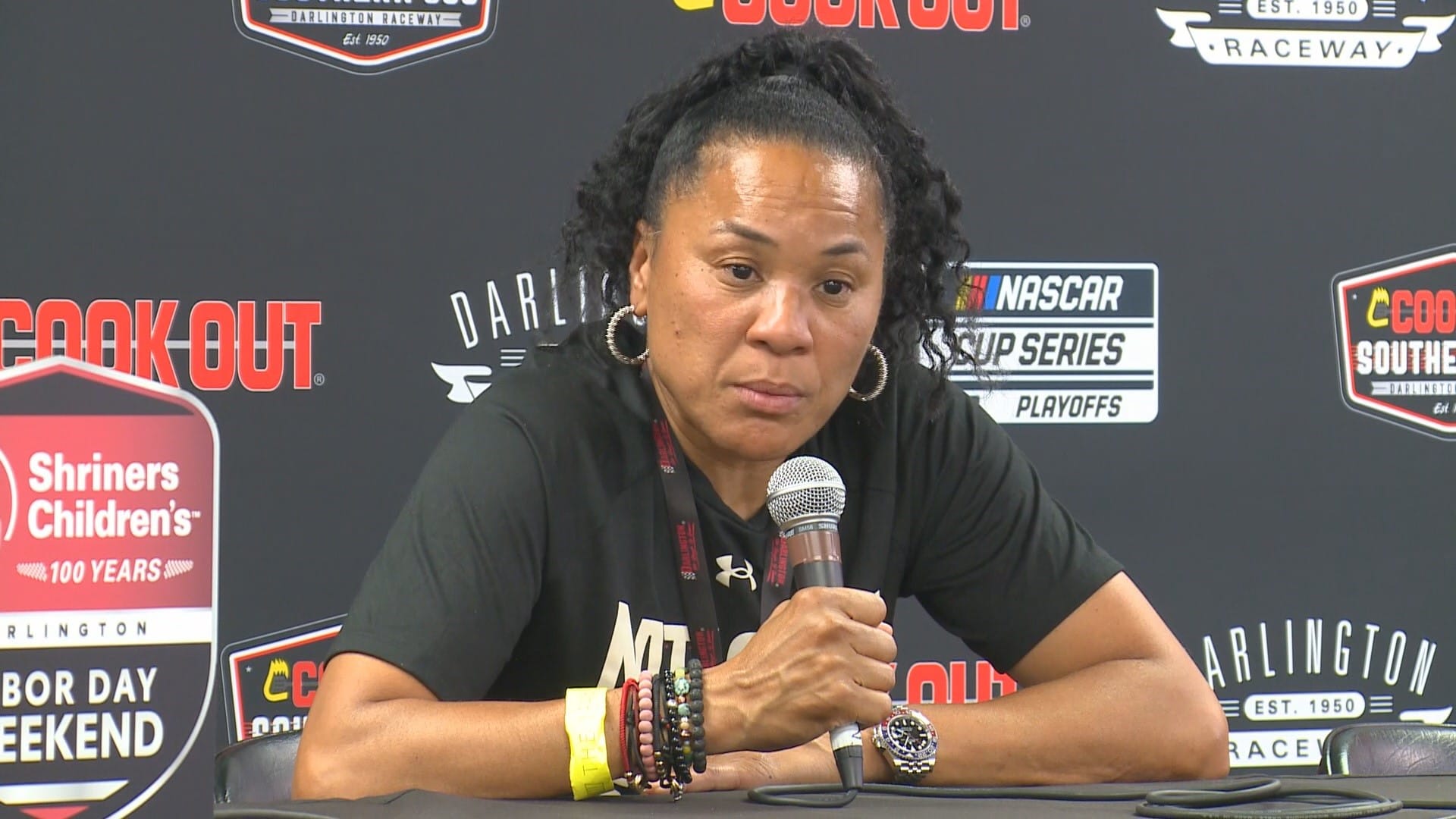
Dawn Staley says the money talk now starts earlier
“How much is it going to cost us?” Staley said, adding, “You’ve got to lead with that.” Her point was not that South Carolina has abandoned player development or academics. It was that in the NIL era, coaches do not want to spend days chasing a transfer they cannot realistically afford.
The timing makes the comment even more revealing. According to the NCAA’s official 2026 women’s tournament schedule, South Carolina and TCU are playing for a Final Four berth Monday night. But under transfer-window changes the NCAA approved in January, the women’s basketball notification window now opens the day after the national championship game, meaning Staley’s remarks offered an unusually candid look at roster economics before the official 2026 portal even opens.
South Carolina is not speaking from the sidelines of the portal era. The Gamecocks’ current roster includes senior transfers Ta’Niya Latson, Madina Okot and Maryam Dauda, and TCU has spent the last three seasons building aggressively through transfer additions. Staley’s message was not anti-transfer. It was anti-guesswork. Before fit, before role and before long-term projection, programs increasingly need budget clarity.
Dawn Staley has been signaling this shift for a while
This did not start on the eve of an Elite Eight game. In a March 2024 AP report on the portal and NIL squeeze during the NCAA tournament, Staley acknowledged that March had already become a balancing act between preparing to win and keeping enough connection inside a roster to withstand offseason movement.
By the 2025 Final Four, the issue had grown into a staffing problem. Front Office Sports reported that Staley saw a future where women’s programs would need GM-style help to manage money, agents and portal movement while coaches were still trying to win championships.
The recruiting language had also hardened by last fall. At SEC Tipoff, On3 reported that Staley said South Carolina would not overpromise NIL or revenue-sharing dollars and that recruits who chase only the biggest offer can be “a lot cheaper the second time around.” Put next to her latest remarks, the through line is clear: South Carolina still wants portal talent, but not at any price and not on any imaginary budget.
That is why Staley’s latest answer lands beyond a single quote. She still talks about degrees, development and getting players out on time. But the order of operations has changed. In the old version of recruiting, the first question was about opportunity. In the current one, the calculator comes out almost immediately.


