

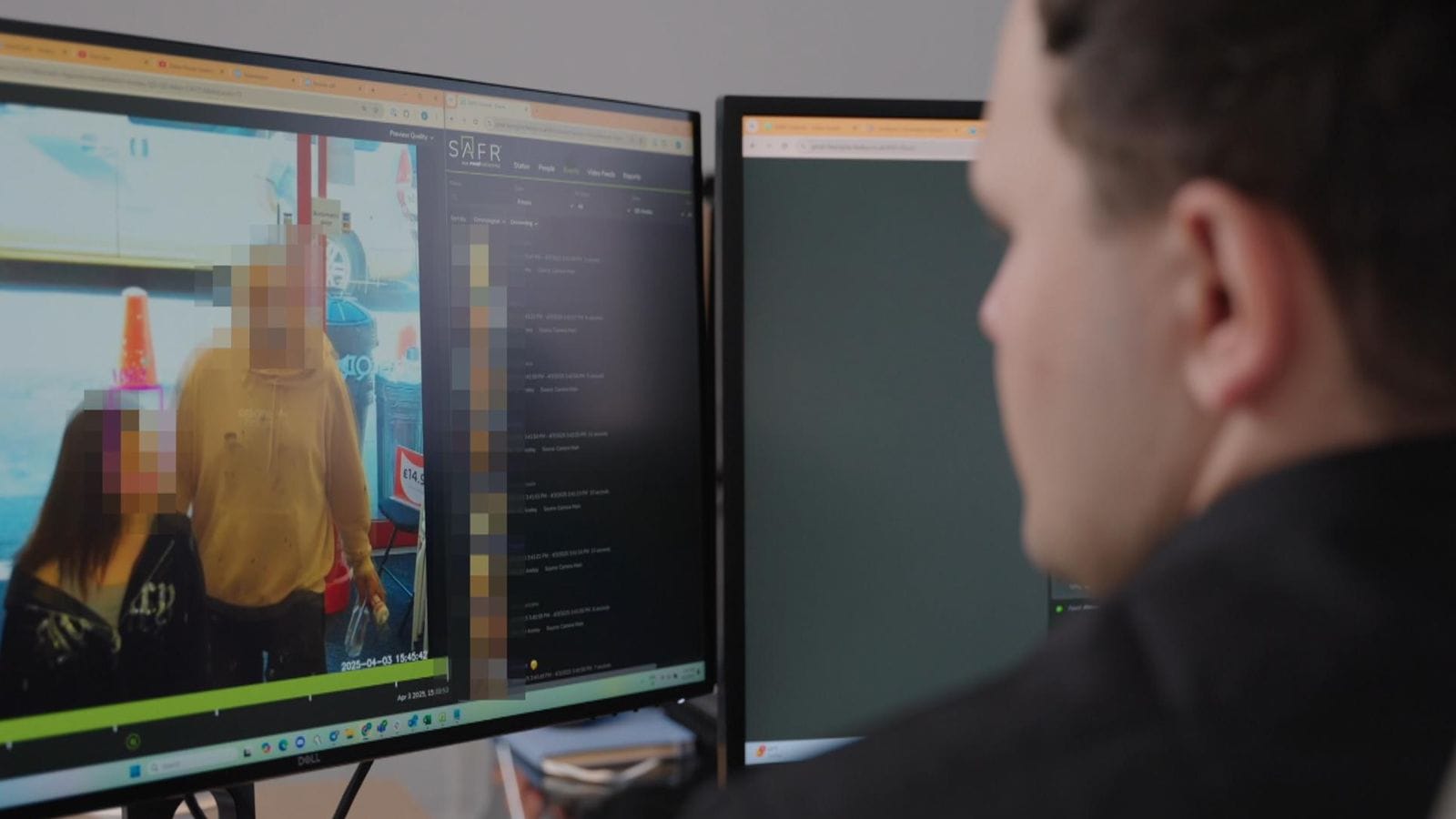
LONDON — British retailers are expanding the use of Facewatch facial recognition cameras at store entrances across the United Kingdom as the technology moves from pilots to wider deployment this winter. Retailers say the system helps protect staff and deter repeat offenders as shoplifting reaches record levels, while privacy advocates argue it amounts to biometric surveillance with weak safeguards, Dec. 21, 2025.
Why retailers are betting on Facewatch
Retailers say they are turning to Facewatch as theft rises and frontline staff face more abuse. Sky News reported that Sainsbury’s, Asda, Budgens and Sports Direct are among the businesses using Facewatch, describing a cloud-based system that scans faces at the entrance, checks them against a watchlist and triggers an alert when a match is found.
Shoplifting increased 13% to 529,994 offences in England and Wales in the year ending June 2025, according to the Office for National Statistics. In interim results from 3,271 retail staff responses, the union Usdaw said 71% experienced verbal abuse, 48% were threatened and 9% were assaulted in the last 12 months, in a Respect for Shop Workers Week briefing.
Supporters say the approach is targeted — designed to focus on repeat offenders — and that non-matching images are not retained. Facewatch chief executive Nick Fisher told Sky News that criticism has been “alarmist.”
Privacy backlash grows as watchlists spread
Civil liberties groups say the same features that make the technology appealing — speed, scale and shared watchlists — also raise the risk of mistakes and private blacklisting. Big Brother Watch director Silkie Carlo called it “a very dangerous kind of privatised policing industry,” Sky News reported.
Disputed cases have sharpened criticism. A June 2025 Guardian investigation described a London woman who said she was added to a Facewatch watchlist after a dispute over 39p of paracetamol, later filing a data protection complaint.
Campaigners have also questioned where the cameras end up. A January 2024 Guardian report said a privacy group found Facewatch deployments in supermarkets were disproportionately concentrated in poorer areas, though retailers have said they deploy the tool based on crime patterns rather than local demographics.
Regulators: not a blank check
The U.K.’s data protection watchdog has warned against treating its past review as a green light for unlimited expansion. The Information Commissioner’s Office said it closed a Facewatch investigation in 2023 without further regulatory action at that time, but stressed the decision was not a “blanket approval” and that each new use must be lawful, transparent and proportionate, in a 2023 blog post.
As the rollout accelerates, the next fight is likely to be over rules and redress: who gets added to a watchlist, how long data is kept and how a shopper can challenge a decision. There is no dedicated U.K. law setting comprehensive rules for facial recognition in shops, and campaigners argue that gap is helping adoption outpace safeguards, as Courthouse News Service reported.


