
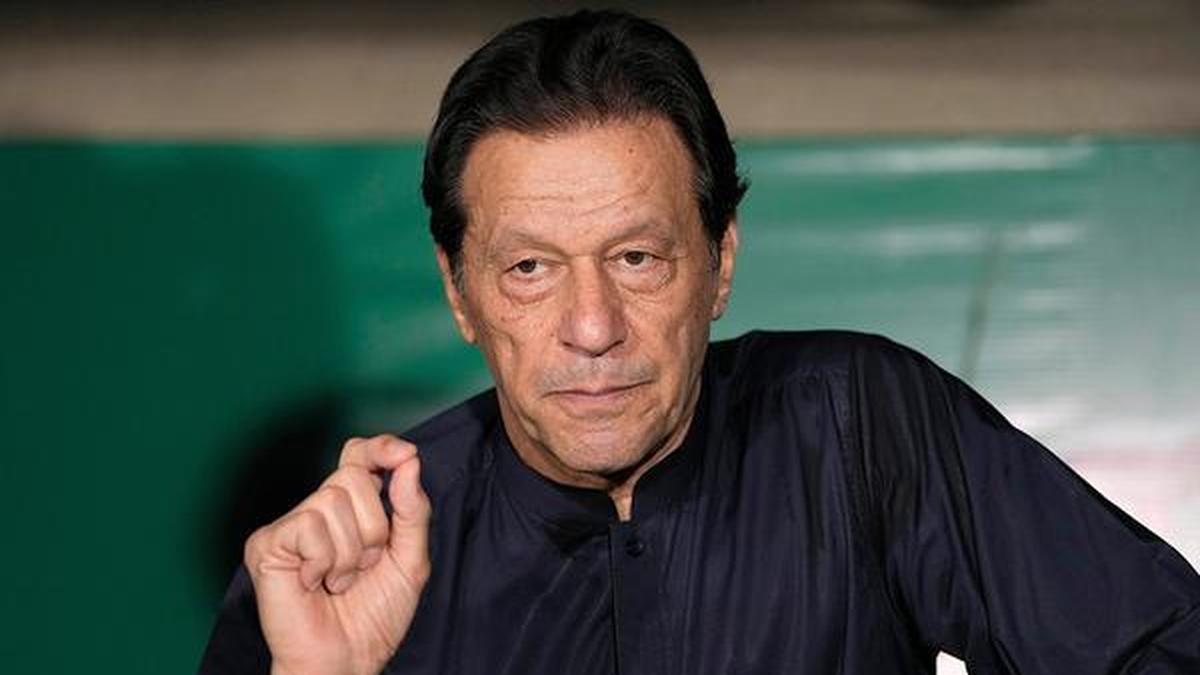
ISLAMABAD — Pakistan Tehreek-e-Insaf founder and former Prime Minister Imran Khan received his fourth intravitreal anti-VEGF eye injection at the Pakistan Institute of Medical Sciences and was discharged after follow-up care, hospital officials said, April 28, 2026. Doctors carried out the procedure after an optical coherence tomography scan showed clinical improvement in his right eye, while PIMS said Khan remained stable before, during and after treatment.
Imran Khan eye treatment: PIMS reports improvement after fourth injection
Khan, who is incarcerated at Adiala Jail in Rawalpindi, was taken to PIMS for the scheduled follow-up procedure, according to Dawn’s report on the fourth eye procedure. The hospital said ophthalmologists examined him before the injection and found him clinically stable.
The procedure was performed as a day-care surgery under microscopic guidance after informed consent and standard monitoring, Geo News reported, citing the PIMS medical update. Hospital authorities said he was later discharged with instructions for further care, follow-up advice and medical documents.
The latest PIMS update said Khan’s optical coherence tomography scan showed clinical improvement before the fourth injection, according to The Express Tribune’s coverage of the hospital statement. The scan is commonly used to examine the retina and assess changes during treatment.
Why the fourth PIMS procedure matters
Khan’s eye condition has become a sensitive medical and political issue because his party and family have repeatedly called for treatment under the supervision of his personal doctors. Arab News reported that PIMS described the latest injection as part of continuing follow-up treatment and said scans showed improvement before the procedure.
The treatment is linked to right central retinal vein occlusion, a condition that can cause swelling and vision loss when the main retinal vein is blocked. The U.S. National Eye Institute says anti-VEGF injections can help treat central retinal vein occlusion and that many patients require ongoing monitoring even after improvement, according to its medical overview of CRVO treatment.
Older reports show continuity in Imran Khan eye treatment
The public timeline of Khan’s eye care dates back to late January, when Geo News reported that PIMS doctors diagnosed central retinal vein occlusion in his right eye after he complained of reduced eyesight. A senior PIMS doctor said at the time that Khan underwent a specialized procedure and was discharged after treatment.
The matter later reached Pakistan’s Supreme Court after Khan’s lawyer said the former premier had suffered major vision loss in his right eye. The Associated Press reported in February that the court ordered a medical board to examine him after the claim raised concern among PTI supporters and Khan’s family.
His follow-up treatment continued in February, when Dawn reported that Khan received a second anti-VEGF intravitreal injection at PIMS and was discharged after doctors found him clinically stable. In March, Arab News reported that Khan underwent a third eye procedure at PIMS, again under medical supervision.
Political concerns continue despite medical update
PTI Chairman Barrister Gohar Ali Khan said the party’s concerns remained unresolved even after the latest injection, arguing that Khan and Bushra Bibi should be moved to a hospital for treatment under the supervision of personal doctors and family members. PIMS, meanwhile, has maintained that Khan’s fourth procedure was completed under standard medical protocols and that he remained vitally stable throughout.
The latest update gives Khan’s supporters a clearer medical milestone in a case that has developed over several months. However, the dispute over access to personal physicians, family oversight and the setting of his treatment is likely to continue unless the government, jail authorities and Khan’s representatives agree on a broader medical-care arrangement.