

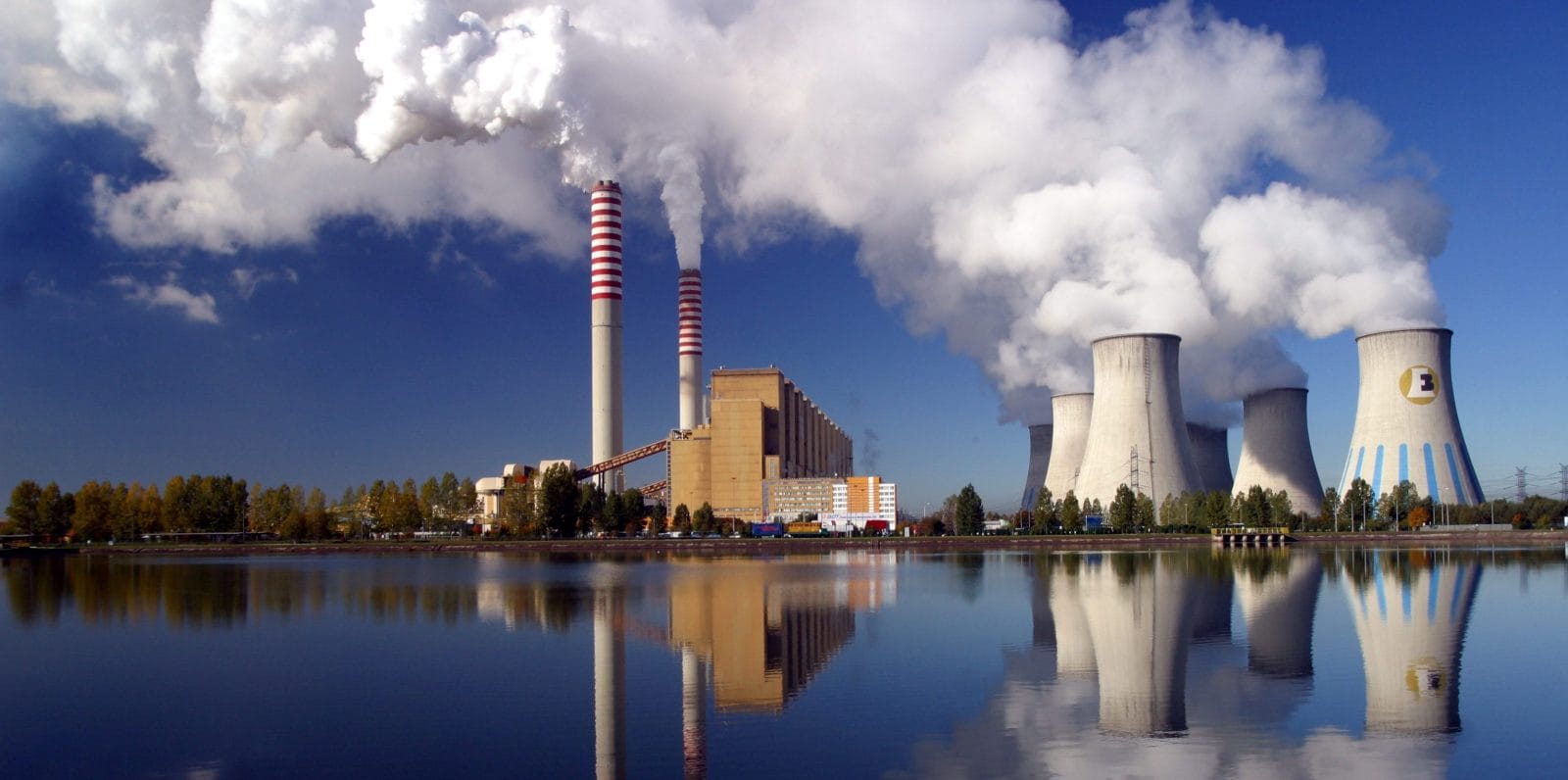
NEW DELHI — India will cap coal-fired power capacity at 300 gigawatts by 2022 while expanding renewables, a government official said. Announced Dec. 7, 2025, the decision aims to reduce fossil fuel dependence but underscores coal’s central role in reliable energy, as regulators warn of risks from rapid growth in solar and wind.
India pauses coal power build-out at 307 GW — for now.
In a separate interview, Pankaj Agarwal, secretary at the Ministry of Power, said that the government plans to cap coal capacity at 307 GW in 2035, from around 210 GW now. He added that policymakers would spend the next three years monitoring demand growth and the pace of clean energy adoption before determining whether India’s coal-fired power should be permitted to expand beyond 2035.
“We would like to have a capacity of 307 gigawatts (GW) of coal by 2035,” Agarwal said in an interview on the sidelines of a power ministry event, laying out the plan as an energy-security antidote even as India chases down its target of 500 GW of non-fossil capacity by 2030.
The 307 GW target essentially turns a pipeline that has been growing for months into law. In August, in a written reply in Parliament, the ministry said it intends to add up to 97 GW of coal and lignite capacity by 2034-35 to meet that thermal benchmark—an increase from the approximately 212 GW projected for 2023. Then, in September, the country’s regulators told an energy forum that 97 GW of new coal-based capacity would operate until the 2050s to balance out renewables, according to a meticulous analysis by Down To Earth.
State utilities have already started locking in supply. Bid documents published in October, seen by Reuters, showed states such as Uttar Pradesh and Assam seeking long-term contracts to buy 7 GW or more of new coal-fired power, out of at least 17 GW contracted since last August, as distributors are ready for surging evening demand and slow battery storage roll-out. That rush implies India’s coal power will be sucked into the grid long after 2035, even if headline capacity growth stops.
Grid risks drive the next phase of India’s coal power.
Officials argue that the seeming contradiction — increasing coal capacity while pledging no new additions after 2035 — is as much the result of grid engineering as of politics. India is installing more solar and wind than ever before, but batteries, pumped hydro and grid capacity are failing to keep up with the pace of renewable deployment. Ghanshyam Prasad, the chair of the Central Electricity Authority, recently said that India’s power system is being pushed into a “high-risk phase” characterised by steep evening ramp-ups as solar production declines and more frequent curtailment of surplus daytime renewable generation. Regulators are scrambling to expand the use of pumped storage and to develop new capacity markets that compensate plants — particularly coal units — that remain available as a flexible backup, rather than just paying them for selling electricity.
Balancing act: The government’s own numbers underscore this delicate balancing act. A 2024 press release forecast that at least 80 GW of incremental coal-based capacity would be needed by 2031-32 to avoid shortages, even as non-fossil capacity is on track to overtake half of India’s installed power fleet. But a previous Reuters investigation found that distribution companies are grappling with grid instability associated with variable renewables and “very low net load” in the middle of the day, which is sending them back to long-term coal contracts.
Meanwhile, clean energy is growing quickly. India has already surpassed 240 GW in non-fossil capacity, with renewables now accounting for just over half of installed capacity and a record 30 GW of new clean power added in the year to April 2025, according to an Associated Press report on the country’s energy transition. But coal still accounts for about three-quarters of electricity generation, which explains why grid planners remain leery of ramping down India’s coal power too quickly.
And this isn’t just a short-term situation: India has to entirely rethink its coal power strategy Th.e increased 307 GW limit is also a U-turn from earlier aspirations for a narrower role for coaThe 2018 National Electricity Plan, the subject of a separate IEEFA analysis from that time period, foresaw only gradual coal additions and was focused on reaching 275 GW of renewable-based capacity by 2027.27A Reuters report from 2019 quoted Indian officials anticipating that coal-fired capacity would reach 238 GW by 2022 – a time when planners were still working under the assumption of an orderly build-out of conventional power plants.tIn 2021, however, the International Energy Agency’s India Energy Outlook suggested there could be “no net growth at all” in the coal fleet once projects under construction were completed, with solar and wind being absorbed as most new demand in cost-optimised scenarios.osThose same past expectations now run headlong into today: a power system moving at giddy speed to absorb cheaper renewables while consolidating dependence on Indian coal power as an insurance policy against blackouts and heatwaves, and to service growth in data centre power. Research from both NREL and others had already demonstrated last year that least-cost pathways could be much more reliant on renewables and flexible resources, with coal gradually declining as a generation resource despite continuing. It says that 307 GW is a “hard” number only through 2035Only 2035. What hap.pens after that will largely depend on whether storage costs continue to fall, whether transmission can keep up with gigawatt-scale solar parks and offshore wind, and whether India can satisfy surging demand without locking itself into another generation of high-emitting assetThe next three years’ worth of data — and decisions — will determine whether today’s pause on India’s coal power expansion marks the beginning of a plateau or just another stop in the long run.un.unre on India’s coal-and-clean-energy balancing act in an Economic Times deep-dive into the “paradox” of the country’s energy transition.


