

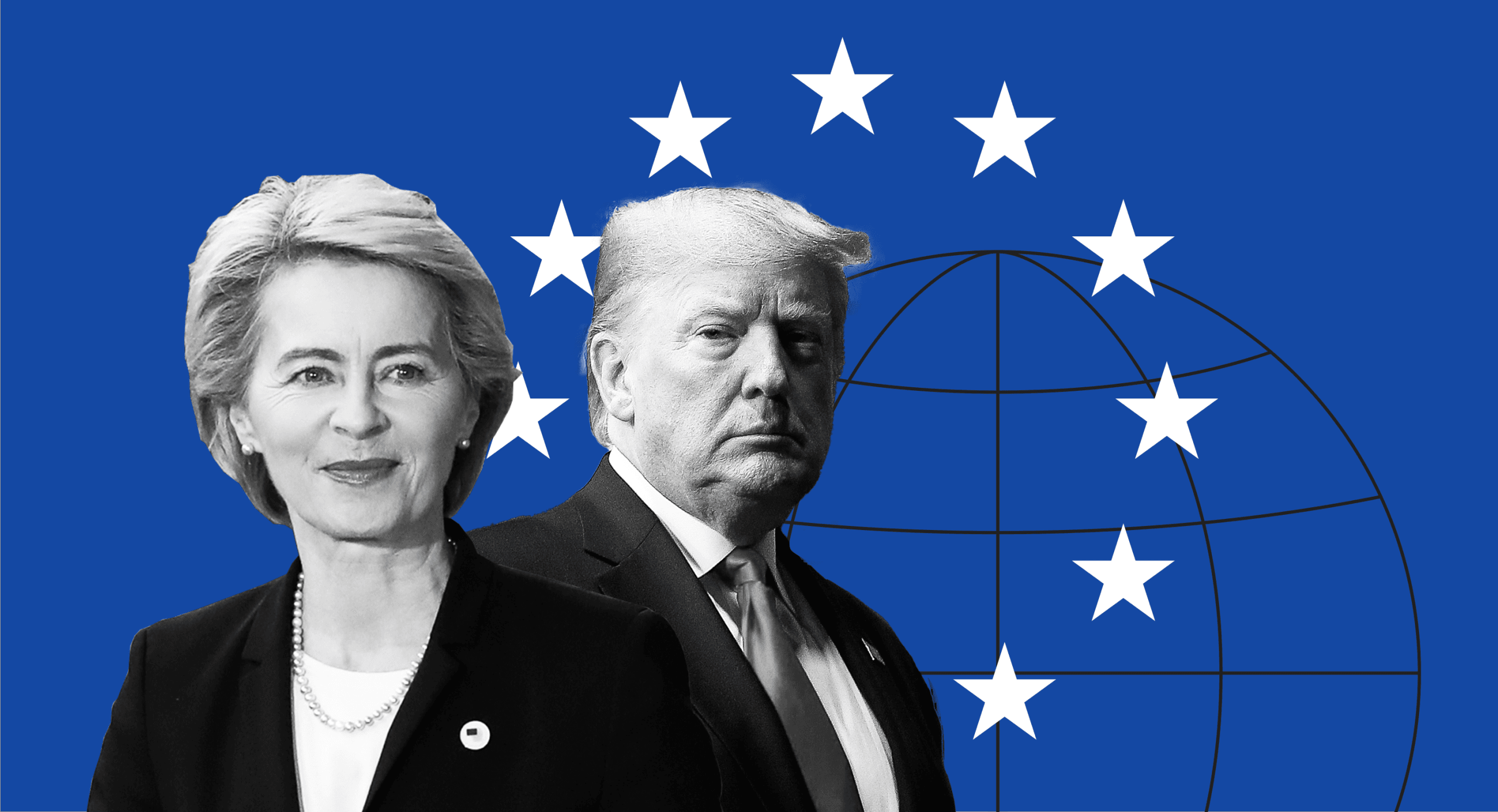
WASHINGTON — President Donald Trump released a broad, Europe-focused national security blueprint at the White House on Friday, laying out a fresh set of ideas for how the United States will deal with its allies worldwide. The plan raises alarms about Europe facing “civilizational erasure,” asks whether NATO member states will prove reliable allies, and ties U.S. support for a prompt Ukraine cease-fire to a reordering of transatlantic politics, Dec. 8, 2025.
How the Trump Europe game plan rewrites America’s friends and foes
In its 33 pages, the Trump Europe strategy describes an ominous portrait of the continent: a place that is roiled by rising nationalism, hamstrung by its own union and vassal to Russian overtures, but nowhere more in peril than by immigration, limits on free speech and sagging birthrates threatened with “civilizational erasure.” It warns that if current trends continue, parts of Europe “may be unrecognisable in 20 years or less” and cautions that some NATO members may no longer have the economic and security resources necessary to remain reliable U.S. allies, according to a CBS News summary of the strategy’s Europe chapter.
At the same time, the strategy picks up on themes that nationalist parties across the European Union have long championed, such as extolling the “growing influence of patriotic European parties” and casting their rise as a hopeful sign of cultural renaissance rather than what many critics would see as an existential threat to liberal democracy. As the Associated Press report that ran on NPR states, it directly links U.S. support to these forces and calls on European allies to “step up and spend — and more importantly do — much more for collective defence.”
European diplomats have responded cautiously but nervously. Kaja Kallas, the European Union’s foreign policy chief, told the Doha Forum that the rhetoric about “civilizational erasure” was overblown, but the fact remained that America is still Europe’s “biggest ally,” and she urged both sides to “stick together” even as Washington ranks Europe lower in its calculus of global priorities. Her remarks, revealed in Al Jazeera’s interview with the EU foreign policy chief, Kaja Kallas, highlight the juggling act officials are undertaking to manage the political fallout as Ukraine peace negotiations continue.
NATO testing and the Trump-Europe strategy
For many in Europe’s security establishment, the Trump Europe strategy is a bureaucratic codification of doubts about NATO that Trump has aired for years. In March, he informed reporters in the Oval Office that if allies didn’t meet his demands for defence spending, “I’m not going to defend them,” comments that triggered fresh alarm in European capitals already fretting about the sturdiness of U.S. security guarantees.
Such concerns have been around at least since Trump’s first term: The 2017 Brookings analysis of Trump’s NATO Article 5 stance argued that his reluctance to clearly endorse the alliance’s mutual-defence clause, for instance, left it unclear whether Washington would actually step in if a member state were under attack. And those sorts of fears returned last year, when an Atlantic Council op-ed cautioned that Trump’s rhetorical hemming and hawing about defending Montenegro might encourage Russia to test NATO’s eastern edge.
Coupling alliance obligations ever more explicitly to money, Trump, as a 2024 candidate, told a rally that he would “encourage” Russia to “do whatever the hell they want” to NATO members who fall short of spending targets — a line that critics and NATO officials said risked inviting aggression. Those comments, relayed in an ABC News report from February 2024, sound like a draft of the harder-edged stance that was enshrined in the Trump Europe strategy.
Trump’s plan on Ukraine — a gamble to campaign on a cease-fire. A dose of political chaos, such as the investigation by independent counsel Robert Mueller that led to impeachment, and his own homeland security chief acting against his wishes to fund border wall construction.
Now in Ukraine, the Trump-Europe strategy is trying to turn that rhetoric into a quick cease-fire. The national security plan defines ending the Russian invasion as a core American interest and maintains that restoring “strategic stability” with Moscow will enable Europe to assume the primary responsibility for its defence.
The Kremlin has given rare public praise, with spokesman Dmitry Peskov welcoming the strategy as largely aligning with Russia’s view of the world and noting that it opposes further NATO expansion. The reaction, as reported, occurred in a Reuters dispatch from Moscow and has fueled criticism in Europe that Washington is emphasising a geopolitical reset with Russia at the expense of Ukraine’s territorial integrity.
Negotiations over a U.S.-drafted peace plan are intensifying as Trump’s envoys, Steve Witkoff and Jared Kushner, meet with Ukrainian President Volodymyr Zelenskiy. Zelenskiy describes the talks as “constructive, although not easy,” with the plan proposing to exchange land held by Russian forces for security guarantees short of NATO membership. Another Reuters story provided details from Zelenskiy’s latest remarks, highlighting the urgency as European leaders rush to weigh in while talks shift toward London and Brussels.
The scramble to negotiate a cease-fire also echoes Trump’s longstanding contention that he could resolve the war “in 24 hours” through sheer personal dealmaking with Zelenskiy and Russian President Vladimir Putin. That boast, fact-checked in an Associated Press article last year analysing his claim that he could end the war within 24 hours, has now taken the form of a formal peace initiative that many Ukrainians and Europeans fear will enshrine Russian territorial gains.
Supporters see the Trump Europe strategy as a long-overdue insistence that Europe pay more for its own defence and face up to what they see as a self-inflicted demographic and cultural crisis. Critics, by contrast, view it as a broadside against democratic allies—one that threatens to erode NATO’s deterrent, embolden far-right parties, and railroad beleaguered Ukraine into a lopsided peace. The ultimate test, then, will be whether the United States, in seeking to avoid “civilizational erasure,” actually hastens the fragmentation of Europe—and with it, the Western alliance—that the strategy purports to prevent.


