

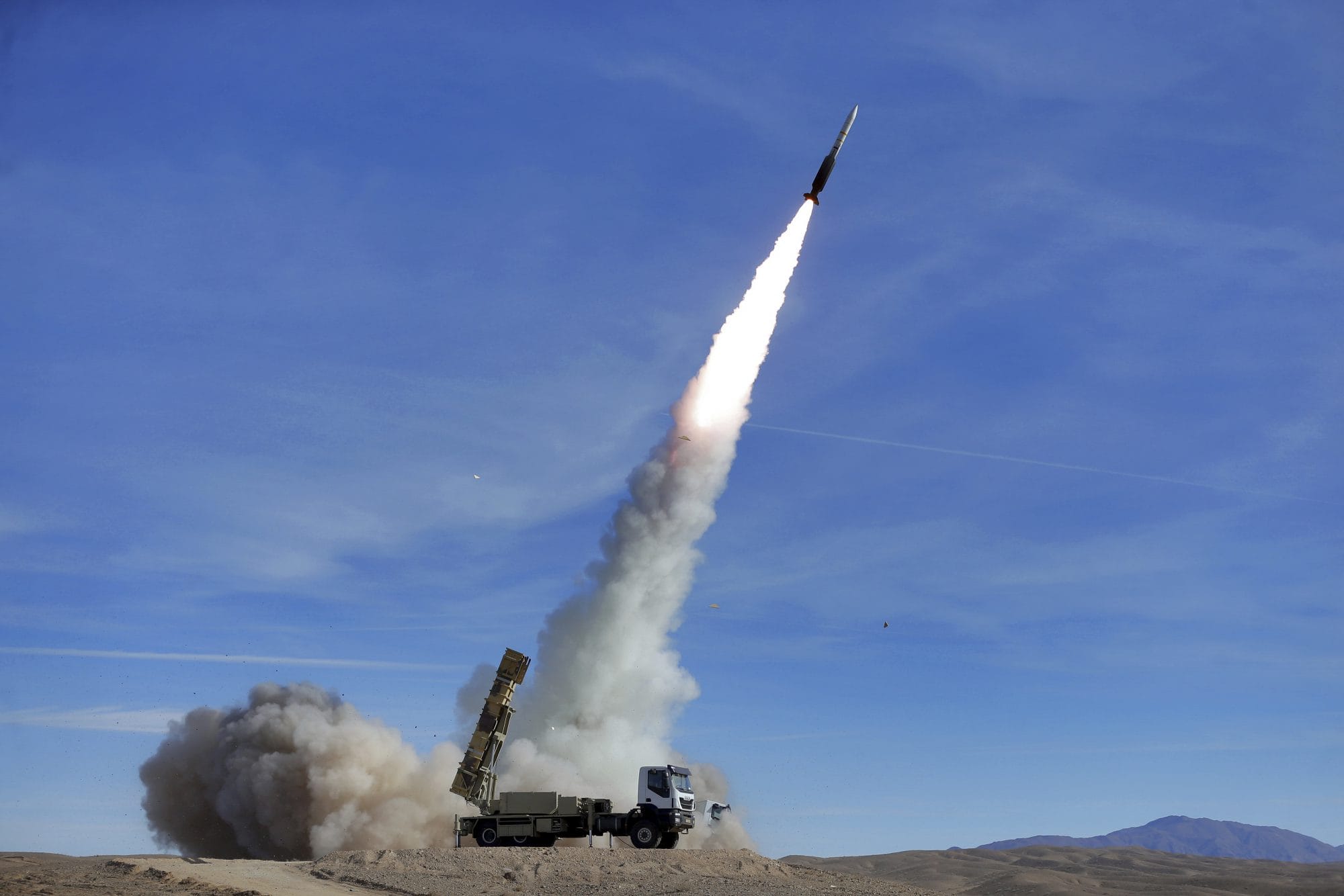
WASHINGTON — President Donald Trump warned in his State of the Union address that Iran is working on missiles that will “soon reach” the United States, but people familiar with U.S. intelligence reporting said current assessments still put an Iran ICBM capability years away, Feb. 27, 2026.
The gap matters because the administration is weighing how hard to press Tehran in nuclear talks — and whether to lean on military threats — while analysts warn that overstating an ICBM timeline can muddy deterrence and diplomacy.
Iran ICBM warning vs. the DIA’s 2035 benchmark
Three sources familiar with U.S. intelligence reports said there has been no change to an unclassified 2025 Defense Intelligence Agency assessment that Iran could take until 2035 to field a “militarily viable” intercontinental ballistic missile, a conclusion that clashes with the president’s “soon” formulation in his speech, according to a Reuters account of the intelligence dispute.
That DIA timeline appears in a one-page public graphic, “Golden Dome for America: Current and Future Missile Threats to the U.S. Homeland,” which says Iran’s space launch vehicles could be used to develop a militarily viable ICBM by 2035 “should Tehran decide to pursue the capability.” The same graphic lists a 2035 inventory figure of 60 ICBMs for Iran, underscoring how much the assessment depends on intent, resources and engineering follow-through.
- What the White House says: Iran is “soon” approaching a U.S.-reaching missile.
- What the DIA benchmark says: A 2035-era ICBM remains a conditional possibility tied to space-launch know-how.
- What experts stress: Range is only part of the problem; re-entry vehicles, guidance and testing cadence matter as much as booster size.
What Iran can reach today — and what it can’t
Iran already fields a large regional missile force, and that is where most of the near-term risk sits: U.S. bases in the Middle East, Israel and parts of Europe are within range of Iranian short- and medium-range systems. The president’s latest rhetoric, however, focuses on an Iran ICBM — a different class of weapon typically defined as having a range above 5,500 kilometers (3,400 miles) and designed to deliver a re-entry vehicle back through the atmosphere at extreme speeds.
In remarks relayed by Reuters, Iranian Foreign Minister Abbas Araghchi said Iran has “limited range to below 2,000 kilometers intentionally” and framed the missile program as defensive. A separate Reuters Q&A on Iran’s weapons programs noted that Iranian state media has claimed Tehran is developing a missile capable of reaching the United States, while missile expert Jeffrey Lewis called the 2035 estimate “very conservative” if Iran chose to prioritize long-range development.
Why the “space rocket equals ICBM” shorthand can mislead
U.S. officials have long flagged Iran’s space-launch work as “dual use” — meaning some technologies can overlap with ballistic missile development — but technical overlap is not the same as a ready-made Iran ICBM. Space launch vehicles are optimized to loft payloads into orbit; an operational ICBM must reliably deliver a warhead along a ballistic trajectory and protect it during re-entry, a major engineering hurdle highlighted by analysts and former U.N. inspector David Albright in the Reuters report.
For policymakers, the distinction is more than academic. A credible Iran ICBM capability would alter U.S. homeland defense calculations and crisis stability. But an exaggerated timeline can also create perverse incentives: it can harden negotiating positions, raise public expectations for rapid action, and shift attention away from the missile threats Iran can employ right now in the region.
Nuclear context: capability, intent, and the missing “warhead” piece
Even the most alarming Iran ICBM scenarios assume more than a big rocket. They assume a deliverable payload — and, in the nuclear case, a warhead package that can survive launch stresses and atmospheric re-entry. The U.S. intelligence community’s public baseline has continued to emphasize uncertainty on intent. In its 2025 Annual Threat Assessment, the Office of the Director of National Intelligence said it “continue[s] to assess Iran is not building a nuclear weapon” and that Supreme Leader Ali Khamenei has not reauthorized the program he suspended in 2003, even as internal debate in Iran has become more public.
That’s why analysts often treat the Iran ICBM question as a “two-key” problem: you need the long-range delivery system, and you need the payload and re-entry package. Either can stall the other — and both are sensitive to battlefield setbacks, sanctions pressure, foreign assistance and domestic politics inside Iran.
How Congress and analysts are framing the Iran ICBM debate
U.S. lawmakers have tracked the missile issue for years through mandated reports, sanctions and hearings. A June 2025 U.S. Naval Institute summary of a Congressional Research Service brief highlighted DIA’s view that Iran could leverage space-launch vehicles to pursue a militarily viable ICBM by 2035, while noting ongoing debates over how quickly Iran could extend range and improve accuracy if it chose to do so.
The bottom line from many defense analysts is similar: the Iran ICBM question is real enough to plan for, but not imminent enough to treat as settled — and it should not eclipse the day-to-day reality of Iran’s regional strike capacity.
Long view: how Iran ICBM estimates have shifted over time
Part of today’s confusion is historical. Over the past three decades, U.S. estimates have moved as Iran’s programs evolved — and as analysts learned what was hype, what was feasible and what required outside help.
-
- Early 2000s-era forecasts: An Arms Control Association analysis reviewed how U.S. intelligence estimates in 1999 and 2001 suggested Iran could develop an ICBM capable of reaching the United States by 2015 — but also stressed bottlenecks in propulsion, stage separation and re-entry vehicle design (read the 2007 overview).
-
- Mid-2010s dial-back: By 2014, a Pentagon report to Congress backed away from the long-held view that Iran could flight-test a U.S.-reaching ICBM by 2015, noting instead that planned space-launch work could reach ICBM-class ranges if configured differently (as summarized by Iran Watch).
-
- ICBM tech via space launch: In 2015, National Defense University authors wrote that Iran did not possess an ICBM but was advancing satellite launch vehicles and related technologies that could feed long-range development (Joint Force Quarterly’s 2015 article).
-
- DIA’s public framing: When DIA released its unclassified “Iran Military Power” overview in 2019, it highlighted how Iran’s space-launch efforts could serve as a pathway for intercontinental missile technologies (DIA’s release announcement).
Read together, the arc is clear: Iran’s ability to threaten the U.S. homeland has been a recurring concern in official writing, but the estimated arrival date has repeatedly slid as analysts separated theoretical range from operational reliability and warhead delivery.
Bottom line
Trump’s warning has thrown the ICBM debate back into the spotlight, but the latest public benchmarks still point to 2035 as the conditional horizon for a militarily viable Iran ICBM — not an imminent breakthrough. For now, the immediate missile risk from Iran remains regional, while the longer-range question hinges on whether Tehran decides to sprint for an Iran ICBM capability and can solve the hardest engineering pieces along the way.


