

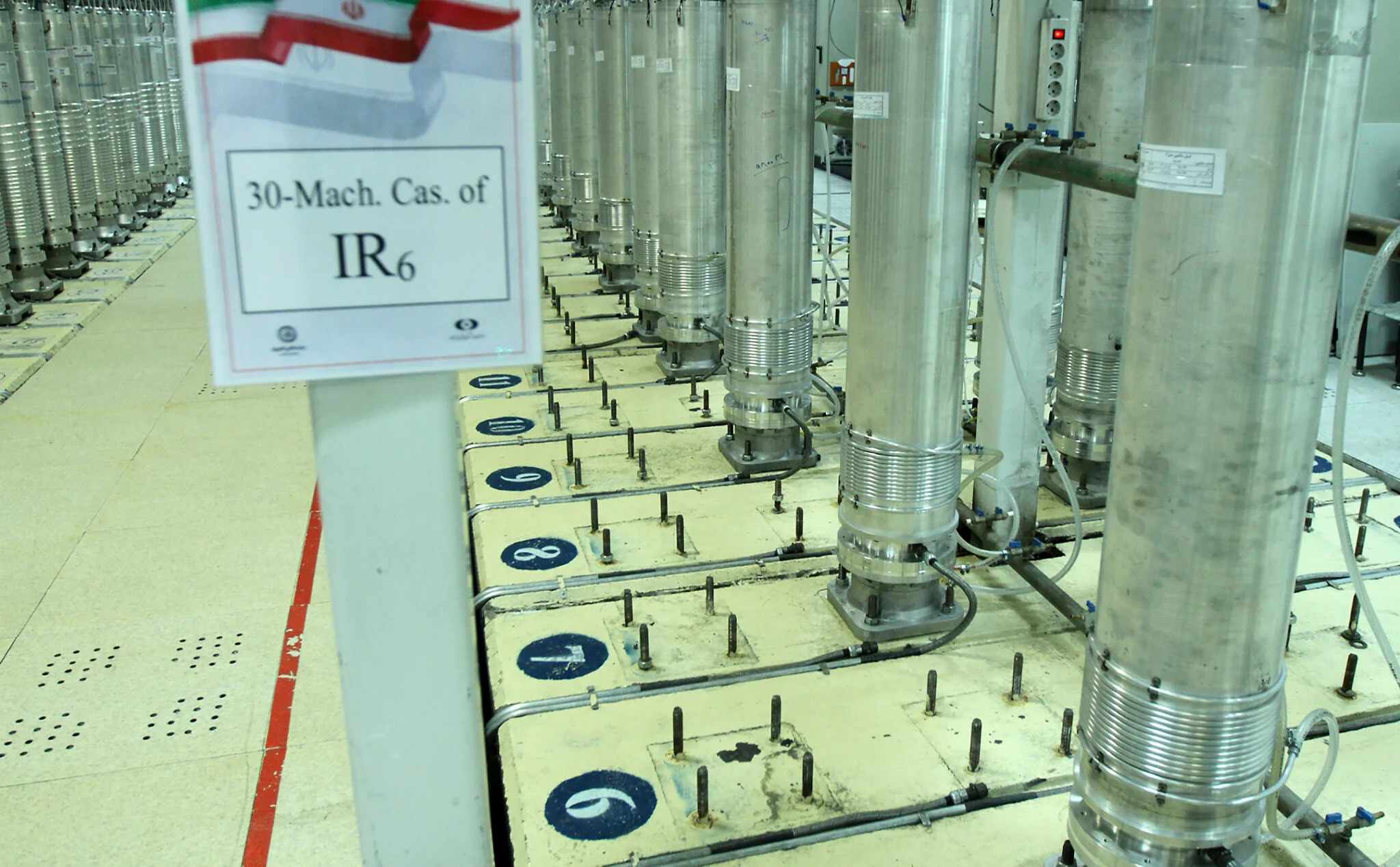
Speaking in Paris, IAEA Director General Rafael Grossi said the stock was “mainly” at Isfahan and that the agency had seen no sign the material had been moved, according to Reuters’ report on Grossi’s latest remarks. Grossi said Isfahan had “a bit more than 200 kg” of uranium enriched to 60% at the time of the last inspection, while some material stored elsewhere may have been destroyed. Reuters also reported that Iran’s broader stock of uranium enriched to that level stood at 440.9 kg before the June 2025 attacks.
Why the Iran uranium stockpile matters now
In its latest IAEA board report, the agency said Iran’s estimated stockpile as of June 13, 2025, included 440.9 kg of uranium enriched to up to 60% U-235. The report also said inspectors observed regular vehicular activity around the entrance to the Isfahan tunnel complex, where uranium enriched up to 20% and 60% had been stored, but the agency could not determine the nature or purpose of activity at affected sites without on-the-ground access. Iran, in its reply to the agency, said normal safeguards implementation was “untenable” under prevailing circumstances but maintained that its willingness to engage constructively endures.
Grossi sharpened that warning in his introductory statement to the IAEA Board of Governors, saying the agency had gone more than eight months without access to Iran’s previously declared inventories of low- and high-enriched uranium. As a result, the IAEA said it cannot provide assurances that declared nuclear material at affected facilities has not been diverted from peaceful activities.
The agency has repeatedly said Iran must provide the declarations, reports and access required under its safeguards obligations. It has also noted that Iran remains the only non-nuclear-weapon state under the Nuclear Non-Proliferation Treaty to have produced and accumulated uranium enriched to 60%, a level that is a short technical step from weapons-grade.
Iran uranium stockpile concerns have built over time
The current alarm did not emerge overnight. In May 2024, Reuters reported that Iran’s stock of uranium enriched to up to 60% had risen to 142.1 kg, underscoring how quickly the program was advancing even before the regional war and the later collapse in inspections.
By November 2025, the monitoring gap had become a story of its own. The Associated Press reported that the IAEA had lost continuity of knowledge over Iran’s previously declared nuclear material at facilities affected by the June strikes, and that verification of the stockpile had become long overdue.
That longer timeline is what gives the current Isfahan assessment its weight. The IAEA still says it has no credible indication of a coordinated nuclear weapons program, but the combination of a sizable 60% stockpile, uncertain access and incomplete accounting keeps the Iran file at the top of the agency’s proliferation concerns.


