
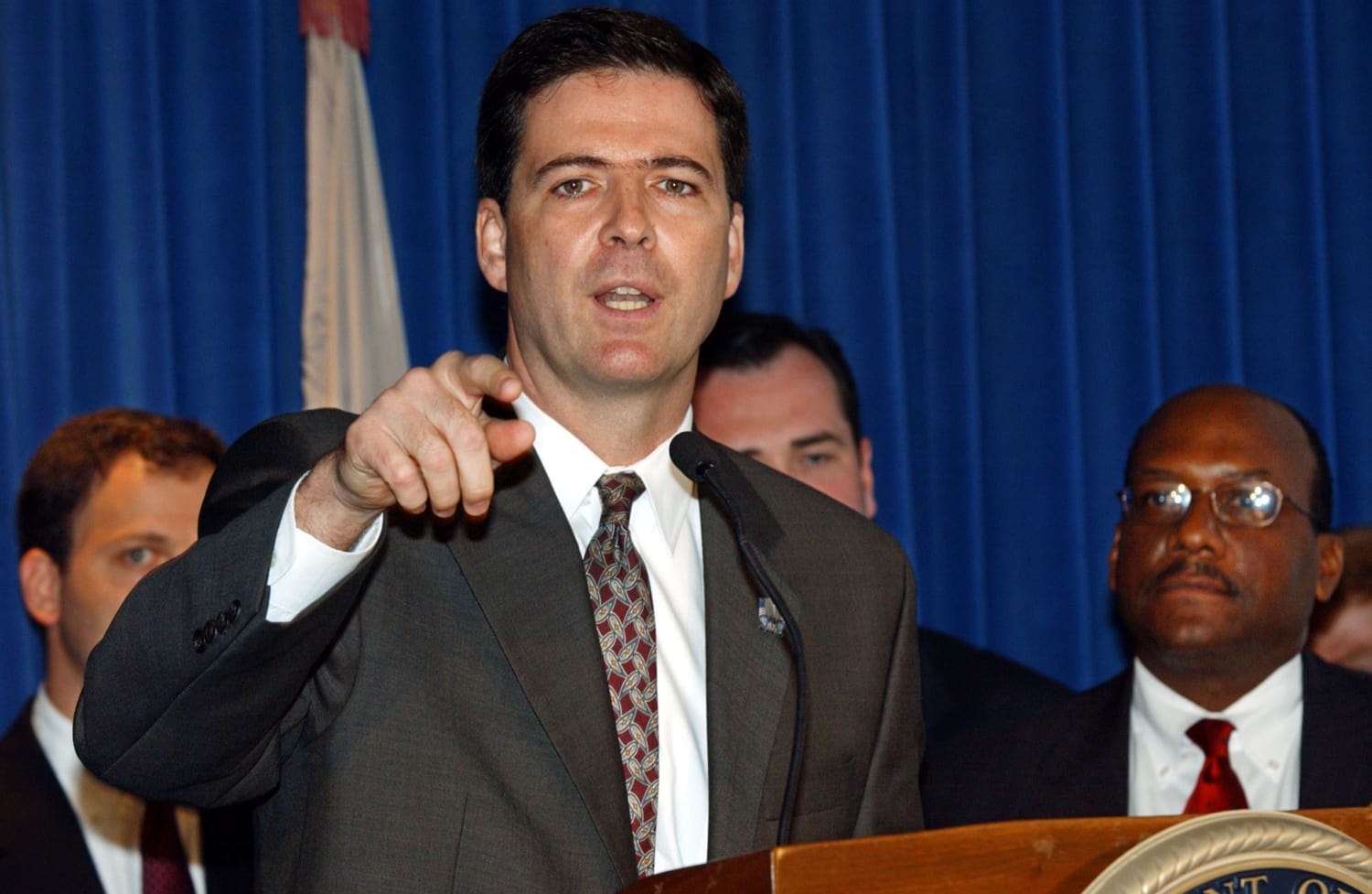
ALEXANDRIA, Va. — Former FBI Director James Comey surrendered to federal authorities and made his first court appearance at a federal courthouse after a North Carolina grand jury indicted him in a case alleging he threatened President Donald Trump through a 2025 Instagram post, Wednesday, April 29, 2026.
The case stems from a photo of seashells arranged to read “86 47,” which prosecutors say represented a threat to Trump, the 47th president. Comey’s lawyers are preparing challenges rooted in intent, free speech and claims that the prosecution is vindictive and selective.
The Justice Department said in its announcement of the indictment that Comey is charged with threatening the president and transmitting a threat in interstate commerce. The department said he faces a maximum penalty of 10 years in prison if convicted, while noting that an indictment is an accusation and a defendant is presumed innocent unless proven guilty.
The three-page indictment alleges Comey knowingly and willfully posted a photograph on Instagram depicting “86 47,” which prosecutors say a reasonable person familiar with the circumstances would interpret as a serious expression of intent to harm Trump.
Why James Comey faces a major legal fight
Comey did not enter a plea during the brief Virginia hearing. Reuters reported that U.S. Magistrate Judge William Fitzpatrick ordered Comey released without special conditions and that his next appearance is expected in North Carolina, where the indictment was returned.
Defense attorneys Patrick Fitzgerald and Jessica Carmichael said they plan to challenge the case as politically motivated, according to The Washington Post’s account of the hearing. Fitzgerald also indicated the defense would seek records tied to a possible motion arguing vindictive and selective prosecution.
The expected fight centers on whether the post qualifies as a true threat or protected political speech. Comey has said he understood the numbers as a political message, not a call for violence, and removed the post after criticism.
How the “86 47” post became a criminal case
The controversy began in May 2025, when Trump administration officials said federal law enforcement was reviewing the post. At the time, AP reported that the Secret Service was investigating after Homeland Security Secretary Kristi Noem and other Republicans described the image as a call for violence.
A day later, Reuters reported that Comey met voluntarily with the Secret Service and had taken down the post, saying: “I oppose violence of any kind.” Trump rejected that explanation and said Comey knew what the numbers meant.
The slang term “86” can mean to get rid of something or remove someone, though Trump and his allies have argued it can also carry a violent meaning. The number 47 is widely understood in the case as a reference to Trump as the 47th president.
Older cases and the long-running Trump-Comey feud
The new indictment is the latest chapter in a feud that dates to Trump’s first term. AP’s 2019 reconstruction of the Comey firing, based on the Mueller report, detailed how Trump’s 2017 decision to dismiss the FBI director became central to the Russia investigation and years of political conflict.
The case also follows another failed prosecution of Comey. Reuters reported in November 2025 that a federal judge dismissed criminal charges against Comey and New York Attorney General Letitia James after ruling the prosecutor who brought the cases was unlawfully appointed.
Comey has remained one of Trump’s most visible critics since his dismissal as FBI director. Trump, in turn, has repeatedly accused Comey of misconduct tied to the Russia investigation and the FBI’s handling of politically sensitive matters.
What happens next
The case is expected to move to federal court in North Carolina for arraignment and pretrial motions. The defense is likely to argue prosecutors cannot prove Comey intended to threaten Trump, while the government is expected to contend that Comey’s background as a former FBI director shows he understood the likely meaning and impact of the post.
For now, the immediate legal question is not whether the post was offensive or provocative, but whether it meets the high constitutional threshold for a criminal threat. That issue could determine whether the indictment survives before the case ever reaches a jury.