

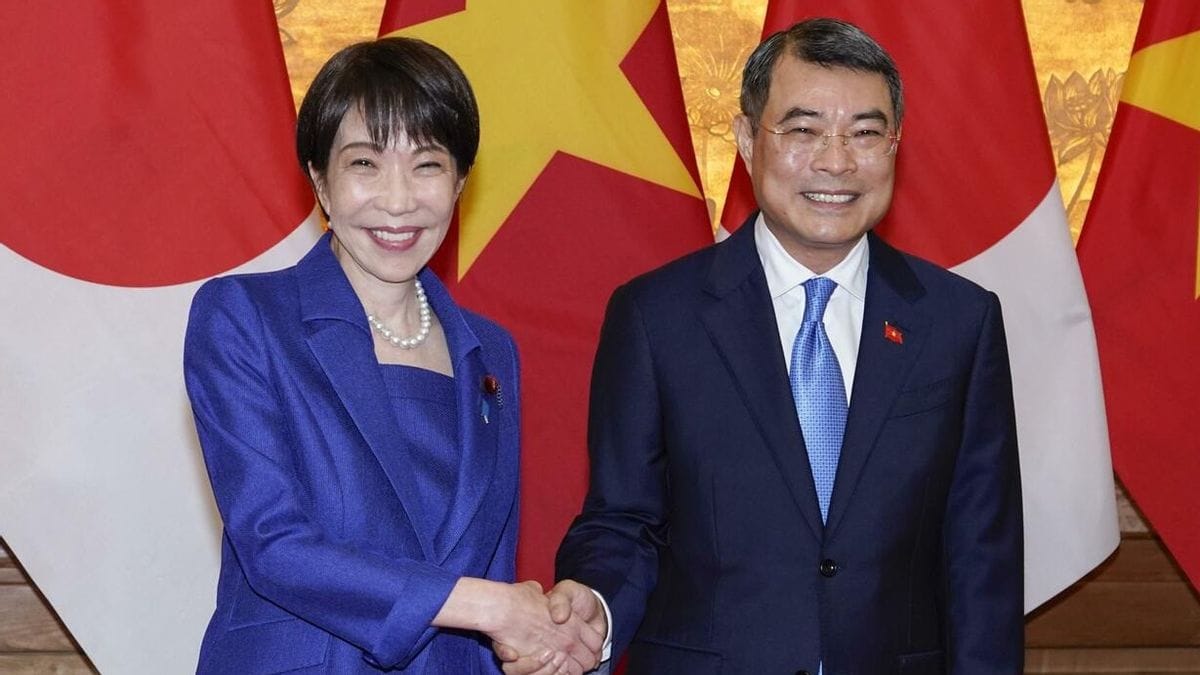
The two sides agreed to advance economic security cooperation in energy, critical minerals, artificial intelligence, semiconductors and space, according to Japan’s Foreign Ministry account of the Japan-Viet Nam summit meeting. The talks build on a broader Comprehensive Strategic Partnership and signal a more practical phase in which Tokyo and Hanoi are linking diplomacy to resource access, industrial policy and manufacturing stability.
Why the Japan Vietnam pact matters for supply chains
Energy was the most immediate issue. Japan said the leaders agreed to proceed with support through Nippon Export and Investment Insurance for crude oil procurement for Vietnam’s Nghi Son Refinery and Petrochemical Complex under the POWERR Asia framework. The refinery is important to Vietnam’s fuel supply and to the production chains that support its manufacturing sector.
Takaichi also used the visit to frame Vietnam as a supply-chain hub in the Indo-Pacific. In a foreign policy speech in Hanoi, she pointed to Vietnam’s role in manufacturing and identified semiconductors, space and critical minerals as areas where the two countries have room to expand cooperation, according to Japan’s summary of her foreign policy speech at Vietnam National University.
Vietnam has been seeking stronger energy backing from partners as instability in the Middle East has complicated crude oil access and raised supply concerns. A Reuters report on the Hanoi talks said Japan’s support for Vietnam’s energy needs includes assistance with crude oil supplies for Nghi Son through a $10 billion regional initiative.
Critical minerals move to the center of Japan Vietnam cooperation
The minerals portion of the pact is strategically significant because Vietnam holds major rare earth potential, while Japan wants to reduce exposure to concentrated supply chains. Japan’s Foreign Ministry said the two leaders agreed to cooperate on strengthening supply chains, including rare earths in Vietnam.
Vietnamese officials described the relationship in similar economic-security terms. Vietnam’s Ministry of Foreign Affairs said Takaichi stressed that bilateral economic cooperation would help strengthen strategic autonomy and resilience for both countries during her meeting with Communist Party General Secretary and State President To Lam, according to the ministry’s readout of the Hanoi meeting.
The challenge is that rare earth reserves alone do not create a secure supply chain. Mining, separation, refining and magnet production require capital, technology, environmental controls and dependable regulation. That is why Japan’s role could matter: Tokyo can bring financing, industrial customers and processing expertise, while Vietnam can offer resource potential and a growing manufacturing base.
The longer trend is already clear. In 2023, Vietnam set out plans to sharply raise rare earth output by 2030, with Reuters reporting that Hanoi aimed to develop a more synchronized and sustainable rare earth mining and processing industry in an older article on Vietnam’s rare earth production targets. That plan helps explain why the latest Japan-Vietnam agreement is not a one-off announcement, but part of a broader effort to turn mineral potential into industrial capacity.
A partnership built over several years
The latest pact also reflects continuity in bilateral ties. Japan and Vietnam formally upgraded relations to a Comprehensive Strategic Partnership in November 2023, a move Reuters said underscored Vietnam’s growing role in global supply chains as companies diversified production in Asia. That earlier upgrade in Japan-Vietnam relations gave both governments a framework for deeper cooperation on trade, security and strategic industries.
Japan has also been widening its economic-security agenda across Southeast Asia. At a Japan-ASEAN summit in 2023, leaders emphasized security, economic cooperation and supply-chain resilience, according to an older Associated Press report on Japan and ASEAN efforts to strengthen ties. The Vietnam agreement fits that regional pattern, but with a sharper focus on energy and minerals.
The timing is important for both governments. Vietnam is trying to secure energy supplies while sustaining its role as a manufacturing destination for electronics, consumer goods and industrial components. Japan, meanwhile, is trying to keep its companies supplied with materials needed for clean energy, defense, electric vehicles and advanced electronics.
The agreement also comes as Japan is pursuing similar supply-chain deals with other partners. Tokyo’s energy and minerals diplomacy continued in Australia after Takaichi’s Vietnam stop, where Japan and Australia announced deeper cooperation on energy security and critical minerals. The sequence shows that Japan is building a wider network rather than relying on a single partner.
What comes next
The pact’s impact will depend on implementation. For energy, the first test will be whether Japanese-backed arrangements help stabilize crude procurement for Nghi Son and reduce Vietnam’s exposure to market disruption. For minerals, the harder test will be whether the two countries can move beyond political agreement toward mining, processing and manufacturing projects that meet commercial and environmental standards.
Japan’s Ministry of Foreign Affairs said Takaichi’s May 1-5 trip to Vietnam and Australia was designed to strengthen cooperation in economic security fields, including energy, critical minerals and science and technology, according to the ministry’s pre-visit announcement. That framing suggests the Hanoi pact is part of a broader Japanese strategy to make supply chains more resilient across the Indo-Pacific.
For Vietnam, the agreement offers a chance to turn resource wealth and manufacturing strength into higher-value industries. For Japan, it offers another route to secure materials and energy flows in a period when global supply chains are becoming more contested. Together, the Japan Vietnam pact marks a practical step toward a more diversified and resilient regional economy.


