

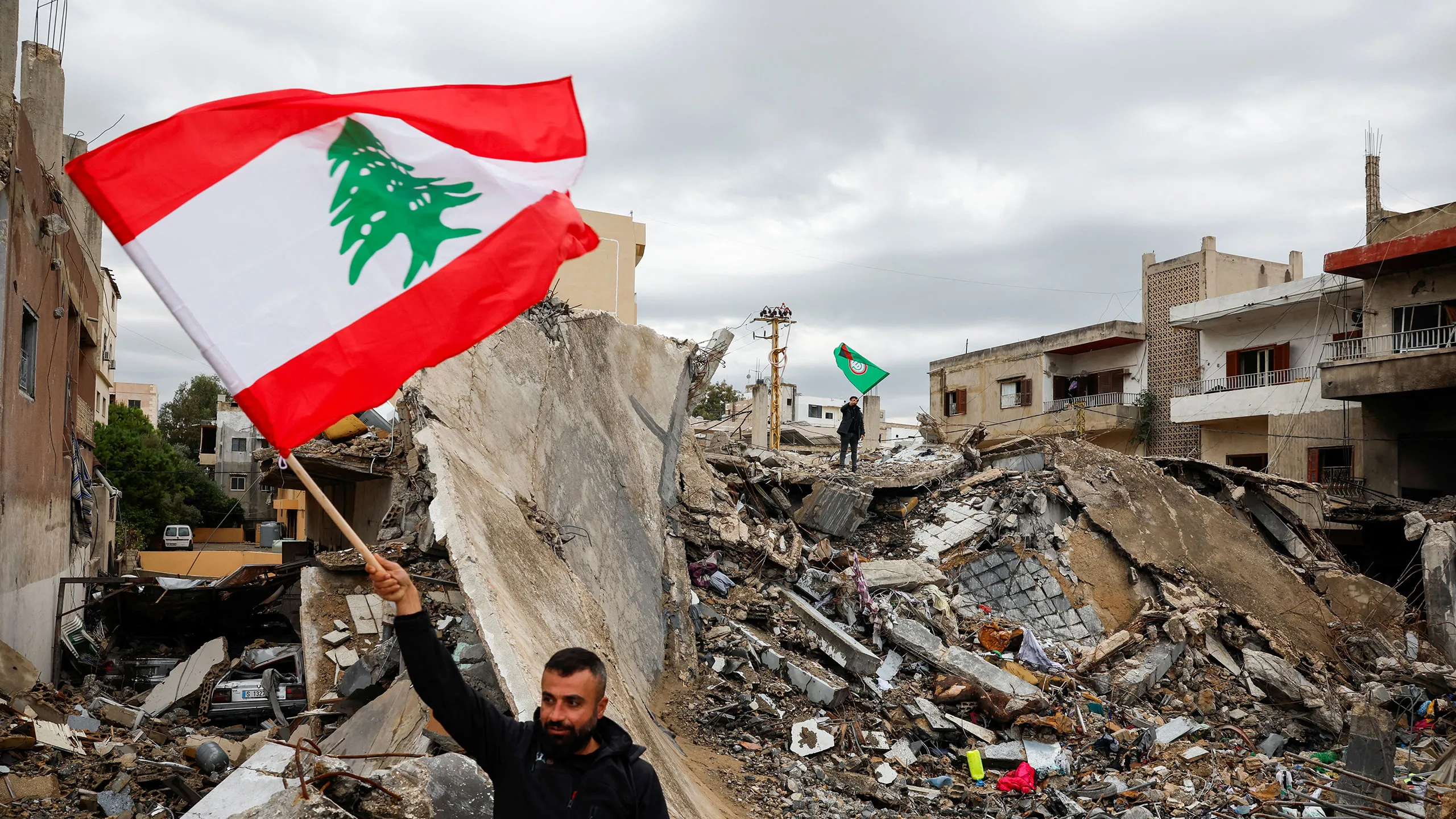
BEIRUT — The U.S.-backed Lebanon ceasefire faced a critical test in southern Lebanon Sunday as Israel ordered residents of 11 towns and villages to evacuate after fresh strikes and renewed Hezbollah fire. The escalation threatens Washington’s push to turn the truce into a broader security arrangement that restores Lebanese state control over the south, May 3, 2026.
Lebanon ceasefire strains under new strikes and Hezbollah fire
The Israeli military said it was carrying out operations against Hezbollah after what it described as a ceasefire violation, warning residents to move at least 1,000 meters, or about 3,300 feet, away from their homes and into open areas, according to an urgent evacuation warning reported by Reuters. The warning came as Israel continued strikes across southern Lebanon and Hezbollah maintained drone and rocket attacks against Israeli troops in Lebanon and northern Israel.
The latest fighting followed a deadly Saturday in the south, where Israeli airstrikes killed at least seven people and wounded others, while Israeli forces demolished parts of a Catholic convent in Yaroun, according to The Associated Press. Israel said it was targeting Hezbollah infrastructure, but Lebanon’s Catholic Church rejected claims that the convent had been used for military purposes. “These are not military bases,” Rev. Abdo Abou Kassm, director of the Catholic Center for Information, told AP.
The ceasefire began as a U.S.-mediated 10-day cessation of hostilities meant to create space for peace negotiations between Israel and Lebanon, according to the State Department’s April 16 announcement. Its central bargain was clear but difficult: Israel would refrain from offensive operations, while Lebanon, with international support, would move to prevent Hezbollah and other nonstate armed groups from attacking Israel.
That framework was extended for three weeks after a White House meeting involving Israeli and Lebanese representatives, with Lebanon seeking Israeli withdrawal, an end to demolitions and negotiations over the border, Reuters reported after the extension. Hezbollah was not present at the talks and has objected to direct negotiations, complicating any state-level deal that depends on the group’s restraint.
The sovereignty push now rests heavily on Lebanon’s armed forces. Lebanese Armed Forces Commander Gen. Rudolf Haykal met U.S. Gen. Joseph Clearfield in Beirut to discuss the security situation and regional developments, with participants emphasizing the army’s role and the need to support it during the current phase, according to Reuters. Clearfield heads a committee monitoring the U.S.-backed ceasefire.
Older context shows why the truce is fragile
The current crisis sits on a conflict arc that accelerated after Oct. 7, 2023. Within days, Hezbollah attacks on Israeli army posts and an Israeli border village were met with Israeli strikes in Lebanon, while U.N. peacekeepers warned that the border clashes were escalating, Reuters reported in October 2023.
The diplomatic blueprint has long centered on U.N. Security Council Resolution 1701, the 2006 measure that called for a buffer zone between the Blue Line and the Litani River free of armed personnel and weapons except those of Lebanese authorities and U.N. peacekeepers. But the same framework has been repeatedly strained by claims of Israeli violations and Israeli accusations that Hezbollah remained armed near the border, as outlined in Reuters’ 2024 explainer on Resolution 1701.
A later U.S.-brokered truce in November 2024 was designed as a 60-day halt to more than a year of hostilities, requiring Israel to stop military operations against Lebanese territory and armed groups in Lebanon to halt operations against Israel, according to Reuters’ summary of the 2024 ceasefire terms. The renewed fighting shows how ceasefires have repeatedly paused, but not settled, the underlying contest over weapons, territory and state authority.
What comes next
For Lebanon, the immediate challenge is preventing the ceasefire from becoming another temporary pause in a cycle of border wars. A durable arrangement would require Israeli forces to pull back, Hezbollah to halt attacks and the Lebanese state to prove it can enforce security in the south without inviting a wider domestic confrontation.
For Israel, the central demand remains preventing Hezbollah from reestablishing positions near the border. For Washington, the test is whether ceasefire monitoring, military support for Beirut and direct diplomacy can move faster than events on the ground.
Unless those tracks hold together, the Lebanon ceasefire could collapse into the same pattern that has defined the frontier for years: strikes, retaliation, displacement and another round of talks after the damage is done.


