

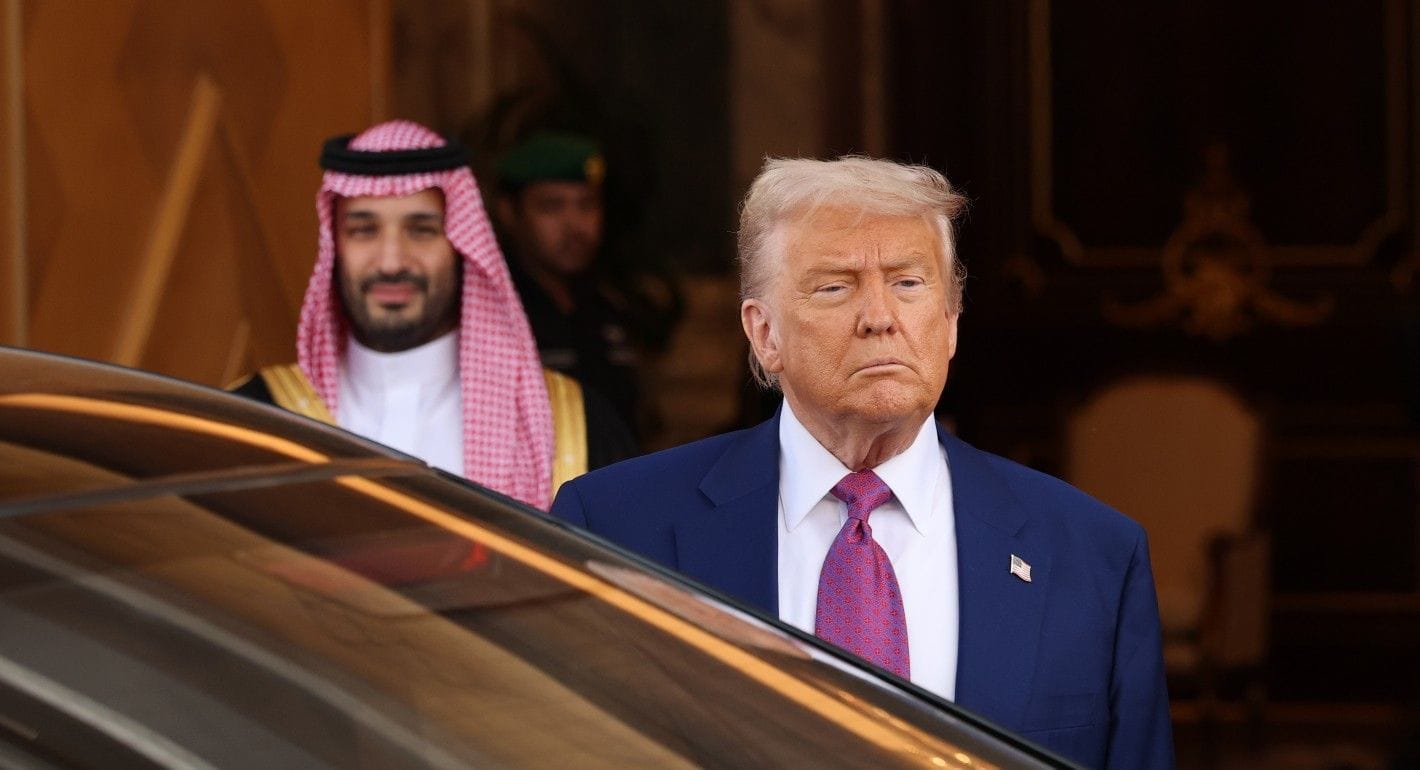
WASHINGTON —Saudi Crown Prince Mohammed bin Salman, known by his initials MBS, met with President Donald Trump at the White House Tuesday to sign a Strategic Defense Agreement and announce new deals on weapons, technology and investment. The package underscores Riyadh’s push for security assurances and Washington’s bid for Saudi investment, Nov. 18, 2025.
The MBS Washington visit included U.S. approval for future deliveries of F-35 fighter jets, an agreement for Saudi Arabia to buy nearly 300 American tanks, and new frameworks on civil nuclear energy, artificial intelligence and critical minerals, according to a White House fact sheet.
MBS Washington deals: defense first, plus AI and nuclear cooperation
The White House said Saudi investment commitments would rise to nearly $1 trillion. Officials also highlighted cooperation on AI, critical minerals and nuclear energy as part of a broader effort to keep Saudi development tied to U.S. firms and standards.
Strategic Defense Agreement: The White House said it “fortifies deterrence across the Middle East.”
Arms sales: Future F-35 deliveries and a tank purchase.
Nuclear and tech: A joint declaration on civil nuclear talks, plus agreements touching AI and critical minerals.
Critics and allies are watching the jet decision closely. Trump confirmed the F-35 sale ahead of the crown prince’s arrival despite concerns about protecting sensitive technology and preserving Israel’s “qualitative military edge,” as The Associated Press reported.
Security assurances were the political core of the MBS Washington trip. Before the meeting, Reuters reported that Riyadh sought guarantees while U.S. officials weighed what could be done without a Senate-ratified treaty and how any defense arrangement might intersect with Saudi-Israel normalization.
Critics warn the defense pact could widen U.S. commitments
An Atlantic Council analysis noted that “major non-NATO ally” status — announced around the visit — is symbolic and does not create an enforceable security guarantee, even if it can smooth some arms cooperation.
Others argue the bigger risk is strategic: that closer defense ties can become a slide toward automatic U.S. involvement in a future conflict. A Responsible Statecraft analysis warned a security pact could be “unnecessary” and “risky,” and might encourage moral hazard by betting Washington will step in.
From Khashoggi to the current MBS Washington reset
Bin Salman’s return revives the fallout from 2018, when Saudi journalist Jamal Khashoggi was killed inside the Saudi consulate in Istanbul. A 2021 U.S. intelligence assessment said it assessed that the crown prince approved an operation to capture or kill Khashoggi — a finding he has denied.
Washington nevertheless resumed engagement, including President Joe Biden’s controversial 2022 trip to the kingdom, as Reuters reported in 2022. A 2024 Congressional Research Service report described negotiations exploring a broader bargain that linked defense, nuclear cooperation and the prospect of Saudi-Israel normalization.
With the MBS Washington meetings complete, the next test is implementation — including congressional review of any formal nuclear cooperation agreement and the details of weapons transfers — as lawmakers and regional partners judge whether the new pact stabilizes the region or raises the stakes for the next crisis.


