

The most direct evidence comes from a Frontiers in Psychology study that tracked 36 urban adults over eight weeks. Participants were asked to spend at least 10 minutes in an outdoor place that gave them a sense of contact with nature, at least three times a week, while researchers measured salivary cortisol and alpha-amylase before and after selected outings.
Nature health benefits may start with a 20-minute reset
The study found that cortisol, a hormone commonly used as a stress marker, dropped after nature exposure, with the most efficient stress-reduction window appearing between 20 and 30 minutes. Benefits continued after that point, but the added gains came more slowly.
Lead author MaryCarol Hunter, an associate professor at the University of Michigan, said people seeking the best return for their time should spend “20 to 30 minutes sitting or walking” in a place that provides a sense of nature, according to a Frontiers report on the research.
That dose can be modest. Researchers did not require a remote forest, strenuous hiking or expensive gear. A quiet urban park, a tree-lined path, a garden or another outdoor place that feels natural may be enough to help the body begin settling.
Older research gave nature health benefits a long runway
The 20-minute finding fits into a much longer research story. In 1984, researcher Roger Ulrich reported that hospital patients with tree views had shorter postoperative stays than similar patients whose windows faced a brick wall, a widely cited early signal that even passive contact with natural scenes could matter for recovery, according to the PubMed record of the study.
A decade later, Stephen Kaplan’s work on attention restoration argued that natural environments can help the mind recover from directed-attention fatigue, because nature tends to hold attention softly rather than demand constant effort, according to the 1995 restorative benefits of nature article.
By 2009, Japanese field research on Shinrin-yoku, or forest bathing, reported lower cortisol, pulse rate and blood pressure in forest settings compared with city settings, according to a study of physiological effects in 24 forests.
What the broader evidence says
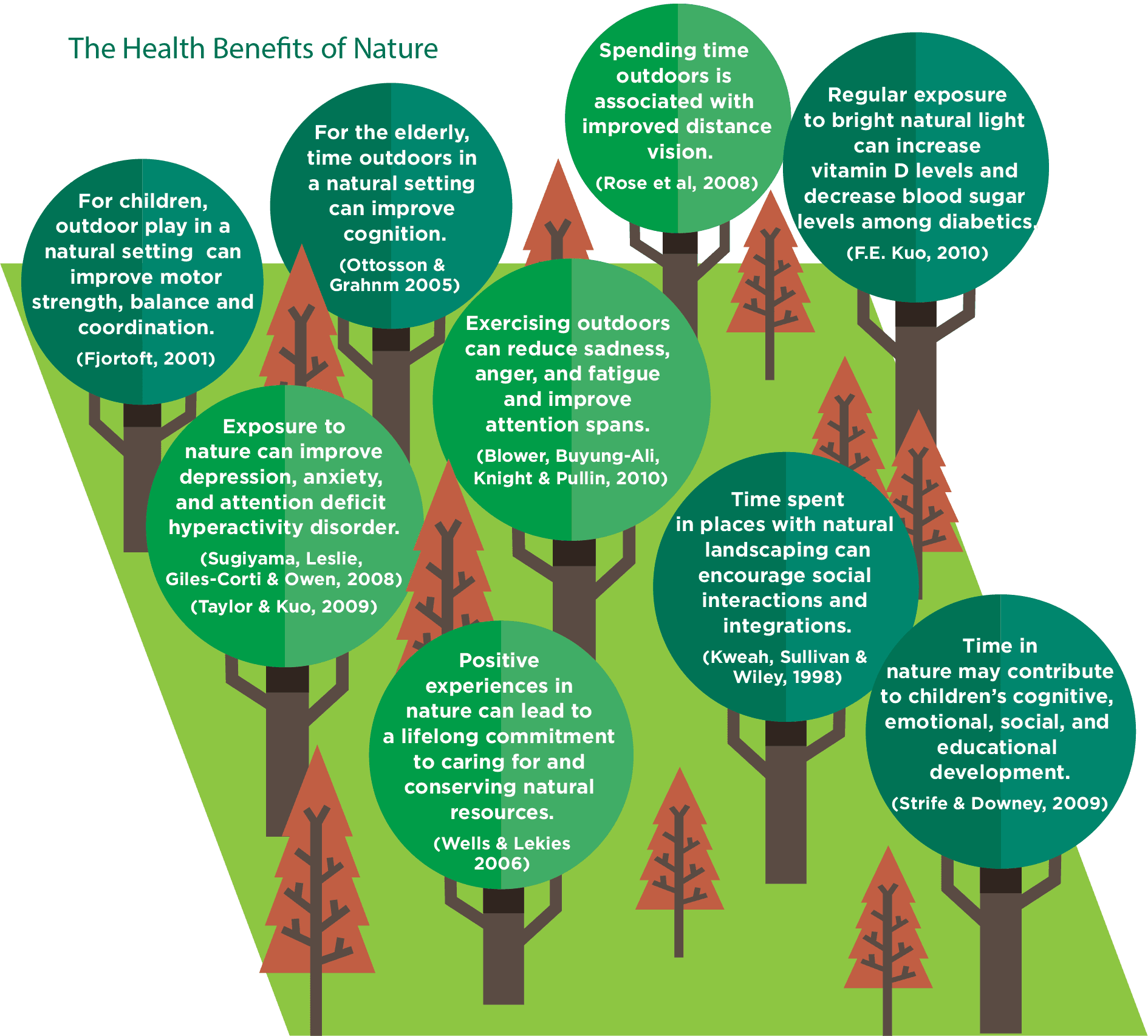
The research base has since expanded beyond stress hormones. A 2021 review of nature exposure and health found evidence linking nature contact with improved cognitive function, brain activity, blood pressure, mental health, physical activity and sleep, while also noting that research methods and strength of evidence vary across outcomes, according to a review published in the International Journal of Environmental Research and Public Health.
Public health groups have also translated the evidence into practical advice. The American Heart Association says spending time in nature can help relieve stress and anxiety, improve mood and boost feelings of happiness and well-being, while still urging people with serious symptoms to seek professional care through its stress-management guidance on nature time.
Newer reviews continue to refine the question of dose. A 2025 systematic review and meta-analysis found that nature exposure produced positive mental health effects for adults with diagnosed mental illness and symptoms of mental illness, with some evidence that shorter exposure delivered repeatedly may be useful, according to the Behavioral Sciences review.
How to use a 20-minute nature break
A practical nature break should be simple enough to repeat. Choose a safe outdoor place, put the phone away, avoid work calls and let the visit be slow. Sitting on a bench can count. So can walking without trying to turn the break into a workout.
People who cannot easily reach a park can still look for smaller forms of contact: a courtyard, a shaded sidewalk, a backyard, a balcony with plants or a route that passes trees and sky. The key is to create a short period where the body is not being pushed by screens, noise and deadlines.
For many people, the best target may be consistency rather than intensity. A 20-minute reset a few times a week is more realistic than waiting for a full free day outdoors, and the research suggests the body may respond before the outing feels like a major time commitment.
What not to overstate
Nature time is not a substitute for medical treatment, therapy, medication or emergency help. It also cannot erase unsafe housing, chronic job strain, financial pressure or lack of access to green space. Researchers continue to study who benefits most, which settings work best and how long the effects last.
Still, the central message is encouraging: nature health benefits do not always require wilderness, travel or hours of free time. For stressed bodies, a quiet 20-minute break outside may be a realistic place to start.


