

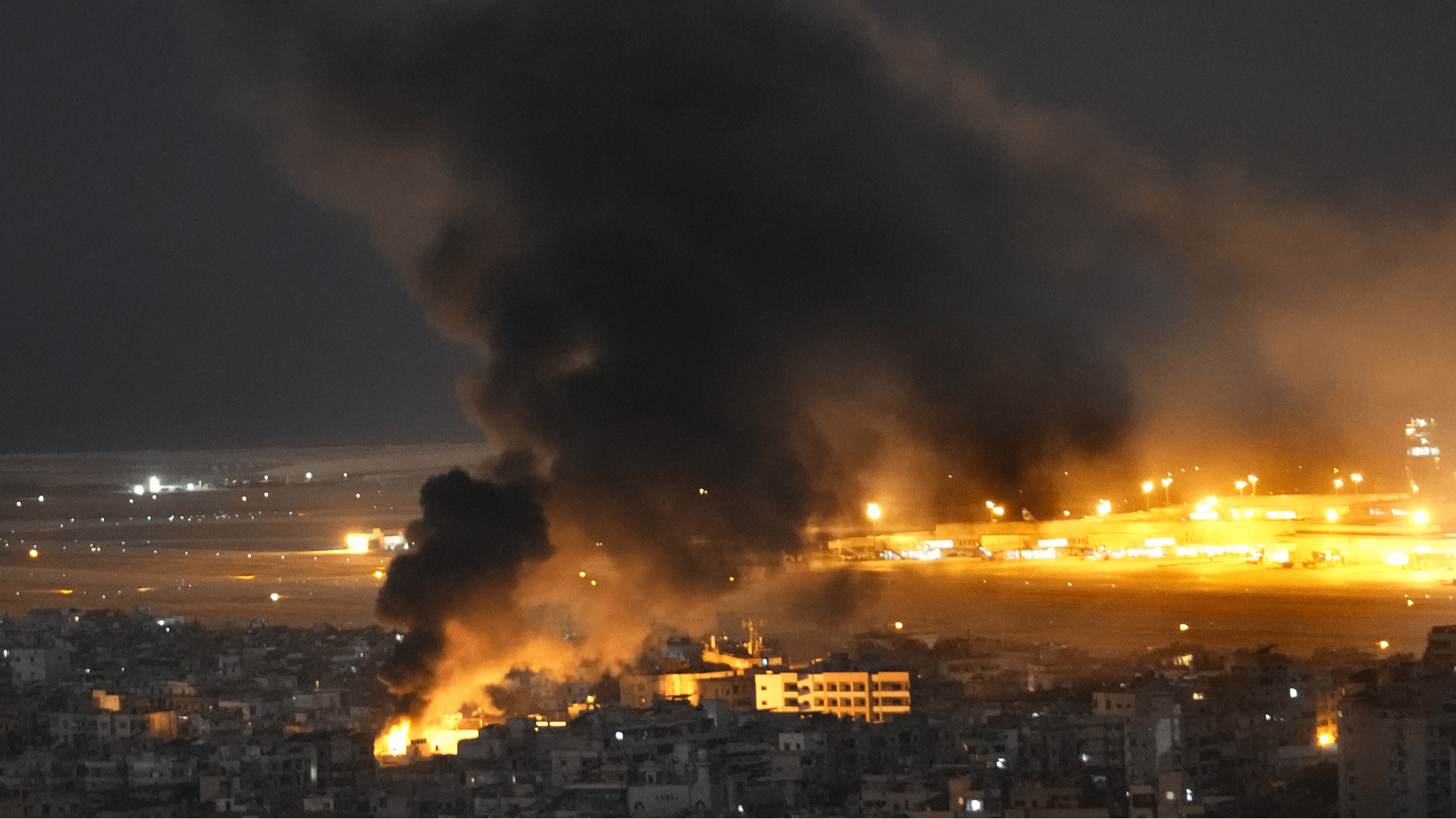
BEIRUT — Israeli Prime Minister Benjamin Netanyahu ordered a new wave of airstrikes on Beirut’s southern suburbs Monday, triggering another mass civilian exodus as Israel widened its military campaign against Hezbollah and deepened fears of a broader regional war. The strikes came amid escalating cross-border attacks, stalled ceasefire negotiations and growing international pressure for de-escalation. June 1, 2026.
Thousands of residents fled the Hezbollah-controlled Dahiyeh district after evacuation warnings and reports of incoming Israeli attacks. Witnesses described packed roads leading out of southern Beirut as families scrambled to leave neighborhoods targeted by the Israeli military.
Israeli officials said the strikes were aimed at Hezbollah infrastructure and command facilities following renewed rocket and drone attacks launched from Lebanon into northern Israel. Netanyahu said Israel would continue military operations until security threats along its northern border are eliminated.
Netanyahu Beirut strikes mark major escalation in Lebanon conflict
The latest offensive follows weeks of intensifying clashes despite previous diplomatic efforts to secure a ceasefire. According to Reuters reporting on the latest strikes, Israeli forces expanded operations around key strategic positions in southern Lebanon while Hezbollah responded with rocket barrages targeting Israeli territory.
Lebanese officials warned that the attacks could worsen an already severe humanitarian situation. More than a million people have reportedly been displaced during recent fighting as Israeli airstrikes and artillery attacks spread across southern Lebanon and parts of Beirut.
The offensive comes as Washington attempts to broker a new diplomatic framework to halt hostilities. A proposed U.S.-backed plan reportedly calls for Hezbollah to suspend attacks while Israel refrains from escalating military action in Beirut.
Mass displacement grows across Beirut and southern Lebanon
Residents described scenes of panic as air raid warnings circulated through southern Beirut. Vehicles clogged major highways, while many families sought temporary shelter with relatives or in public areas farther from expected strike zones.
International aid organizations have warned that repeated displacement waves are stretching Lebanon’s already fragile infrastructure and social services. Hospitals in several regions have reported increased pressure from casualties and displaced civilians seeking assistance.
French and European officials have also urged restraint, warning that continued escalation could destabilize the wider Middle East and undermine ongoing diplomatic efforts.
Conflict continues pattern seen in earlier Beirut offensives
The current escalation echoes major Israeli strikes carried out in September 2024, when Israeli warplanes targeted Hezbollah headquarters in Beirut’s southern suburbs during one of the most intense bombardments of the conflict. Reuters reported at the time that thousands of residents fled Dahiyeh after multiple air raids rocked the Lebanese capital and targeted senior Hezbollah leadership.
Another major strike in September 2024 leveled several buildings in Beirut while targeting Hezbollah command infrastructure, highlighting a long-running strategy of focusing attacks on the group’s strongholds within the city. Those attacks significantly increased regional tensions and raised fears of a full-scale war between Israel and Hezbollah.
Diplomatic efforts face mounting obstacles
The renewed fighting has complicated ongoing negotiations involving the United States, Lebanon and regional actors. According to ceasefire discussions, officials are attempting to establish a phased de-escalation plan, though both sides continue to accuse each other of violating previous understandings.
Hezbollah leaders have maintained that military operations will continue unless Israeli attacks stop first, while Israeli officials insist that cross-border rocket fire and drone attacks must end before any lasting ceasefire can take effect.
Analysts say the competing demands have created a diplomatic deadlock that increases the risk of further escalation.
International concern grows as military operations expand
The latest offensive has drawn criticism from several governments and international organizations concerned about civilian casualties and regional stability. Reports indicate that Israeli ground operations have expanded alongside intensified airstrikes, increasing fears that the conflict could widen beyond current front lines.
According to diplomatic sources monitoring ceasefire negotiations, recent mediation efforts have struggled to gain traction as both Israel and Hezbollah continue military operations.
Meanwhile, European leaders have publicly called for renewed diplomatic engagement and adherence to ceasefire arrangements. Coverage of those concerns was detailed by international reactions to the latest escalation.
Military analysts note that the current campaign appears consistent with Netanyahu’s recent pledge to intensify operations against Hezbollah. Details of that strategy were outlined in earlier statements regarding expanded Israeli military action.
As airstrikes continue and civilians flee affected neighborhoods, fears remain high that the conflict could enter a more dangerous phase, further destabilizing Lebanon and increasing pressure on international mediators seeking a path toward de-escalation.


