
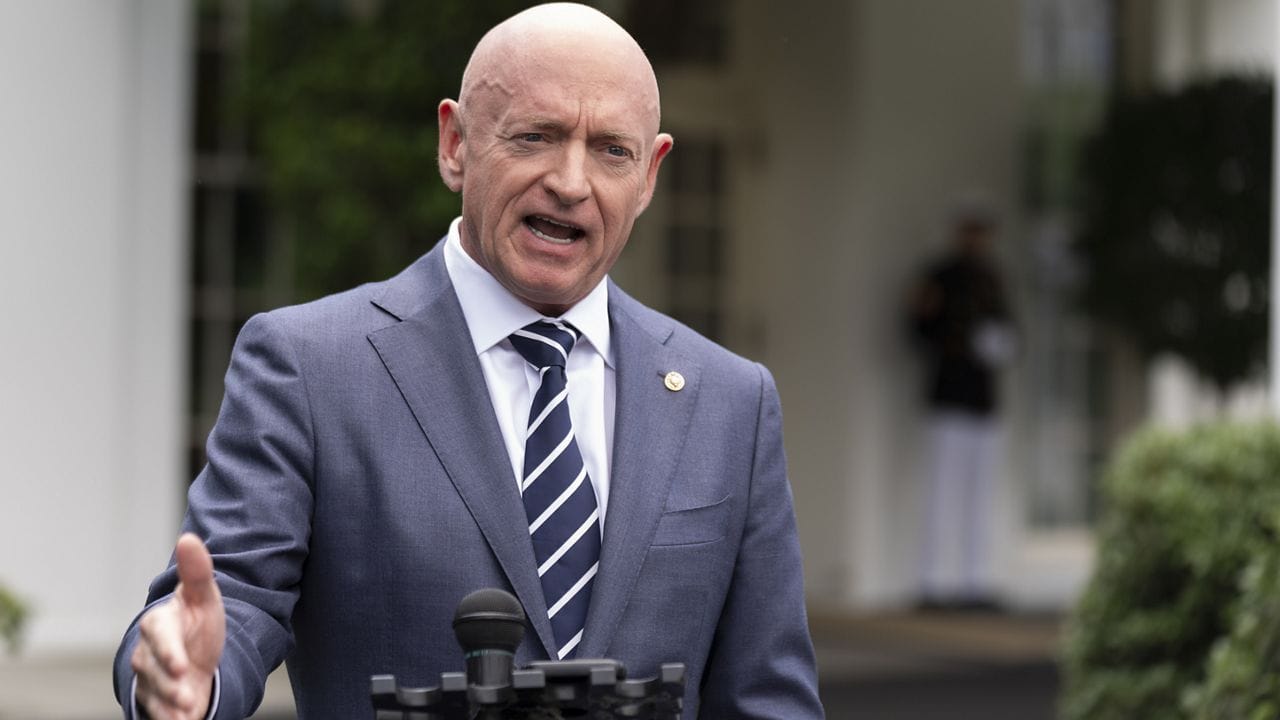
WASHINGTON — The U.S. Defense Department said Monday it is weighing whether to reinstate Sen. Mark Kelly, a former Navy captain and Arizona Democrat, to active duty as part of its investigation into a video urging U.S. troops not to obey “illegal orders,” Nov. 25, 2025. Officials say the video may have emboldened insubordination in their ranks, while critics argue that the threat breaks 200 years of precedent separating civilian politics from military justice.
The Defense Department disclosed the review in a short statement on social media that cited federal law allowing retired service members to be recalled to active duty for court-martial or other punishment, and said a “thorough review” could lead to such a recall or to administrative actions. Kelly is one of the six Democratic lawmakers who have been in the video, but he’s the only one who is an officially retired officer and therefore still under Pentagon jurisdiction, according to an Associated Press report.
But now the bipartisan group, known as Not So Silent Soldiers, is warning in a two-minute video that “threats to our Constitution can come from home” and encouraging the military and intelligence officers to “refuse illegal orders.” President Donald Trump blew it all up, calling the group “seditious” and “treasonous” and further elevating calls for the prosecution of Mark Kelly, as CNN explained in a detailed report.
Mark Kelly has denied the allegations and said he won’t be “bullied” by them, characterizing the video as a reminder that troops take an oath to support the Constitution, not a president. In comments later reported by Reuters, he said he has “given far too much to this country than to see the American project destroyed by a guy who just doesn’t care ” and warned that he would not be shut up by “bullies” who prioritise their own power over defending the Constitution. Military-focused outlet Task & Purpose reported that defense officials have already threatened to yank the Arizona senator back into active duty so they can conduct a court-martial over the video. :
Pentagon’s threat tests the bounds of military law for Mark Kelly
Pursuant to Article 2 of the Uniform Code of Military Justice and certain statutes, including 10 U.S.C. § 688, many retirees retain military jurisdiction over them and can be ordered back into active duty for trial for even offenses alleged to have been committed after their retirement. If they do, recalling Mark Kelly under these circumstances would be a remarkable test of how far that power can be expanded into the political sphere.
In March, the Supreme Court refused to hear the case of retired U.S. Marine Staff Sgt. Steven Larrabee allowed lower-court rulings that had endorsed the Pentagon’s authority to court-martial retirees, buttressing a legal architecture that regards retirement pay as compensation for being on call. That framework, described in a 2025 analysis produced for the military by law firm O’Connell West, highlights that retirees can be recalled and prosecuted long after they hang up their uniforms.
The concept of deploying recall powers against prominent critics is not entirely new to Trump, experts say. The then-president briefly mulled reactivating retired U.S. Navy Adm. William McRaven and retired U.S. Army Gen. Stanley McChrystal — so they could be court-martialed as “disloyal” — until top aides talked him out of it, People magazine reported in 2022. Those plans were never enacted, and the Mark Kelly case is the first time during Trump’s current tenure that Pentagon officials have publicly threatened to do so.
Those earlier episodes, however, never became formal proceedings. In the Mark Kelly case, legal scholars told reporters in interviews that a Pentagon threat raises sharper constitutional questions because it is an attempt to intervene in congressional business and comes on behalf of a sitting senator. Kelly would have a strong legal case to request in court an injunction that would prevent a recall, said Rachel VanLandingham, a former U.S. Air Force lawyer; constitutional law professor Anthony Michael Kreis told the Associated Press that allowing the executive branch to punish a member of Congress would go against constitutional safeguards for legislative independence.
For the moment, Pentagon officials said it would be up to the review to decide whether Mark Kelly should face a recall, lesser administrative penalties, or no action at all. Any effort to order him back into uniform would almost certainly spark a swift legal battle in federal court and force judges to decide what the furthest reaches of military jurisdiction over retirees are—and also how far a president can go in wielding power against political opponents.