
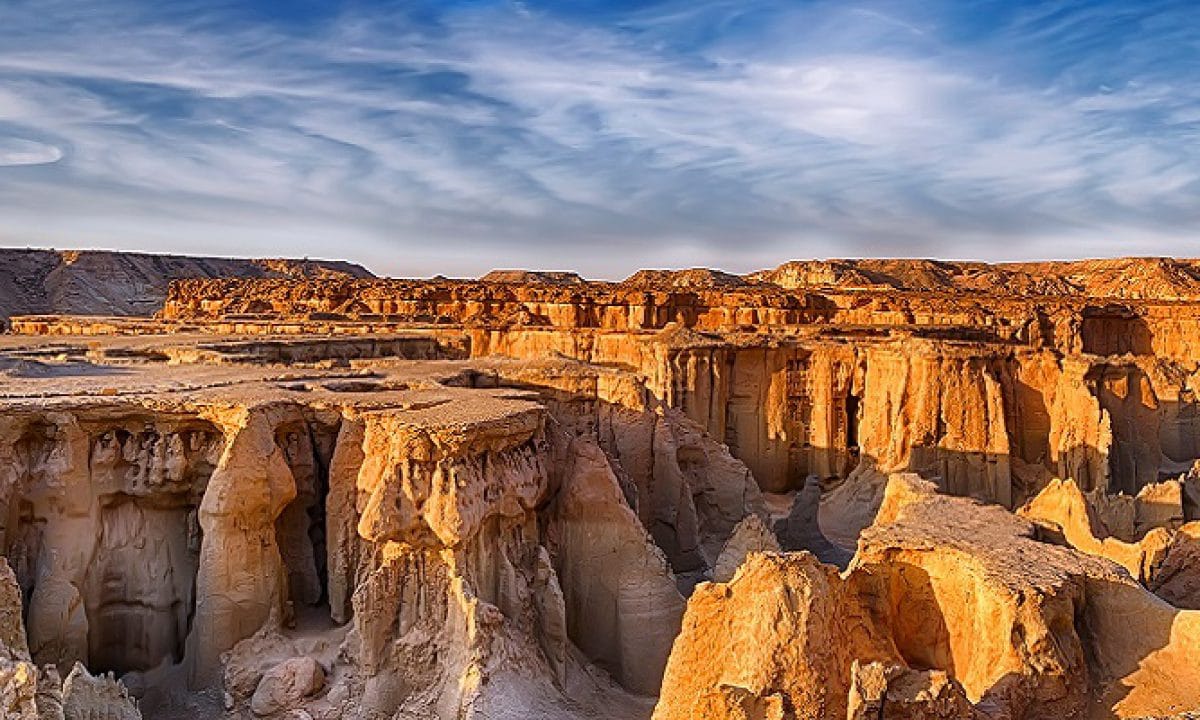
The strait remains central to the global economy. The U.S. Energy Information Administration describes Hormuz as one of the world’s most important oil chokepoints, and a separate EIA analysis says about 20% of global LNG trade moved through it in 2024. That geography is what gives Qeshm its weight: an Iranian island large enough to host dispersed military infrastructure, yet close enough to merchant lanes that any concealed system on or around it can quickly change the risk calculation for shipowners.
Why Qeshm Island matters in the Hormuz fight
The March fighting has made that geometry far more urgent. Reuters reported that Iran had deployed about a dozen mines in the Strait of Hormuz, while another Reuters report found sea-drone attacks on oil tankers had opened a new hazard alongside missiles and fast boats. Qeshm matters because Iran does not need a single dramatic closure of Hormuz to exert pressure; it only needs enough launch options, hiding places and overlapping lines of threat to convince shipping companies and insurers that passage is no longer routine.
Iran rarely discloses precise coordinates for its underground facilities. But the pattern of public messaging has been consistent: Tehran keeps advertising buried launch and storage networks, while the strait itself grows more crowded with tools that can threaten traffic from shore, island and sea. In that framework, Qeshm functions less as a lone fortress than as part of a distributed military belt along Iran’s southern edge.
Qeshm Island in a longer militarization arc
The trajectory predates the current war. Reuters reported in 2019 that the tanker MT Riah was last tracked off the coast of Qeshm before it was towed into Iranian waters, an early reminder that the island sits close to the point where maritime disputes can turn kinetic. In 2022, Washington Institute analyst Farzin Nadimi wrote that a March underground display of Shahed loitering munitions was likely staged at Qeshm Island, tying the island more directly to Iran’s underground military narrative.
Then, in January 2025, Reuters reported that Iran had unveiled another underground naval missile base elsewhere in the Gulf, reinforcing the message that Tehran wanted redundancy, concealment and multiple launch corridors. Taken together, those episodes show continuity more than improvisation. Qeshm has repeatedly surfaced in maritime seizures, drone analysis and the broader underground-basing story, making the island a plausible hub in Iran’s effort to turn geography into deterrence.
What Qeshm Island means for shipping and energy markets
The military significance is already spilling into energy logistics. Reuters graphics show Gulf producers are rerouting crude through pipelines that bypass Hormuz where possible, underscoring that the threat is no longer theoretical. Even partial workarounds do not erase the chokepoint; they simply prove that traders, governments and exporters are being forced to plan around it.
For Tehran, Qeshm’s importance is straightforward: depth, concealment and proximity at the mouth of Hormuz. For everyone else, the island has become a reminder that stabilizing the strait is not only about sweeping mines or escorting tankers. It is also about managing the island-backed missile and drone posture that gives Iran enduring leverage over the Gulf’s narrowest passage.