

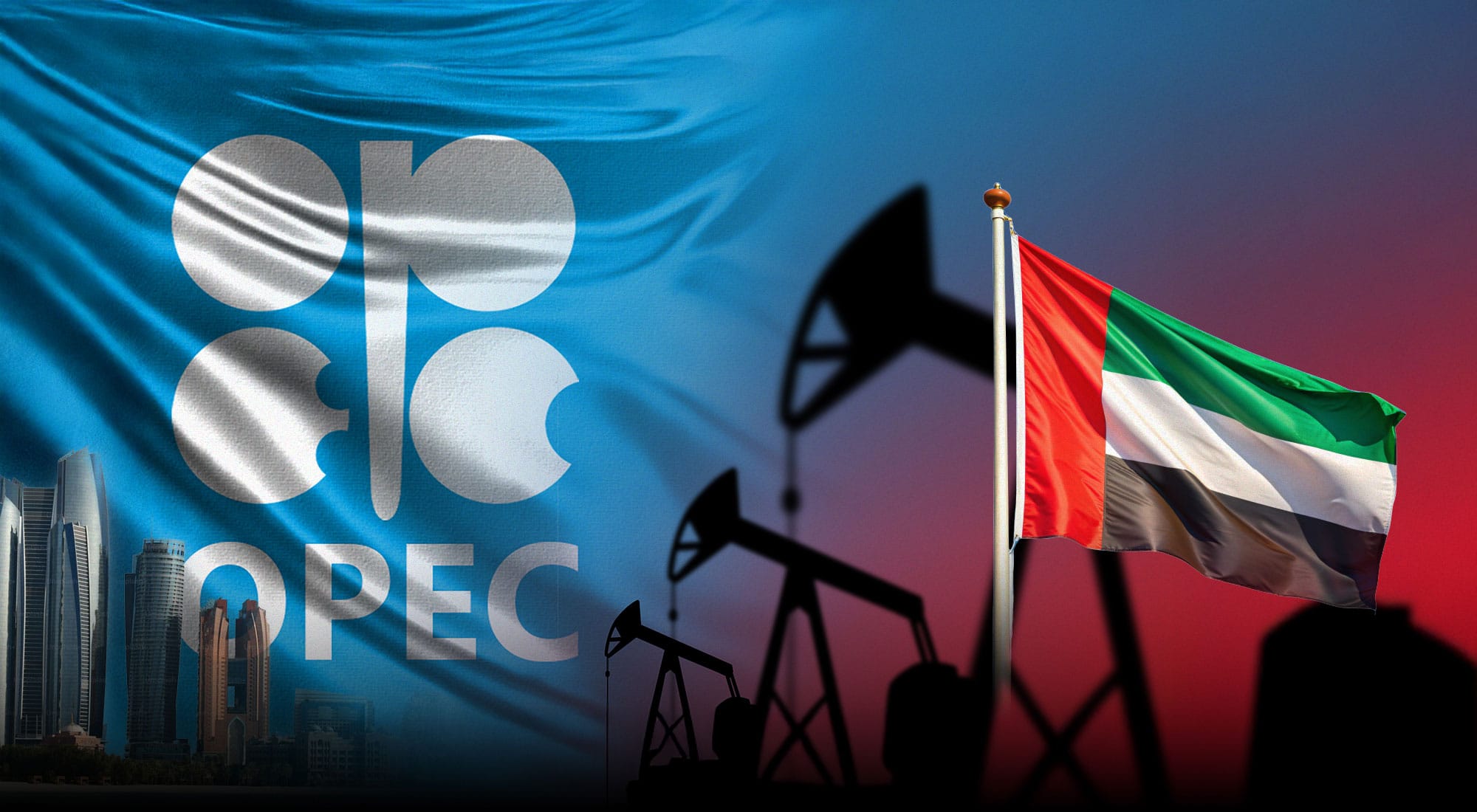
ABU DHABI, United Arab Emirates — The United Arab Emirates left OPEC and OPEC+ after announcing from Abu Dhabi that it would quit the oil producer blocs, dealing a public blow to Saudi-led Gulf energy coordination and freeing itself from cartel output targets, May 1, 2026. The move follows years of disputes over production quotas and comes as war-linked disruptions around the Strait of Hormuz expose deeper political fault lines between Abu Dhabi and Riyadh.
The UAE framed the departure as a sovereign economic decision, saying in an official Emirates News Agency announcement that the decision followed a review of its production policy, current capacity and future energy strategy. The statement said the country would continue to bring additional production to market gradually and in line with demand.
But the timing gives the decision broader weight. The UAE’s exit removes one of OPEC’s largest and most capable producers from a group long shaped by Saudi Arabia’s influence, reducing Riyadh’s ability to use coordinated production policy as a tool of Gulf leadership.
Why the UAE OPEC exit matters for Gulf unity
The UAE OPEC exit is not just an oil-market story. It marks a sharper break in a relationship that has increasingly mixed cooperation with rivalry. Abu Dhabi and Riyadh have competed over foreign investment, regional influence, logistics, financial services and the future of Gulf economic diversification.
Reuters reported that the exit widens a rift between the UAE and Saudi Arabia, while also giving Abu Dhabi more freedom to raise output once Gulf export routes normalize, according to its report on the UAE quitting OPEC. UAE Energy Minister Suhail Mohamed al-Mazrouei described the move as a policy decision after a review of the country’s energy strategy.
The split also lands during a period of regional stress. The Iran war and disruption around the Strait of Hormuz have limited the immediate ability of Gulf producers to ship more crude, blunting the near-term market impact. Still, the political effect is immediate: Saudi Arabia now faces an assertive neighbor willing to abandon one of the region’s most important economic coordination mechanisms.
Oil quotas became a long-running fault line
The break has been years in the making. In 2021, Saudi Arabia and the UAE clashed over how OPEC+ should unwind pandemic-era oil cuts, with Abu Dhabi resisting an extension of the agreement unless its production baseline was addressed. Reuters described that confrontation as one of the group’s most difficult episodes in a look back at the UAE-Saudi OPEC dispute.
A compromise followed later that month, when OPEC+ agreed to adjust baselines and allow the UAE a higher reference level from May 2022. That 2021 oil supply agreement kept the alliance together but did not resolve Abu Dhabi’s deeper complaint: that its investments in capacity were being constrained by collective quotas.
By 2023, talk of a possible Emirati exit had already entered public view. Reuters reported at the time that sources dismissed a media report about the UAE considering leaving OPEC as “far from the truth,” in a story on the denied OPEC exit discussion. The denial now reads less like a closed door than a sign of how sensitive the issue had become.
The capacity dispute sharpened again in 2024. A Reuters explainer said the UAE had come close to expanding capacity to 5 million barrels per day and wanted its OPEC+ quota raised, while producing far below the level it said it could sustain under existing cuts. That 2024 production capacity analysis showed how technical quota formulas had become a proxy for political power inside the alliance.
Saudi Arabia loses leverage, but OPEC+ is not finished
The immediate question is whether the UAE’s departure triggers wider defections. For now, analysts and delegates do not expect OPEC+ to collapse. Reuters reported that the alliance is likely to stay together but lose some influence over the oil market after the UAE’s exit, in an analysis of OPEC+ power after the UAE exit.
Saudi Arabia still has major production capacity, deep financial reserves and decades of experience managing oil diplomacy. Yet the UAE’s move weakens the perception that Gulf producers will continue to subordinate national strategies to a Saudi-led consensus.
For Abu Dhabi, the logic is different. The UAE has invested heavily in energy capacity while also promoting itself as a diversified hub for trade, finance, tourism, technology and clean-energy investment. Leaving OPEC gives it greater flexibility to monetize hydrocarbons while demand remains strong, even as it positions itself for a lower-carbon future.
Market impact may come later
The exit is unlikely to translate into an immediate surge of UAE exports because the Strait of Hormuz remains a constraint on Gulf flows. But once shipping normalizes, the UAE could move closer to its long-stated goal of producing around 5 million barrels per day.
That would pose a challenge for Saudi Arabia. If the UAE increases output independently, Riyadh may have to choose between defending prices through restraint or protecting market share by pumping more. Either path could strain OPEC+ discipline.
The Associated Press said the departure shook up an alliance that produces a large share of the world’s crude and influences global energy prices, noting in its coverage of the UAE leaving OPEC that Abu Dhabi had long chafed at quotas it viewed as too low.
A Gulf rift with global consequences
The UAE’s exit also carries diplomatic meaning beyond oil. The Guardian reported that the decision could recast Middle East politics by damaging Saudi prestige and strengthening Abu Dhabi’s ability to act independently, according to its analysis of the UAE decision and Gulf politics.
That independence has been visible in the UAE’s regional posture, including its ties with the United States and Israel, its commercial reach in Africa and its willingness to chart a separate course from Saudi Arabia on some regional conflicts. The OPEC exit now puts that divergence at the center of global energy policy.
For OPEC, the departure is a test of cohesion. Qatar, Ecuador and Angola have all left the group in recent years, but none carried the UAE’s combination of production capacity, financial power and Gulf political weight. For Saudi Arabia, the challenge is more personal and strategic: its closest Gulf competitor has stepped outside the structure Riyadh has long used to project influence.
The UAE says it remains committed to market stability. The harder question is whether a more independent Abu Dhabi and a still-dominant Riyadh can preserve enough trust to prevent an oil-policy rivalry from becoming a broader Gulf split.


