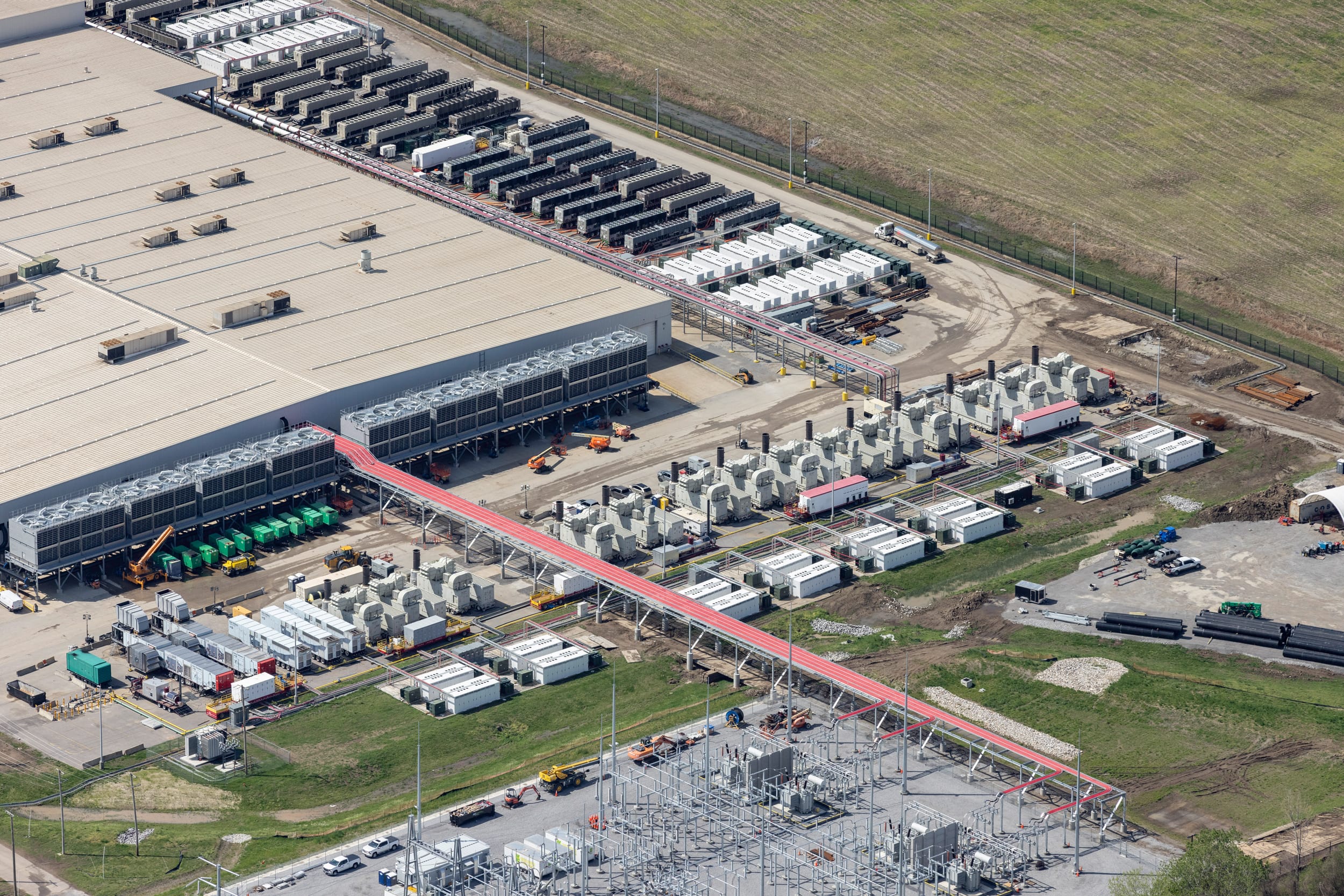
The civil complaint, filed in the U.S. District Court for the Northern District of Mississippi, asks a judge to stop xAI from operating the disputed turbines unless the companies secure required permits, install pollution controls and pay civil penalties. The filing is a set of allegations, not a court ruling.
What the xAI data center lawsuit alleges
The NAACP said in announcing the case that Earthjustice and the Southern Environmental Law Center are representing the national NAACP and the Mississippi State Conference of the NAACP. “Our homes, churches, and playgrounds will not be sacrifice zones for Big Tech’s convenience,” Abre’ Conner, the NAACP director of environmental and climate justice, said.
In the federal complaint, the plaintiffs say xAI and MZX Tech installed and began operating the turbines between August and December 2025 at 2875 Stanton Road South in Southaven without an air permit. They allege the turbines power Colossus 2, which supports Grok, and that emissions reach both Mississippi and Tennessee residents.
The complaint says the turbines could emit more than 1,700 tons of smog-forming nitrogen oxides each year, as well as up to 180 tons of fine particulate matter, 500 tons of carbon monoxide and 19 tons of formaldehyde. The plaintiffs say those emissions likely make the Southaven plant the largest industrial source of nitrogen oxides in the greater Memphis area.
xAI has promoted Colossus as the computing power behind Grok and says Memphis is home to Colossus, with plans to equip the facility with 1 million GPUs by 2026. The lawsuit turns that same speed-driven buildout into a legal question: whether xAI’s power strategy moved faster than federal air-permitting rules allow.
Why the xAI data center fight has been building for months
The dispute started before the Mississippi lawsuit. In June 2025, the Associated Press reported that the NAACP and the Southern Environmental Law Center had sent xAI a 60-day notice of intent to sue over turbines at the first Memphis data center. AP also reported xAI’s statement that “The temporary power generation units are operating in compliance with all applicable laws.”
Later, TIME reported on Boxtown residents’ concerns and cited a University of Tennessee analysis showing peak nitrogen dioxide levels had risen near the facility after xAI’s arrival. The analysis described multiple potential sources, while opponents argued xAI’s turbines added to an already industrial burden in southwest Memphis.
In February 2026, Reuters reported that Mississippi regulators held a public hearing on xAI’s plan for a gas-fired power plant tied to Colossus 2 and that the NAACP had accused the company of installing and operating 27 turbines without required air permits. A month later, Mississippi Today reported the state permit board voted to allow xAI to expand despite residents’ complaints about noise, emissions and opaque operations.
Clean Air Act permit question moves to court
The Clean Air Act issue centers on permitting for major or modified pollution sources. The EPA says its New Source Review permitting program was established under the 1977 Clean Air Act amendments and is part of clean air permitting for industrial sources. The NAACP argues xAI should have gone through that process before building and operating the Southaven turbines.
In a current report on the lawsuit, Reuters said xAI was not immediately available for comment and reported that the plaintiffs say the Southaven plant could emit 1,700 tons of nitrogen oxides annually.
The case also tests how state-line geography interacts with industrial emissions. The turbines are in Mississippi, while the data center they are alleged to power is in Tennessee; the complaint says pollution does not stop at the Mississippi line. That makes the case a Memphis-area environmental justice fight, not just a Mississippi permitting dispute.
What the NAACP wants from the court
The NAACP is seeking a declaration that xAI and MZX Tech violated the Clean Air Act, an order halting unpermitted turbine operations, a requirement that the companies install best available control technology, and financial penalties for each day of alleged violation. For residents near Southaven and South Memphis, the lawsuit asks whether AI infrastructure should be allowed to expand before surrounding communities get a full air-quality review.