

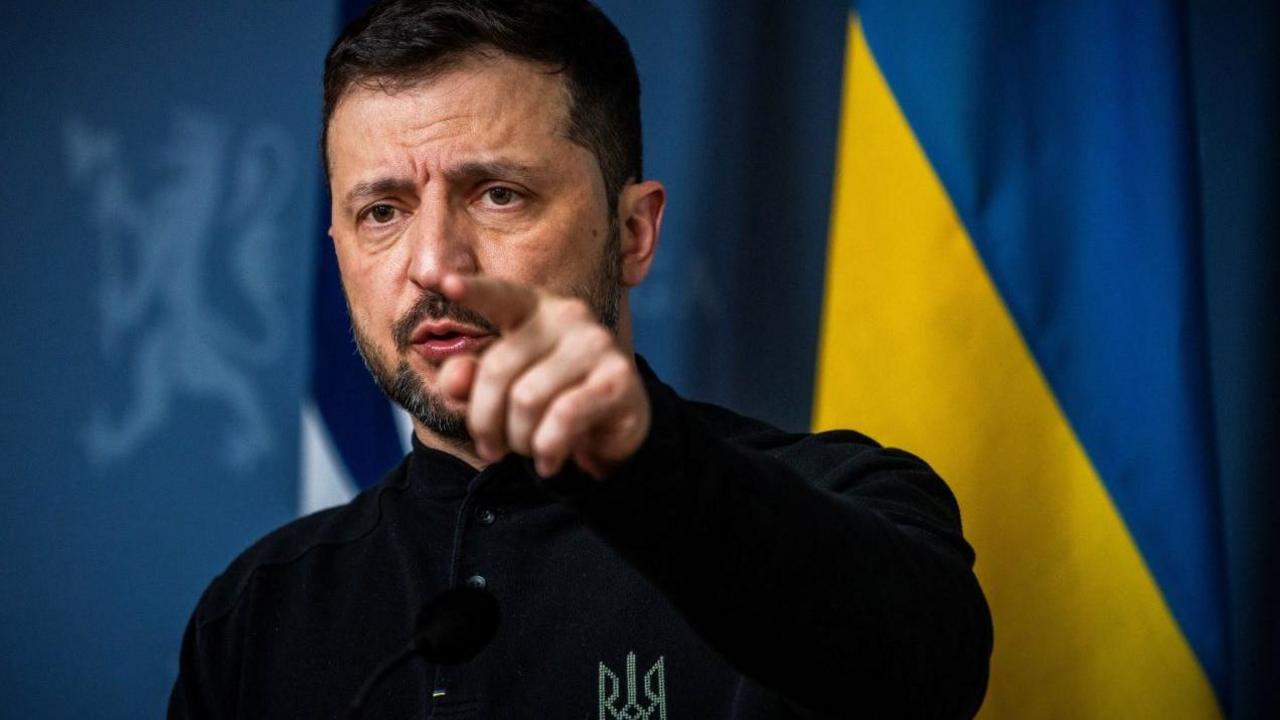
GENEVA — Ukrainian President Volodymyr Zelenskyy warned that allies are pressuring Kyiv “too often” to give ground as U.S.-brokered Russia-Ukraine talks in Geneva approach amid escalating drone strikes and hardened battlefield lines, Feb. 16, 2026. In remarks ahead of the meeting, Zelenskyy argued that any deal built on unilateral trade-offs would collapse without clear security guarantees and tangible Russian concessions.
The Geneva sessions are scheduled for Feb. 17-18 in a trilateral format involving the United States, Russia and Ukraine, according to multiple reports. Moscow is expected to send a delegation led by Kremlin aide Vladimir Medinsky, a familiar figure from earlier rounds of war talks, underscoring how territorial questions remain central to negotiations.
Zelenskyy’s comments landed as Ukraine and Russia traded attacks over the weekend, including strikes tied to energy and transport nodes that both sides see as leverage. Ukrainian officials have framed the talks as a test of whether Washington can translate shuttle diplomacy into enforceable terms rather than a short pause in fighting.
Why “Zelensky concessions” are becoming the flash point
The phrase “Zelensky concessions” has moved from a diplomatic abstraction to the political fault line at home and abroad: how much Ukraine should cede — on territory, sanctions sequencing, or interim governance in occupied areas — to secure a ceasefire and a path to a broader settlement.
Zelenskyy signaled he is willing to engage on a U.S. framework, but he pushed back on what he described as an imbalance in expectations. In a report published Feb. 15, he said the United States “too often” presses Ukraine rather than Russia for concessions — a message aimed at both negotiators and European partners watching for signs of drift in Western unity. Al Jazeera’s account of Zelenskyy’s comments described him as seeking “clear security guarantees” before accepting any outcome that freezes the conflict on Russia’s terms.
European officials have echoed the argument that the durability of a deal depends on what Moscow gives up — not just what Kyiv signs away. The EU’s top diplomat, Kaja Kallas, has publicly stressed that sanctions relief and other incentives should be conditioned on verifiable Russian steps, not promised up front.
Geneva talks: who is coming, and what’s on the table
Russia’s decision to dispatch Medinsky has drawn scrutiny in Kyiv, where officials have previously criticized him for leaning on historical narratives instead of bargaining over practical enforcement. Still, his appointment is widely interpreted as a signal that Moscow wants the talks to revisit core political demands — and to keep territorial control front-and-center. Reuters reported Feb. 13 that the Geneva round follows earlier U.S.-mediated sessions in Abu Dhabi that failed to resolve major issues such as borders and control of strategic infrastructure.
In parallel, the Biden-era concept of “nothing about Ukraine without Ukraine” has been replaced by a more transactional tone in Washington’s mediation under President Donald Trump, according to analysts tracking the talks. A recent White House readout on prior U.S.-Ukraine discussions in Geneva framed them as part of a broader “peace proposal” process. The White House joint statement from Nov. 23, 2025 referenced continued engagement on terms and implementation concepts, though it provided limited detail.
Fighting intensifies as negotiators close in
As diplomats prepared for Geneva, Ukraine and Russia traded strikes that highlighted how the war’s tempo can complicate negotiations. The Associated Press reported Feb. 16 that a Ukrainian drone strike sparked fires at Russia’s Black Sea port area of Taman while Russian drones hit infrastructure in Ukraine’s Odesa region — disruptions that reinforce each side’s narrative of pressure and resolve.
European leaders meeting Zelenskyy around the Munich Security Conference have also focused on near-term military and energy support, betting that Ukraine’s leverage at the table depends on what it can sustain on the ground. Time’s coverage of remarks in Munich noted the emphasis on security guarantees and the timing of any political steps, including elections, in relation to a ceasefire.
How Kyiv is trying to reframe “Zelensky concessions”
Ukrainian officials increasingly present “Zelensky concessions” as a misnomer — arguing that reciprocity is the only workable model. That means concrete Russian moves (such as withdrawals from specified areas, acceptance of monitored demilitarized zones, or binding commitments tied to sanctions) before Kyiv agrees to controversial trade-offs.
Privately, Ukrainian lawmakers and civil society figures have warned that any agreement perceived as surrender could trigger internal political instability — a risk that negotiators say must be weighed against war fatigue and the humanitarian cost of prolonged fighting.
Continuity: how peace efforts evolved before Geneva
The Geneva push sits atop several earlier peace tracks that shaped today’s debate over Zelensky concessions. In late 2022, Zelenskyy advanced a “peace formula” that put territorial integrity, accountability for war crimes, and nuclear and food security at the center of any settlement; a Reuters explainer from Dec. 28, 2022 detailed the plan’s 10 points and the insistence on international law as the baseline.
In 2023, Ukraine and allies widened outreach beyond Europe and North America to build support in the Global South, including talks hosted in Saudi Arabia. Reuters reported Aug. 6, 2023 that the Jeddah meetings drew dozens of countries, though Russia dismissed the track as doomed — an early sign of how competing diplomatic blocs would shape pressure on Kyiv and Moscow.
Then, in 2025, attention returned to the earliest war talks after the Kremlin suggested an Istanbul draft from 2022 could serve as a basis for a deal. Reuters reported March 7, 2025 that Moscow and U.S. interlocutors viewed the draft as a possible reference point — an idea Ukraine has criticized as effectively demanding neutrality and limiting defenses without trustworthy enforcement.
What to watch in Geneva
The immediate test is whether negotiators can define a sequence: ceasefire parameters, monitoring and enforcement, and the timing of any steps that would look like Zelensky concessions. Ukrainian officials say the order matters because premature commitments — on territory, sanctions relief, or disputed regional status — could lock in Russia’s gains while leaving Ukraine exposed to renewed attack.
If the talks produce a framework, the harder phase will be implementation: verification on the ground, political approval in Kyiv, and buy-in from European capitals that hold major sanctions levers. If they fail, the diplomatic calendar may shrink as both sides intensify strikes against infrastructure they believe can shift the balance before the next negotiating window.


