

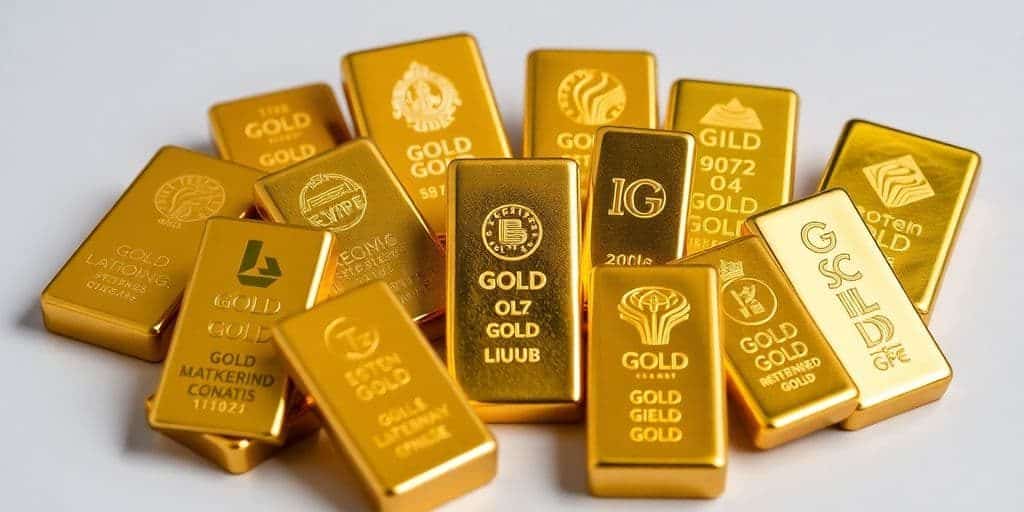
NEW YORK — The gold price surged above $5,000 an ounce Friday after a weaker-than-expected U.S. GDP report and President Donald Trump’s move to impose a temporary 10% global import duty jolted markets and sparked fresh safe-haven demand. The move extended a broad precious metals rally as traders weighed slower growth and renewed trade uncertainty against the outlook for U.S. interest rates, Feb. 20, 2026.
Gold price surge: where the numbers stand
Spot gold was up 1.5% at $5,071.48 an ounce in afternoon trading, while U.S. gold futures for April delivery settled 1.7% higher at $5,080.90, according to a Reuters commodities report.
Silver jumped 5.8% to $82.92 an ounce, platinum rose 4.5% to $2,163.53 and palladium added 4% to $1,751.70, the report said.
Why the gold price jumped after the GDP report
The advance estimate from the Bureau of Economic Analysis showed real gross domestic product increased at a 1.4% annual rate in the fourth quarter of 2025, down from 4.4% in the third quarter.
In technical notes, BEA said the partial federal government shutdown from Oct. 1 through Nov. 12 reduced labor services supplied by federal employees and subtracted about 1 percentage point from fourth-quarter real GDP growth.
For bullion markets, weaker growth can matter as much as inflation. A softer GDP print can pull Treasury yields lower and revive expectations that the Federal Reserve will eventually ease policy — a backdrop that often supports the gold price because the metal does not pay interest.
Trump’s 10% tariff plan and the gold price
In a White House fact sheet, the administration said Trump invoked Section 122 of the Trade Act of 1974 to impose a 10% ad valorem import duty for 150 days, taking effect Feb. 24 at 12:01 a.m. EST. The fact sheet also listed exemptions, including “metals used in currency and bullion,” among other categories.
The latest move came hours after the Supreme Court struck down Trump’s earlier global tariffs imposed under the International Emergency Economic Powers Act. SCOTUSblog’s analysis of the ruling said the justices voted 6-3 to invalidate the emergency-based tariffs, tightening the legal boundaries around how presidents can impose broad duties without congressional action.
Volatility spreads across precious metals
Analysts said the combination of slower growth and another tariff shock can increase demand for hedges — and encourage traders to pay up for “insurance” in markets. “It’s hard to see the president collecting his toys and going home; he will try to re-establish tariffs using other statutes which will promote volatility,” said Tai Wong, an independent metals trader.
That volatility has not been limited to gold. Silver and the platinum-group metals have moved even more aggressively, a reminder that smaller markets can amplify macro swings.
In a January note, CME Group’s outlook on precious metals said silver often behaves as a higher-volatility trade on gold and that the gold-silver price ratio has fallen to its lowest level since 2013 — one reason the broader precious metals rally can look sharper than the headline gold price move.
A gold price story years in the making
Gold’s latest milestone fits a pattern that has repeated through multiple macro shocks. During the 2019 U.S.-China trade war, gold held above $1,500 as investors sought shelter from tariff-driven growth worries, Reuters reported.
In 2020, the gold price broke through $2,000 as pandemic-era stimulus expectations and plunging yields pushed investors toward havens, according to Reuters.
Structural demand also grew: the World Gold Council said central banks bought a record 1,136 metric tons in 2022, adding longer-term support for the gold price beyond day-to-day trading catalysts.
By 2024, gold rose above $2,400 as Middle East tensions fueled another safe-haven surge, Reuters reported.
What to watch next for the gold price
The next catalysts are likely to come from two places: U.S. monetary policy and trade policy. Investors will parse upcoming inflation reports and Federal Reserve guidance for signs that rate cuts are becoming more likely. On the trade front, companies and trading partners are expected to scrutinize how the temporary tariff is implemented, what exemptions mean in practice, and whether retaliation follows.
For now, the gold price is telling the same story markets heard in earlier crises: when growth falters and policy uncertainty rises, demand for protection can climb quickly — and it can pull the whole precious metals complex higher with it.


