
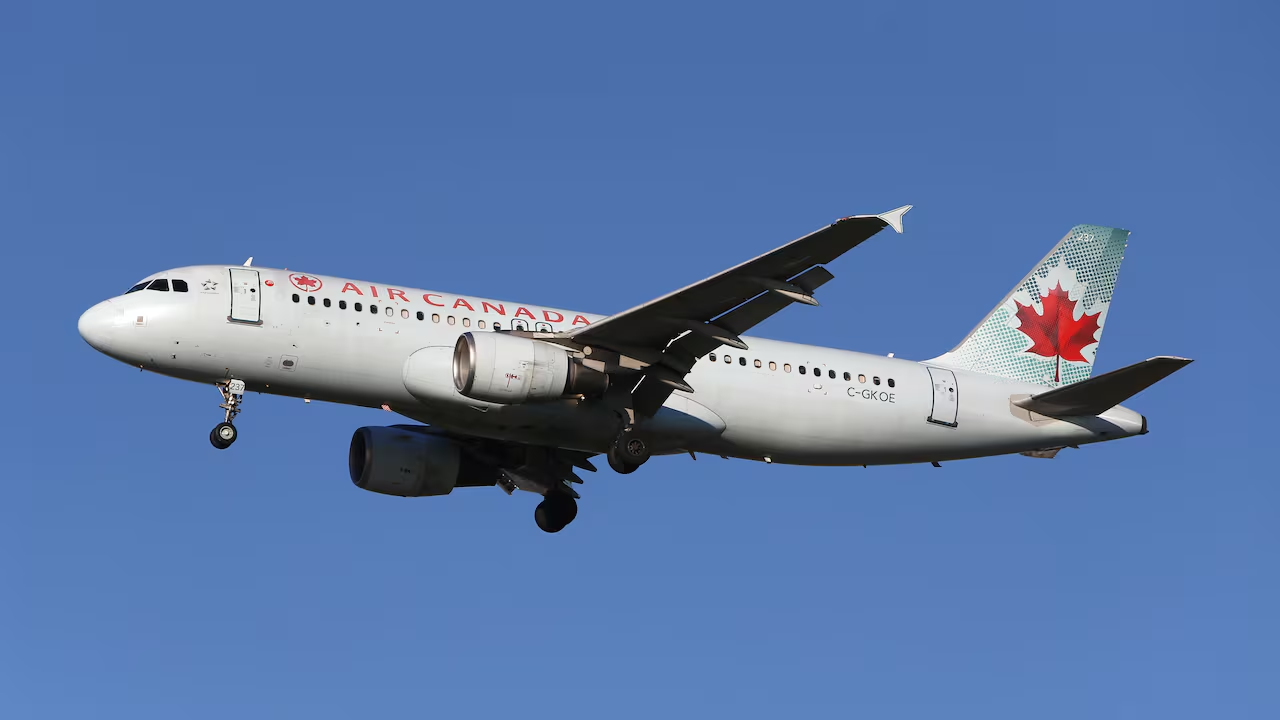
TOKYO — All Nippon Airways canceled 95 domestic flights and idled part of its narrow-body fleet on Saturday, saying it is an example of the havoc a sweeping recall of Airbus A320 aircraft has been causing since global regulators demanded that flight-control software be fixed quickly before planes could carry passengers again. The cancellations, centered around Haneda Airport and other major airports across Japan, are the latest part of a global effort to reverse a faulty software upload linked to an abrupt descent on a JetBlue flight in October. Nov. 29, 2025
Here’s how the Airbus A320 recall is impacting ANA fliers
ANA said the grounding is affecting Airbus A320 and A321 jets that ferry business travelers and tourists between Japan’s biggest cities, meaning it has to cut some schedules or substitute in larger Boeing planes where available, while rebooking thousands of customers. A Reuters report said that the cancellations on Saturday alone stranded some 13,500 travelers and prompted long lines at cancellation counters and departure boards across the country, adorned with “canceled” signs.
ANA and its low-cost sister carrier, Peach Aviation, own the largest fleet of Airbus narrow-body planes in Japan, leaving the airline little room for maneuver when jets are suddenly taken out of service. Rival Japan Airlines, which relies more on Boeing jets and doesn’t operate the A320, has not faced significant disruption so far, highlighting… how concentrated the fallout from the Airbus A320 recall is for carriers that built their networks around… the single-aisle workhorse.
Unprecedented groundings driven by a global software fix
The recall of Airbus A320 aircraft — which involves some 6,000 planes worldwide, over half of the nearly 11,300 A320-family jets in service — comes after analysis indicated that very high electrical activity at a crucial flight-control computer could corrupt data stored in it. In a late-Friday press release to operators, Airbus said the vulnerability was introduced by a recent software update and called on airlines to carry out an immediate precautionary rollback, with additional hardware protections needed — but only on a smaller subset of jets.
The European Union Aviation Safety Agency issued an Emergency Airworthiness Directive mandating that operators modify or replace the affected Elevator Aileron Computers before the next commercial flight, except for ferry flights to maintenance bases on a restricted basis. United States and Indian regulators are replicating the order, which would prevent aircraft from flying with passengers until local authorities have reviewed and signed off on the software. ANA has turned weekend flights into a morass of aircraft swaps and last-minute schedule changes.
JetBlue’s case illustrates what our regulators did right.
The crisis dates back to Oct. 30, safety officials say, when a JetBlue flight from Cancun, Mexico, to Newark, with several dozen passengers aboard, experienced a short-lived, uncommanded nose-down pitch while cruising, injuring at least 15 people and prompting an emergency diversion to Tampa. Sunlight-powered data corruption also could be a factor. Samples of the new software installed in the crashed planes showed that sunlight could lead to corrupted data, according to reports by AP News, and analysis by Airbus and European regulators determined that solar radiation can cause corruption in some versions of the flight-control system for its A320 family jets.
Some former Max engineers stress that the fix itself is fairly simple: Most planes require only a software rollback, which can be done in just a few hours during overnight checks. Yet since regulators have demanded that the Airbus A320 be fully fixed before jets return to passenger service, minor maintenance checks are having a trickle-down effect on delays and cancellations as one of the busiest travel seasons of the year looms.
Airbus A320 safety concerns have been rising for years.
It’s not the first time authorities have acted exhaustively on the world’s best-selling single-aisle jet family, the Airbus A320, which is currently facing a recall. The U.S. Federal Aviation Administration issued an airworthiness directive in 2016 for some A320-series aircraft after discovering cracks in cockpit equipment racks that could have prevented access to critical flight data, leading to repetitive inspections to address the issue.
Three years later, India’s aviation regulator directed IndiGo and GoAir to replace troublesome Pratt & Whitney geared turbofan engines on dozens of A320neo jets after a spate of in-flight shutdowns, an action reported at the time by Al Jazeera. More recently, long-term engine maintenance bottlenecks have forced scores of A320neos to remain parked on the ground around the world, so some airlines are entering this software mess already straining overextended fleets.
For Airbus, the recall of the A320 is a reminder of both the power and vulnerability of a jet family that has only recently claimed the title of the most-delivered commercial aircraft in history, after surpassing Boeing’s 737. For passengers on ANA and others throughout Asia, that means tracking flight status apps obsessively while airlines scramble to fix software, juggle fleets, and assure travelers that safety — not schedule — is dictating every decision.